
Solutions
A door is not a partition. A rooflight is not a window.
Six products, one technology. Everything else about the build comes from the opening. A door moves, so the wiring has to cross a joint that moves with it. A shower is wet, so every edge has to be detailed. A rooflight is a solar problem before it is a privacy one. And a railing is a barrier first, glass second.
These are the solutions PriWatt builds. Each page covers which product suits it, which state the panel should hold with no power, what the specification fixes and what gets decided on the shop drawing.
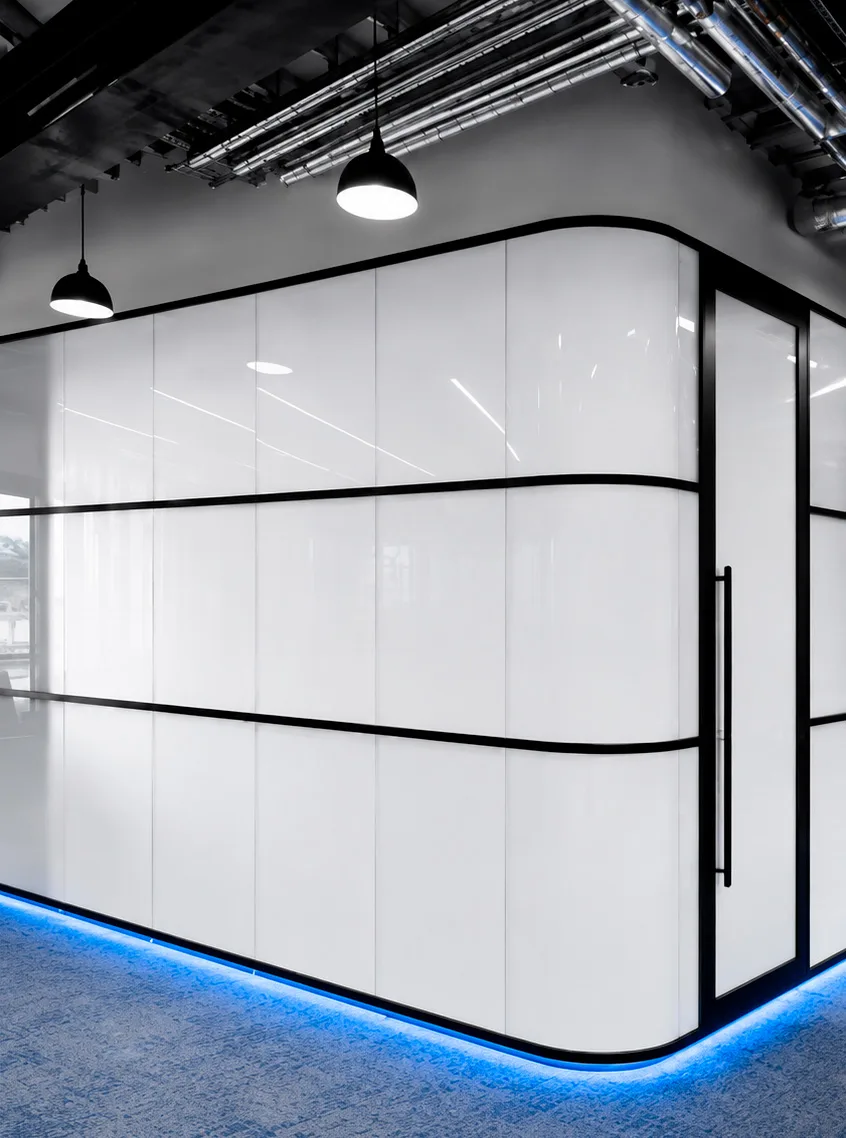
Office partitions
A wall of glass, not one panel: where the joints fall, whether the run switches together, and how a door in the middle is matched to the panels beside it.
Read more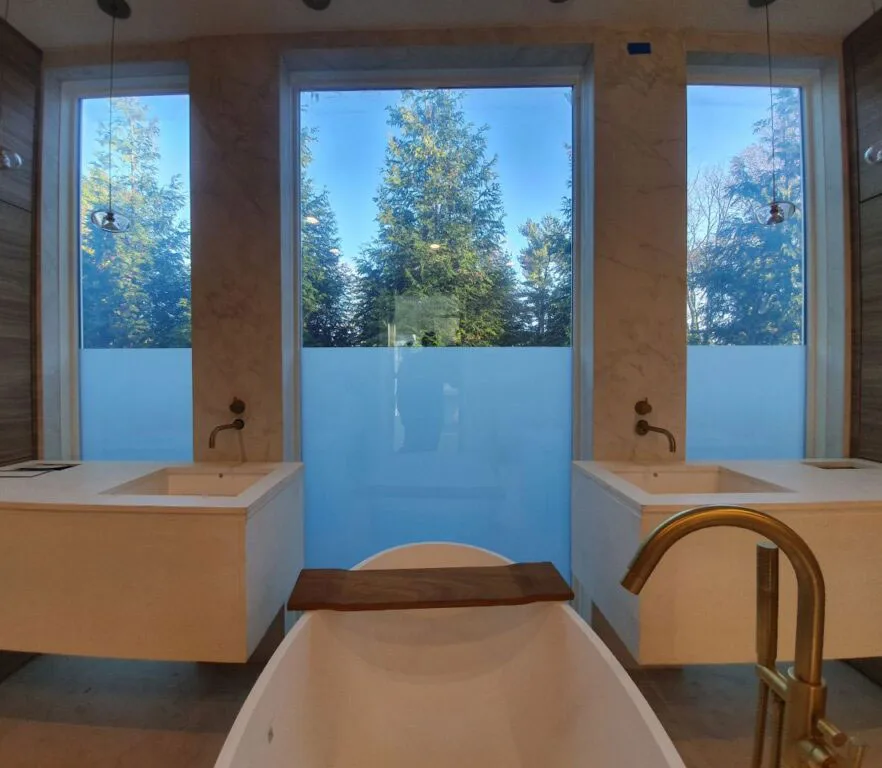
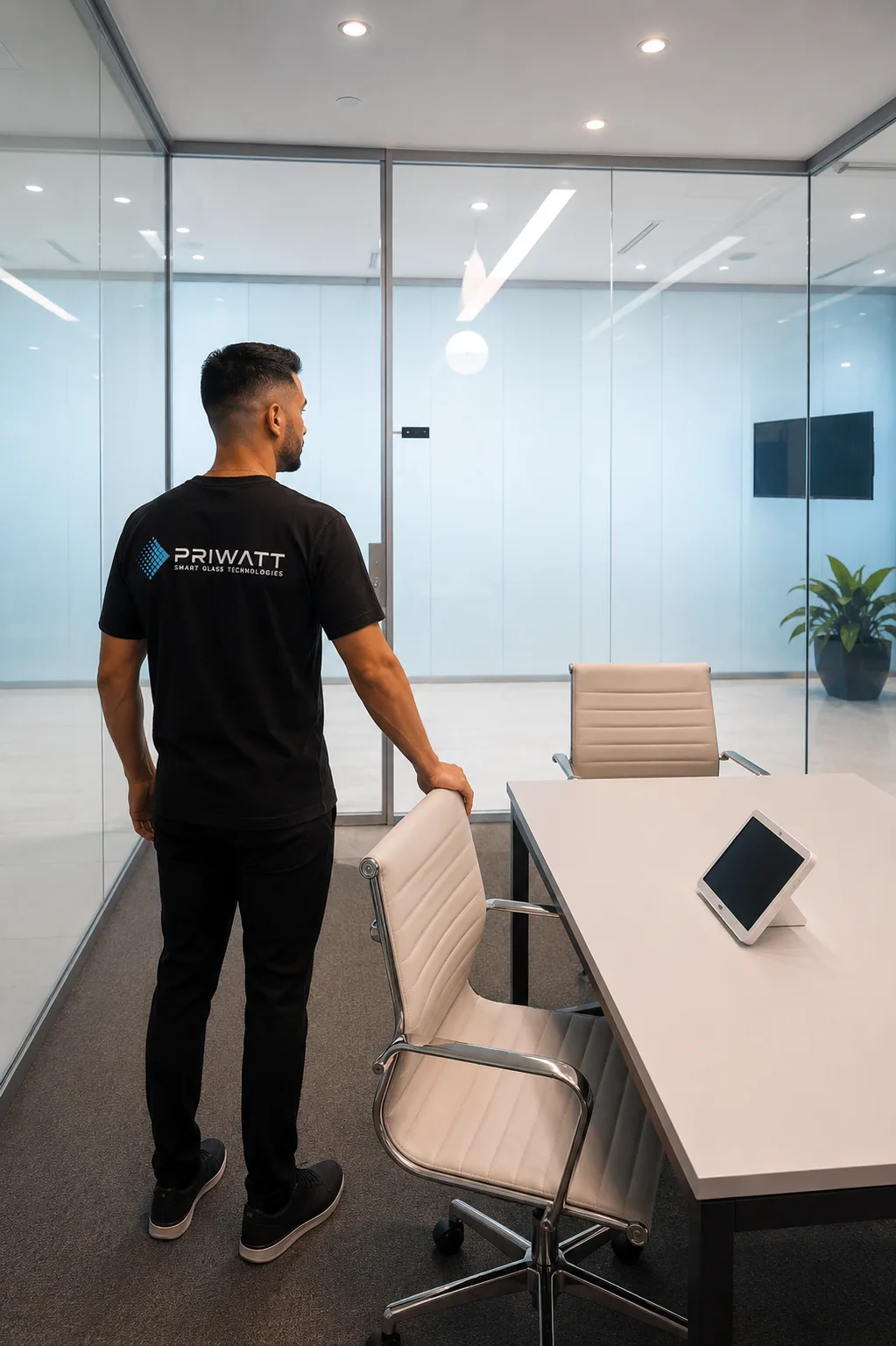
Windows
A window exists to be looked through, so reverse mode is usually the answer. And the honest limit: a switchable window frosts, it does not go dark.
Read more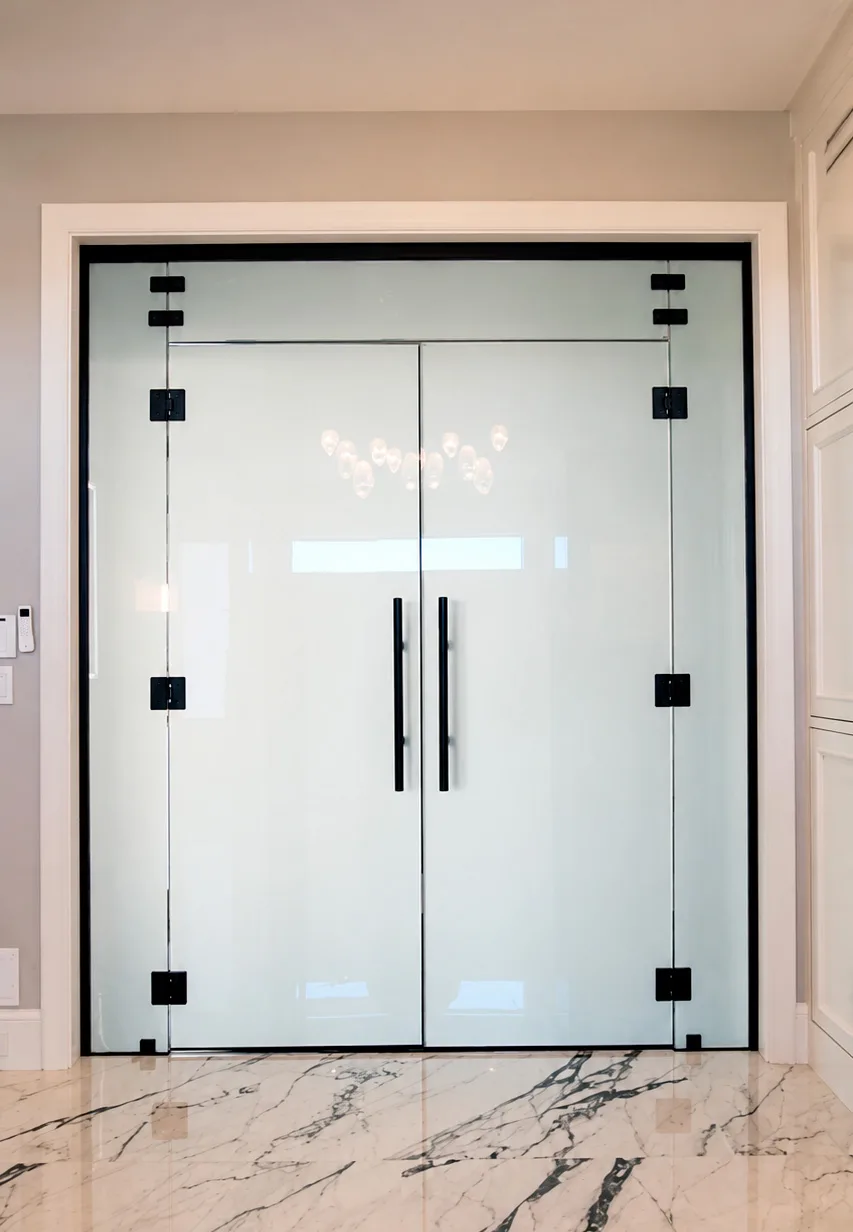
Doors
The one format where the glass moves, so the wiring becomes the detail and not the panel. Internal doors, entrances and glazed leaves in a partition run.
Read more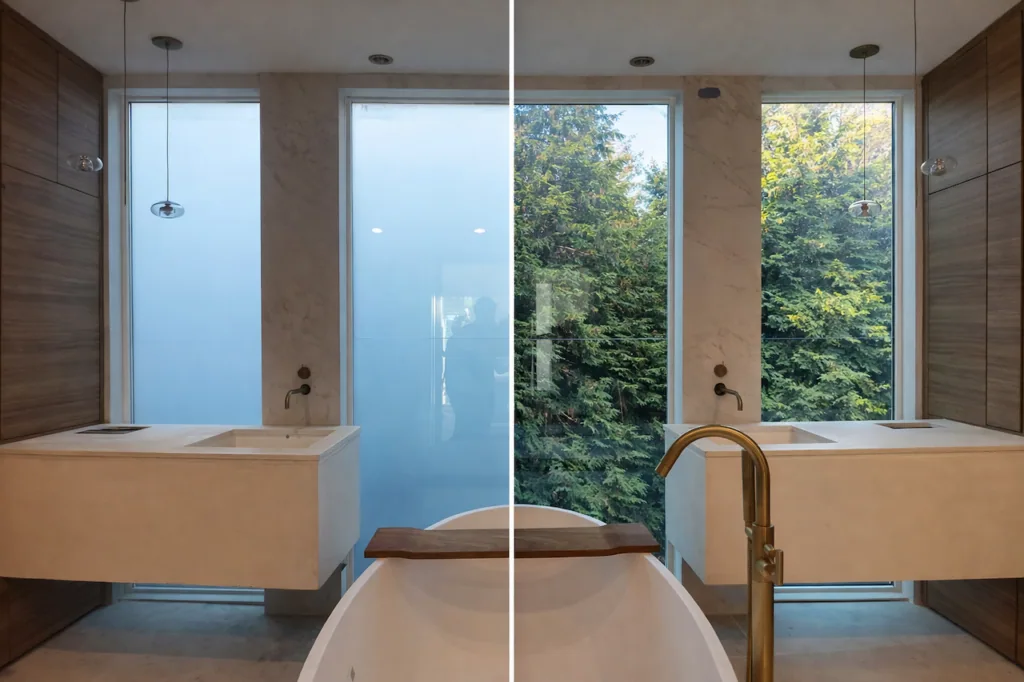
Shower enclosures
The room where the glass is the wall. Normal mode is frosted with no power, so a power cut leaves the enclosure private, the failure state a bathroom wants.
Read more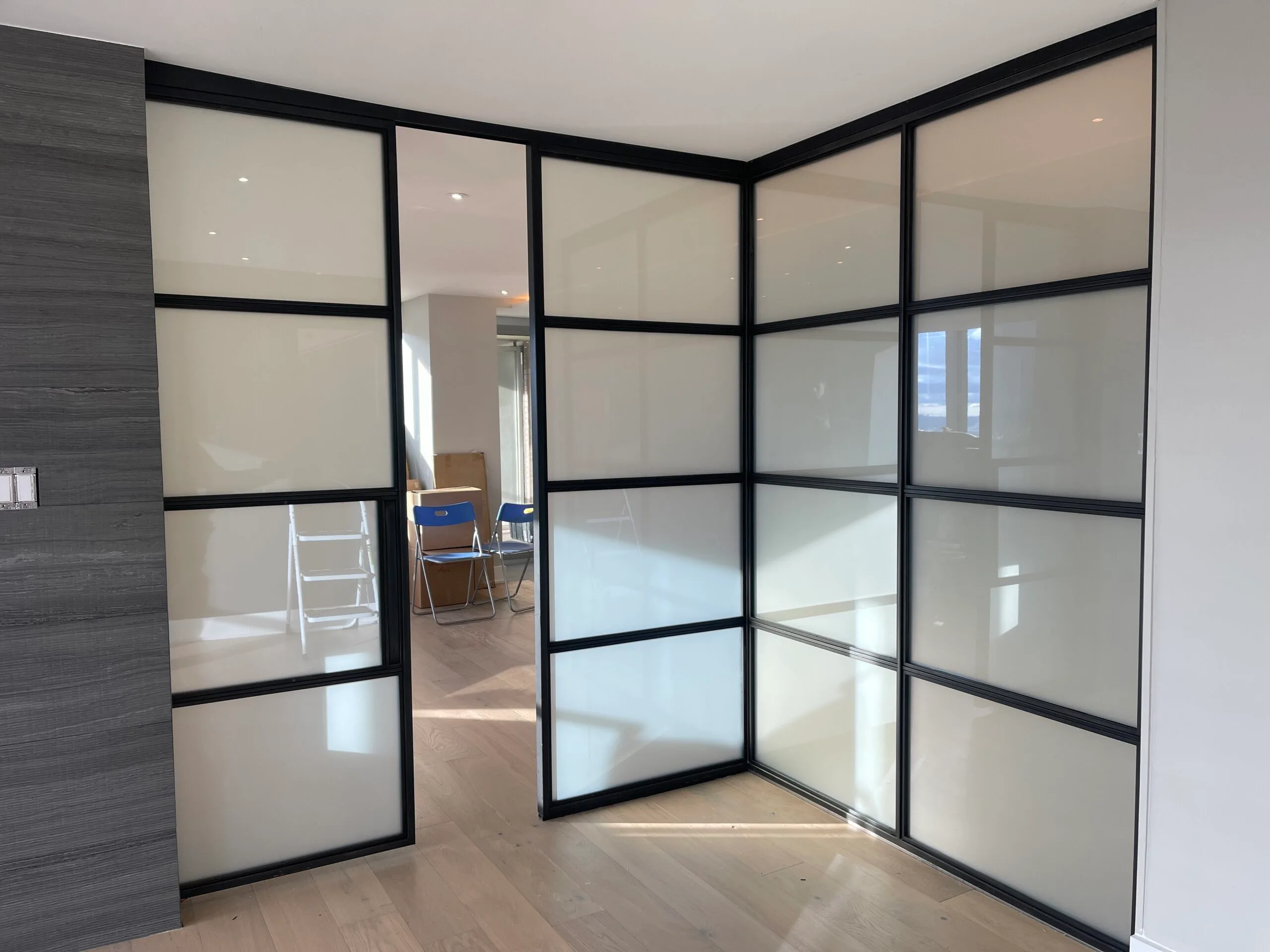
Room dividers
One room, or two. Fixed, sliding, stacking or folding. The question that belongs to this format alone is whether power has to reach a panel that moves.
Read more
Skylights and overhead glazing
Overhead, the problem is usually the sun, not the neighbours. DLC moves between a tinted transparent state and a deep dark one: glare and solar gain, not privacy.
Read more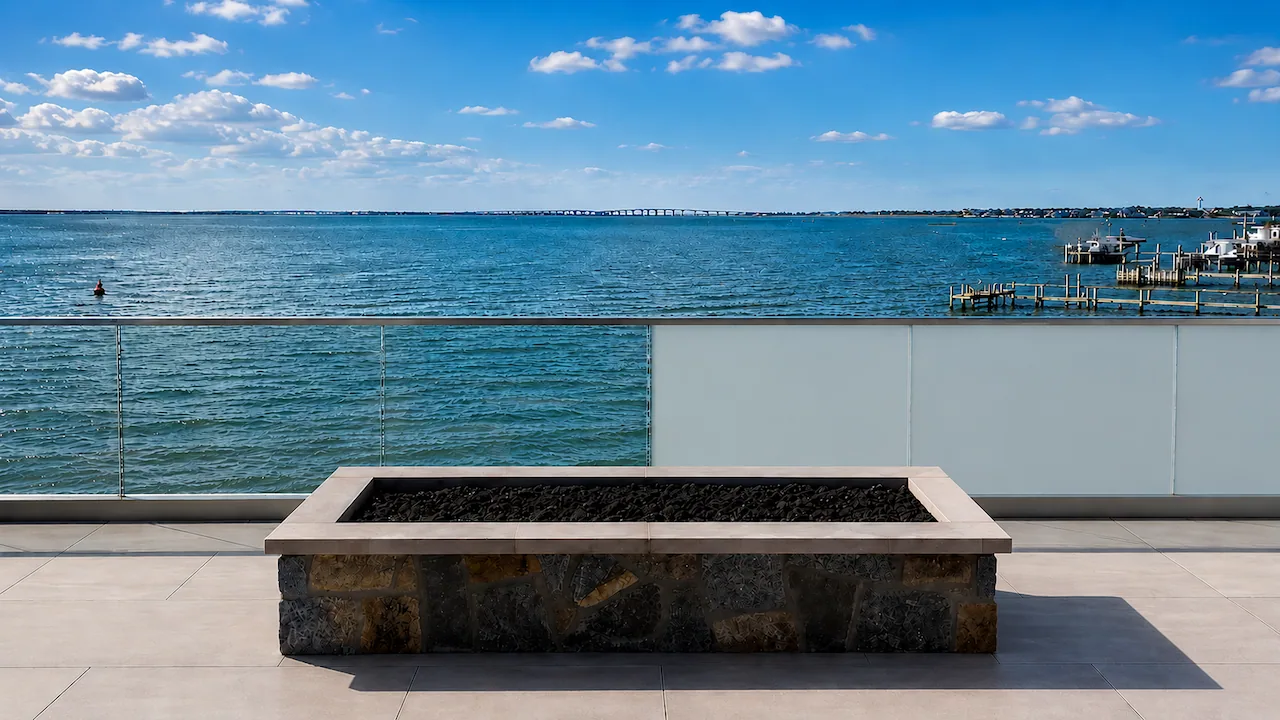
Railings and balustrades
Two projects in service: a New York waterfront terrace and a North Palm Beach pool deck. Reverse mode holds the view with no power drawn, and frosts for the hour it is wanted.
Read moreSpecialized
Curves, display cases, cleanroom panels, studio sets and rear-projection surfaces. Rarely the shape that makes a project unusual; usually the edge, the movement or the duty cycle.
Read moreGot one in front of you? Send the dimensions, or a photograph with the sizes marked on it. What comes back is a quotation: panel schedule, transformer, lead time. No square-foot figure, because there is not an honest one. Earlier than that, twenty minutes with a project specialist is the place to start.
The panel limits are the same wherever it goes
Every one is built from the same six products, so it inherits the same maximum panel and the same unpowered state. Geometry, wiring and exposure change. The material does not.
| Maximum panel | Unpowered state | |
|---|---|---|
| PDLC film | 72 × 143 in | Private |
| PDLC glass | 70 × 143 in | Private |
| PNLC film and glass (reverse) | 57 × 143 in | Clear |
| DLC film and glass | 57 × 143 in | Private / dark |
| Glass | Low iron, heat-treated or fully tempered |
|---|---|
| Overall thickness | 3/8 · 1/2 · 9/16 in |
| Weight | ~5 lb/sq ft |
| Working voltage | 48 – 80 VAC by product, from an isolation transformer |
| Power | < 0.5 W/sq ft |
| Safety glazing | SGCC 9894 |
| Electrical | UL file E514182 |
| Shapes | Rectangles, curves, holes, notches and cut-outs for hardware |
Larger areas are made by dividing them into panels. That is a joint line, not a limit. Several small pieces cost more per square foot than a few large ones: same area, more edges, more connections. What moves the price is a page of its own, and every measured value sits in one table.
Three decisions, on every one of them
Which state it holds unpowered
Normal mode is private with no power; reverse mode is clear. Ask which state the room should be in during a power cut, and on the night nobody is in the building. That answer is the product. It comes out differently for a shower than for a railing.
Glass, or film on the glass
Laminated switchable glass is made for the opening. Self-adhesive film goes onto glazing that is already there, and onto glass PriWatt supplies cut to size for a third party to laminate.
Where the wiring leaves
Every panel has a busbar and a tail. Where that tail exits and where it goes decides whether the job is straightforward, and it gets agreed on the shop drawing, before anything is made.
If you know the room, or you already know the product
This section sorts the catalogue by the thing being built: a door, a shower, a balustrade. It is the same six products underneath, and there are two other ways to arrive at them.
By sector
Offices, healthcare, residential, education, public spaces, government, studios, transit. The specification changes between them; the technology does not. Each one is illustrated with a project already delivered in it.
By product
PDLC, PNLC and DLC, each as laminated glass and as self-adhesive film. Start here if you are deciding which of the six, not where it goes.
By the numbers
Every published value in one table: panel limits, switching times, VLT and haze, power draw, cycle life, temperature range. The reference the pages above cite.
On film
Each of the formats above, filmed in a finished project: the glass switching, in the room it was made for.
Send the opening, not the product code
Sizes, the shapes, whether the glass is already in the building and which state it should hold with no power. That is enough for a price and a lead time. Pompano Beach, Florida; 1-866-PRIWATT (1-866-774-9288).