
Doors
Everything about the panel is ordinary. The wiring is not
A switchable door is a switchable panel with hardware in it, until you remember that the panel swings. The glass, the make-up, the voltage and the switching are exactly what they are in a fixed partition. Two things are different: power has to reach a leaf that moves several thousand times a year, and a door is a hazardous location in the building code whether it switches or not.
Both are solved routinely, and both are solved on the drawing, not on site.
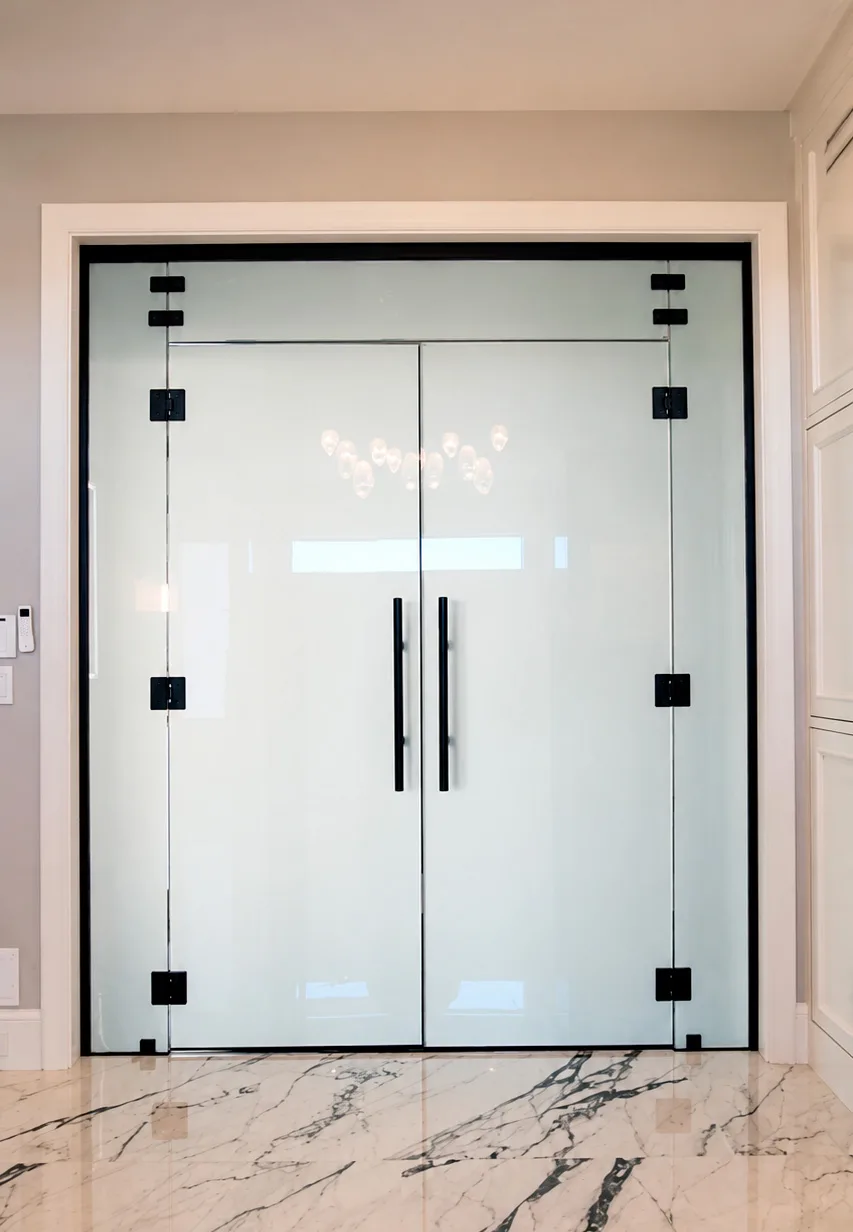
The door above is a glazed exterior leaf, switching in place. Nothing moves except the glass.
Three ways a switchable door is built
A laminated switchable leaf
The door is made as switchable glass from the start: low-iron glass, heat-treated or fully tempered, laminated around the switchable layer, with the holes, notches and cut-outs your hinges, patch fittings, locks and handles need made into the panel. This is the route for new work and for a door being replaced.
Film onto a door already hung
Self-adhesive film applied to the glazing that is in the building. Nothing is taken off its hinges and nothing is re-glazed. It is the same retrofit that put switchable film onto working office partitions at GE Vernova, on a leaf instead of a wall.
A glazed leaf in a partition run
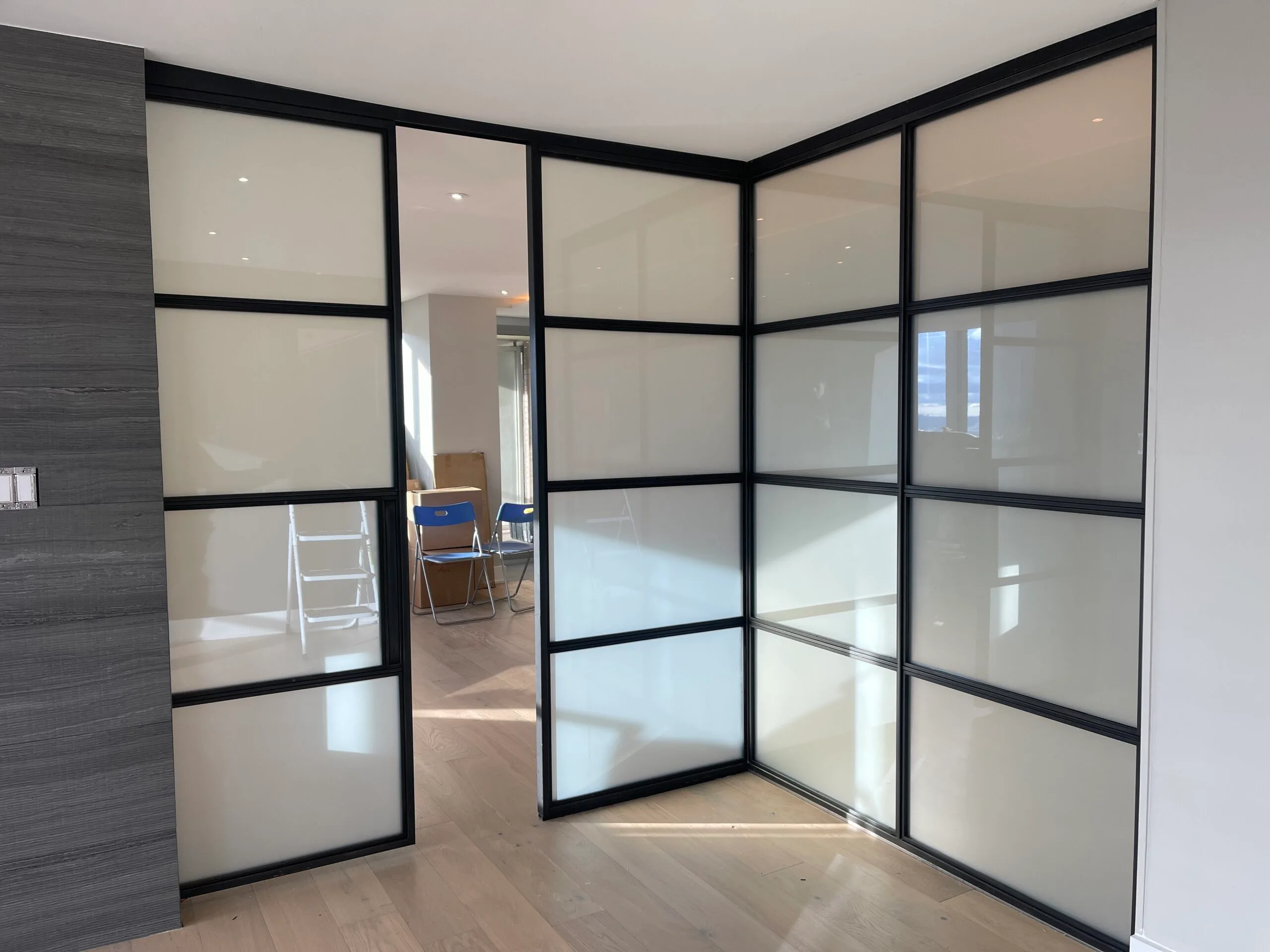
Most switchable doors are one panel in a longer wall of them. The leaf and the fixed panels beside it are made together so that the frosted state matches across the run, and so that one transformer and one control serve the lot.
Got one in front of you? Send the door schedule, or a photograph of the opening with the sizes on it. What comes back is a quotation: panel schedule, transformer, lead time. No square-foot figure, because there is not an honest one. Earlier than that, twenty minutes with a project specialist is the place to start.
Which state the door holds with no power
On a partition this is a preference. On a door it is usually decided by what the door is for.
Internal doors — normal mode
PDLC is frosted with no power and clear when switched. For a door into a room that is private most of the time (a consulting room, an office, an ensuite) that is the right resting state, and the cheaper product.
Entrance and glazed doors — reverse mode
PNLC is clear with no power. For a door people walk through and see through all day, that is usually the correct behaviour: the unit draws power only for the minutes it is private, and a power cut leaves the door clear, not blank.
Sun on the door — DLC
A west-facing glazed entrance is a glare problem before it is a privacy one. DLC moves between a tinted transparent state and a deep dark one. Solar control, not concealment.
The distinction and the numbers behind it are set out in full on reverse mode and in the PDLC against PNLC comparison.
What a door drawing has to settle
| Line | What it decides |
|---|---|
| Leaf size | PDLC glass is made to 70 × 143 in and PNLC and DLC to 57 × 143 in. 143 in is 11 ft 11 in, so full-height leaves are inside the range |
| Hardware | Hinges, patch fittings, locks, pullsthe cut-outs are made into the panel, not drilled later |
| Where the tail exits | Which edge the wiring leaves from, and on which side of the hinge line |
| How power crosses the joint | Hinge-side transfer, a floor spring, or a concealed run through the head, agreed at technical review |
| Safety glazing | Doors and the panels beside them are a hazardous location; the laminated products carry SGCC 9894 |
| The control | Wall switch, remote or building system, and whether the leaf switches with the wall or on its own |
Every project starts with a technical review and shop drawings before anything is fabricated. On a door that review is not a formality. It is where the wiring route is chosen, and choosing it late is how a switchable door becomes an expensive fixed one.
What the safety-glazing certificate covers, what it does not, and why film on an existing leaf is a different question altogether: all of that is on safety glazing.
Common questions
Yes, if the glass is in sound condition and accessible on one face. Film is applied to the existing glazing, so nothing is re-glazed and the door stays on its hinges. The wiring still has to reach the leaf, the same question a new door raises.
Through a transfer at the hinge side, a floor spring, or a concealed run at the head. Which one suits depends on the door type and the frame, and it is agreed on the shop drawing before the panel is made, not resolved on site.
The laminated switchable products are certified safety glazing under SGCC 9894, and the glass is heat-treated or fully tempered low-iron. The requirement that applies to a particular door is set by the code and the authority having jurisdiction, and the certificate is available in full on request.
It holds its unpowered state: frosted on PDLC and DLC, clear on PNLC reverse. The door itself is unaffected: the switchable layer has no bearing on the hardware, so it opens, closes and locks exactly as it did.
Yes. The panel is made to the leaf; what changes between a swing, a slide and a pivot is where the wiring runs and how it crosses the moving joint. Send the door type with the sizes and it is answered with the quote.
Switchable leaves, in service
Florida Power & Light
A drone command room built by four parties, and the switchable film was the smallest scope.
A car collection, Los Angeles
PDLC glass integrated into custom automatic sliding garage doors.
Moose Knuckles, SoHo
A triangular fitting room: five panels and a glass sliding door that had to switch too.
Redcon1, Miami
Two fixed panels and two pivot doors, and where the conductor crosses on a pivot.
Built from the same six products
Office partitions
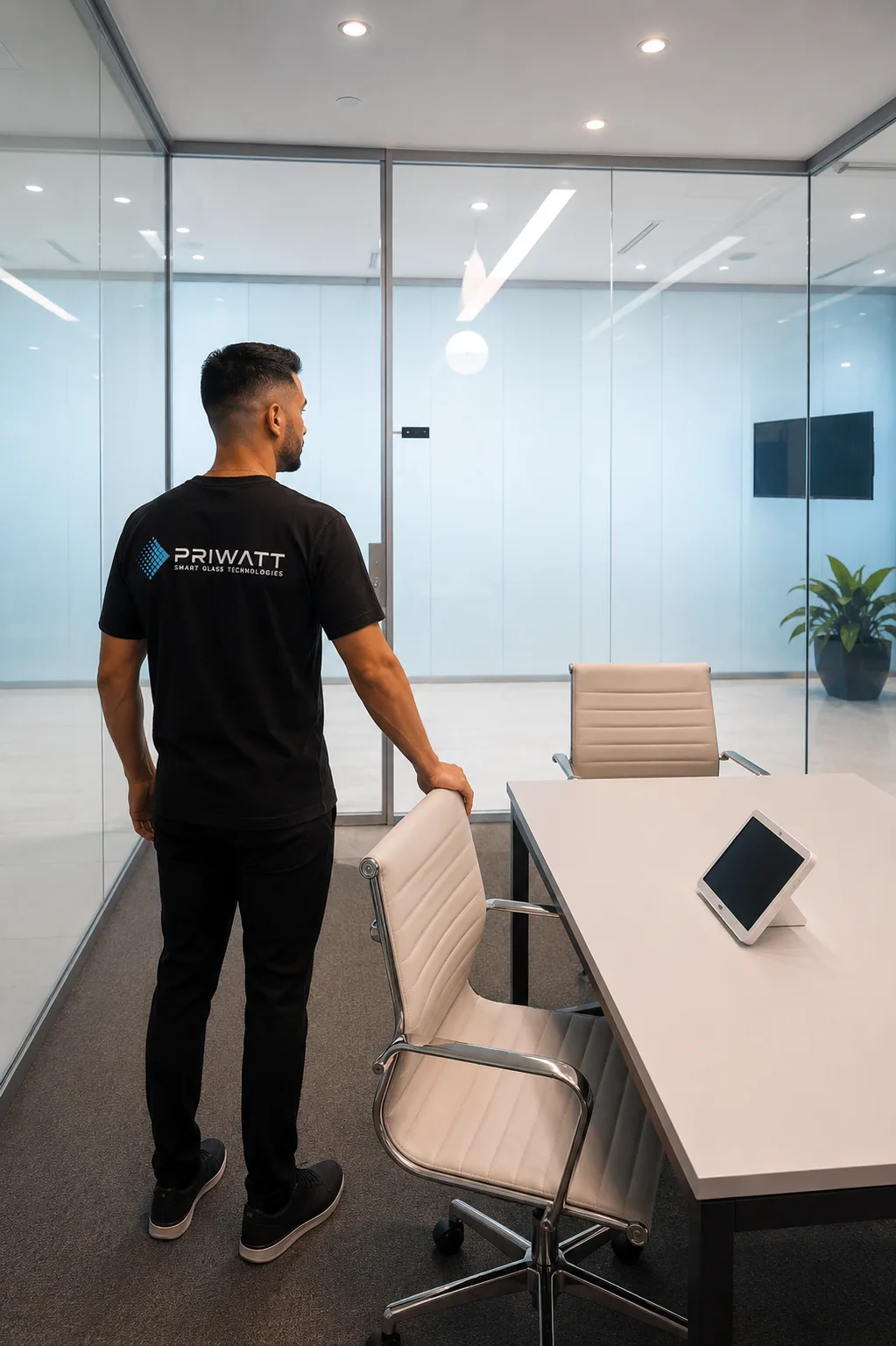
A wall of glass, not one panel: where the joints fall, whether the run switches together, and how a door in the middle is matched to the panels beside it.
Read more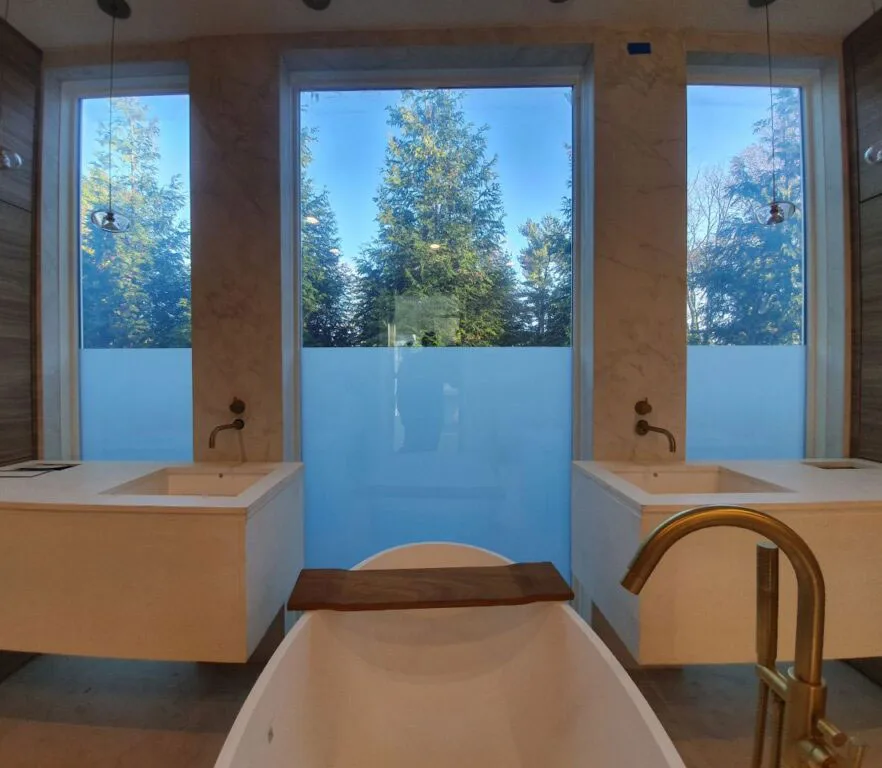
Windows
A window exists to be looked through, so reverse mode is usually the answer. And the honest limit: a switchable window frosts, it does not go dark.
Read more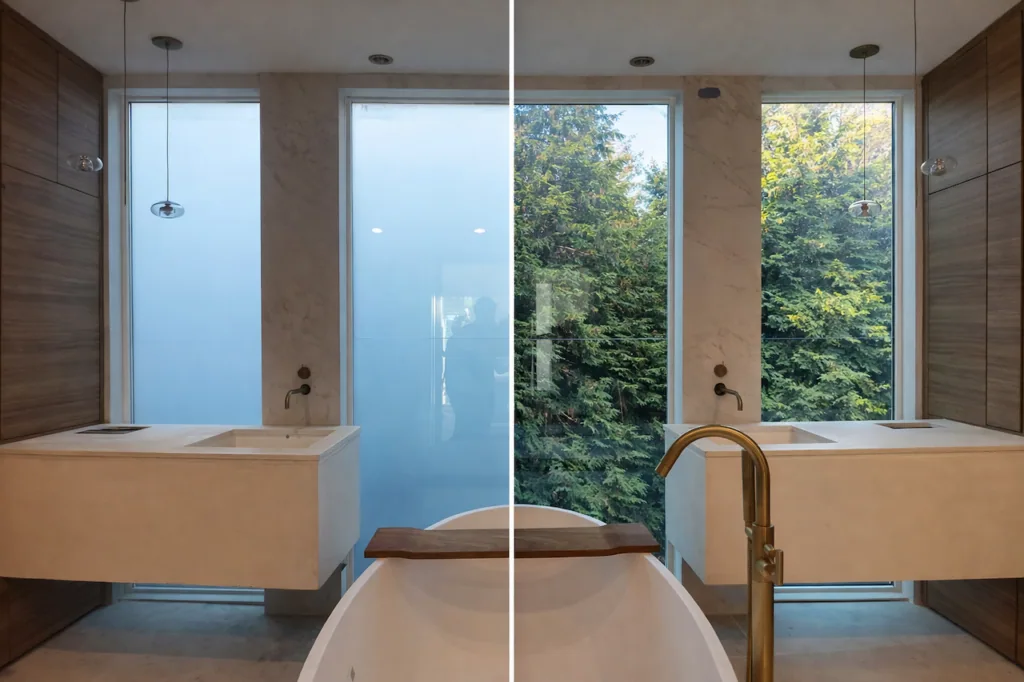
Shower enclosures
The room where the glass is the wall. Normal mode is frosted with no power, so a power cut leaves the enclosure private, the failure state a bathroom wants.
Read moreRoom dividers
One room, or two. Fixed, sliding, stacking or folding. The question that belongs to this format alone is whether power has to reach a panel that moves.
Read more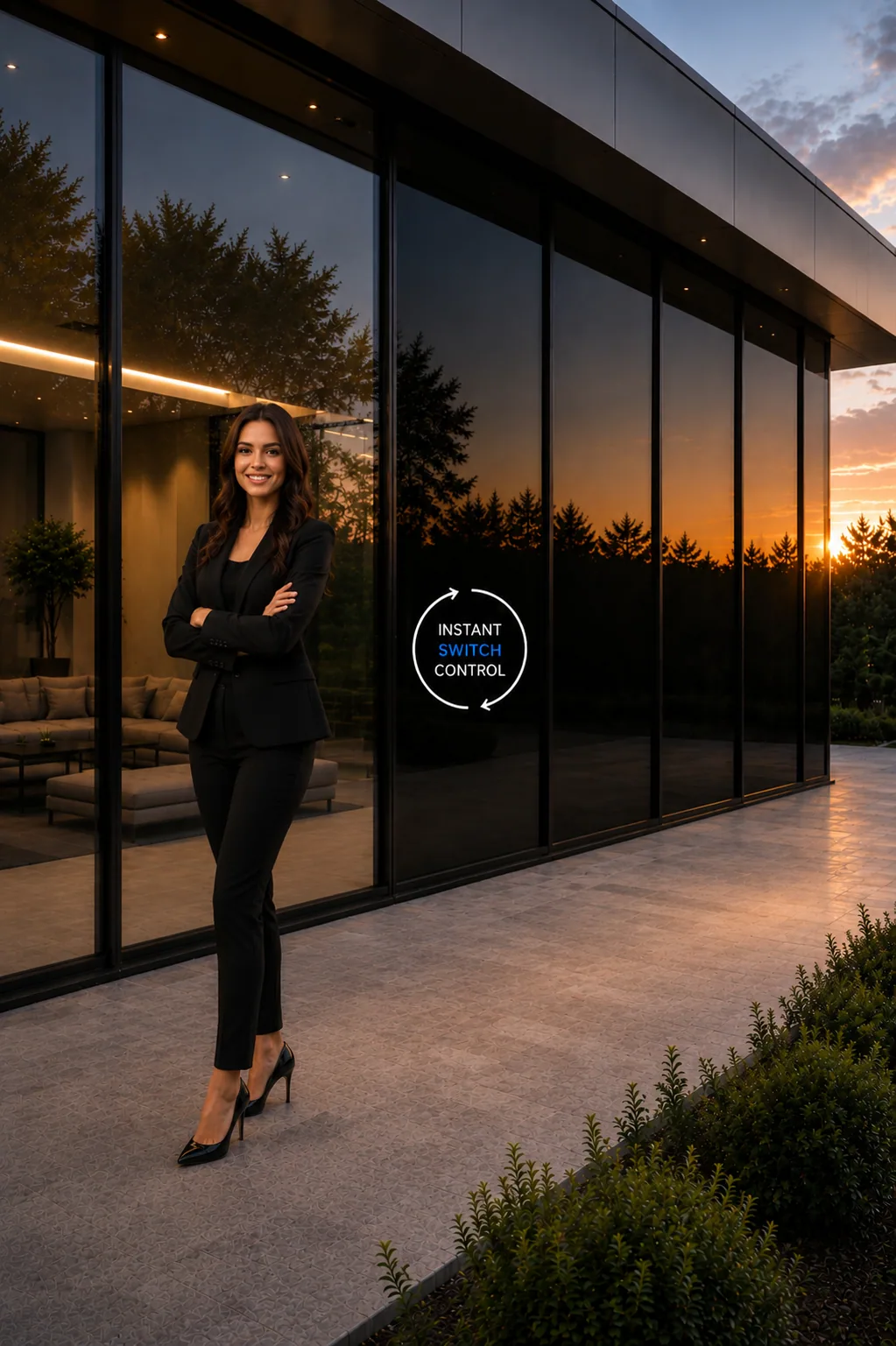
Skylights and overhead glazing
Overhead, the problem is usually the sun, not the neighbours. DLC moves between a tinted transparent state and a deep dark one: glare and solar gain, not privacy.
Read more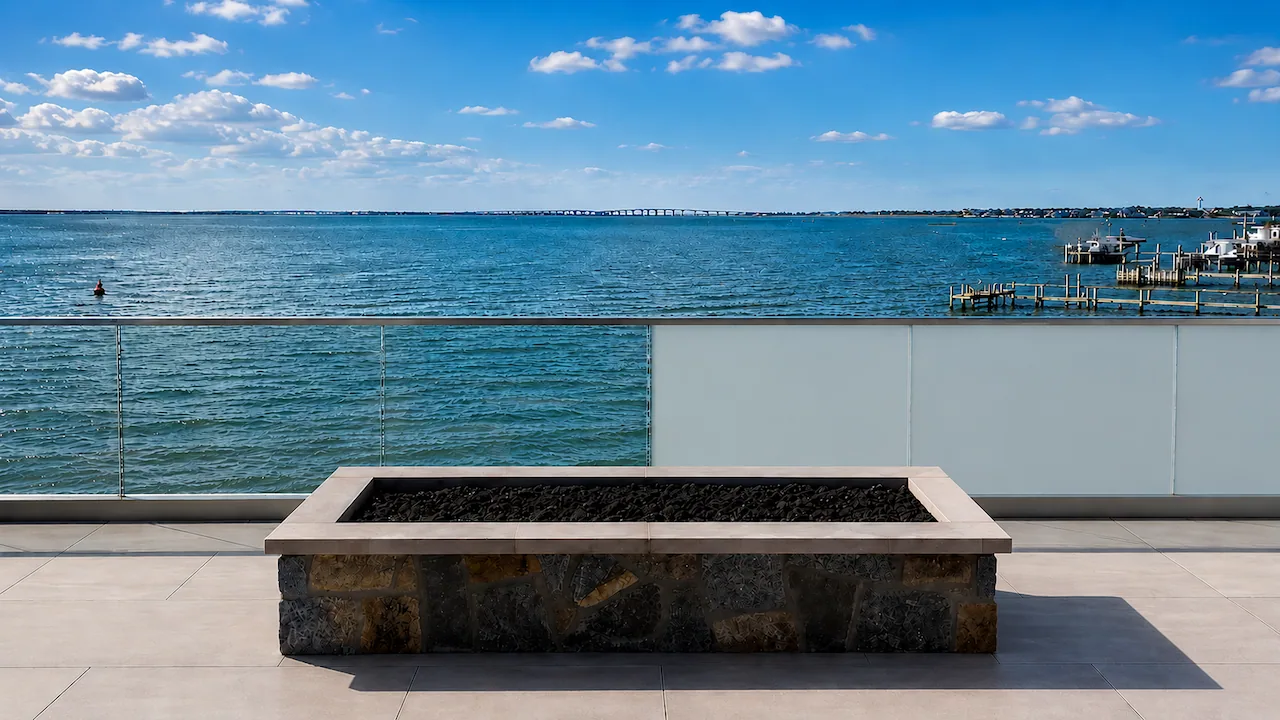
Railings and balustrades
Two projects in service: a New York waterfront terrace and a North Palm Beach pool deck. Reverse mode holds the view with no power drawn, and frosts for the hour it is wanted.
Read more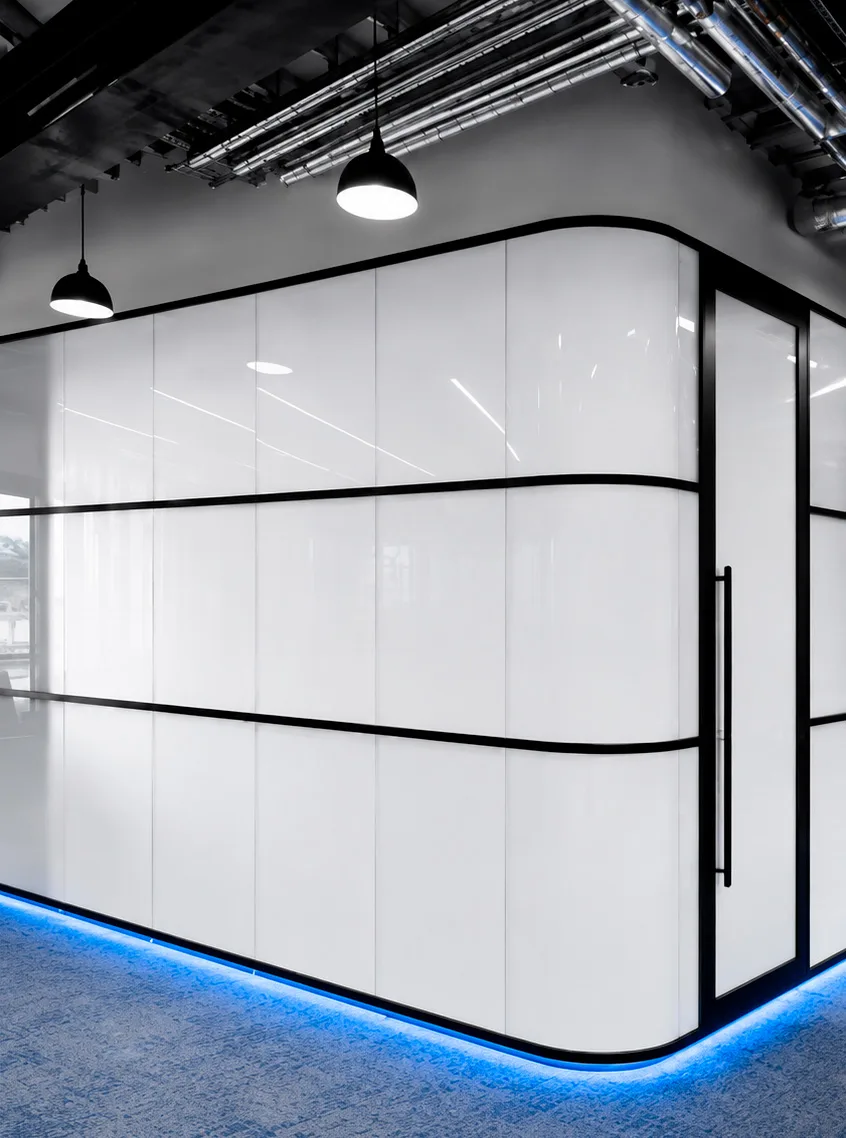
Specialized
Curves, display cases, cleanroom panels, studio sets and rear-projection surfaces. Rarely the shape that makes a project unusual; usually the edge, the movement or the duty cycle.
Read moreDoors in projects on this site
GE Vernova
Existing glazed partitions and meeting rooms retrofitted with film, in a building that kept working through it.
Lomurro Law
Glazed offices in a law firm, where a meeting has to be private and the floor still has to feel open.
Stanford surgical suites
Observation glazing in a working clinical environment, supervised from outside and private from within.
Send the opening, not the product code
Sizes, the shapes, whether the glass is already in the building and which state it should hold with no power. That is enough for a price and a lead time. Pompano Beach, Florida; 1-866-PRIWATT (1-866-774-9288).