Skylights and overhead glazing
Nobody is looking in through a rooflight
A skylight is specified for daylight and it is regretted for heat and glare. The shading that follows is almost always mechanical: a blind on a track, four storeys up, over a space that has to be scaffolded to reach it.
Switchable glass answers it in the glazing. And overhead, the product is different from the one that suits a partition: privacy is not the requirement, so a frosted state is not the useful one. Dimming is.
DLC dims. PDLC frosts
DLC moves between a tinted transparent state and a deep dark one. It is made in two contrast ratios, and the difference between them is how dark the dark state goes:
| DLC | Contrast 1:8 | Contrast 1:15 |
|---|---|---|
| Light transmission, clear state | 36% | 28% |
| Light transmission, dark state | 4.5% | 1.5% |
| Haze, clear state | 2.4% | 3% |
| Haze, dark state | 97% | 97% |
| Switching | < 150 ms to clear · < 5 ms to dark | < 150 ms to clear · < 5 ms to dark |
| Working voltage | 60 – 65 VAC film · 60 VAC glass | 60 – 65 VAC film · 60 VAC glass |
| Power | < 0.5 W/sq ft | < 0.5 W/sq ft |
| Maximum panel | 57 × 143 in | 57 × 143 in |
A 1:15 unit takes a rooflight from 28% transmission to 1.5%: the difference between a bright atrium and a room you can show a projection in, in the same glazing, in the time it takes to press a switch. PriWatt names skylights among the applications DLC is made for, alongside home theatres, hospitality and executive spaces.
Where a rooflight genuinely does need concealment, say an overlooked light well or a bathroom rooflight, PDLC is the product: frosted with no power, clear when switched.
Have a project open? Send the rooflight sizes and the pitch. A quotation comes back as a panel schedule with a transformer and a date, priced on the panels you actually need. Nothing drawn yet? Book twenty minutes with a project specialist.
What overhead glazing changes
The code decides the build-up
Sloped and overhead glazing is governed by its own provisions in the building code, and a particular rooflight takes its requirements from the code and the authority having jurisdiction. Switchable panels are laminated assemblies, made from low-iron glass, heat-treated or fully tempered, and certified as safety glazing under SGCC 9894. The certificate goes to the glazing engineer with the submittal.
Nothing to reach
The reason a rooflight blind is a bad idea is the reason a switchable rooflight is a good one: there is no mechanism over the space, nothing to service at height, and nothing that has to be got to when it stops working.
It is a shading device that draws power
Under 0.5 W per square foot, and only in the switched state. Which state that is matters overhead more than anywhere: DLC is dark with no power, so a rooflight left unpowered is a dark rooflight.
The panel is a system
Voltage above is what the panel runs at, from an isolation transformer sized to the run. On a roof that means a transformer location, a route for the low-voltage run and a control that reaches it, all settled on the shop drawing.
Overhead, in an insulated unit
A rooflight is usually an insulating unit, not a single laminate, and the switchable layer goes inside it. The IGU page has what that changes for solar gain, HVAC load and the elevation. Overhead the argument is the same as it is on a facade: a switchable layer is a shading device the building does not have to hang anything from.
Switchable glass in an IGU
What a switchable layer does inside an insulating unit: solar gain, HVAC load, the elevation.
DLC smart glass
The dynamic-tinting product in full: both contrast ratios, the optical data and the make-ups.
An exterior project in service
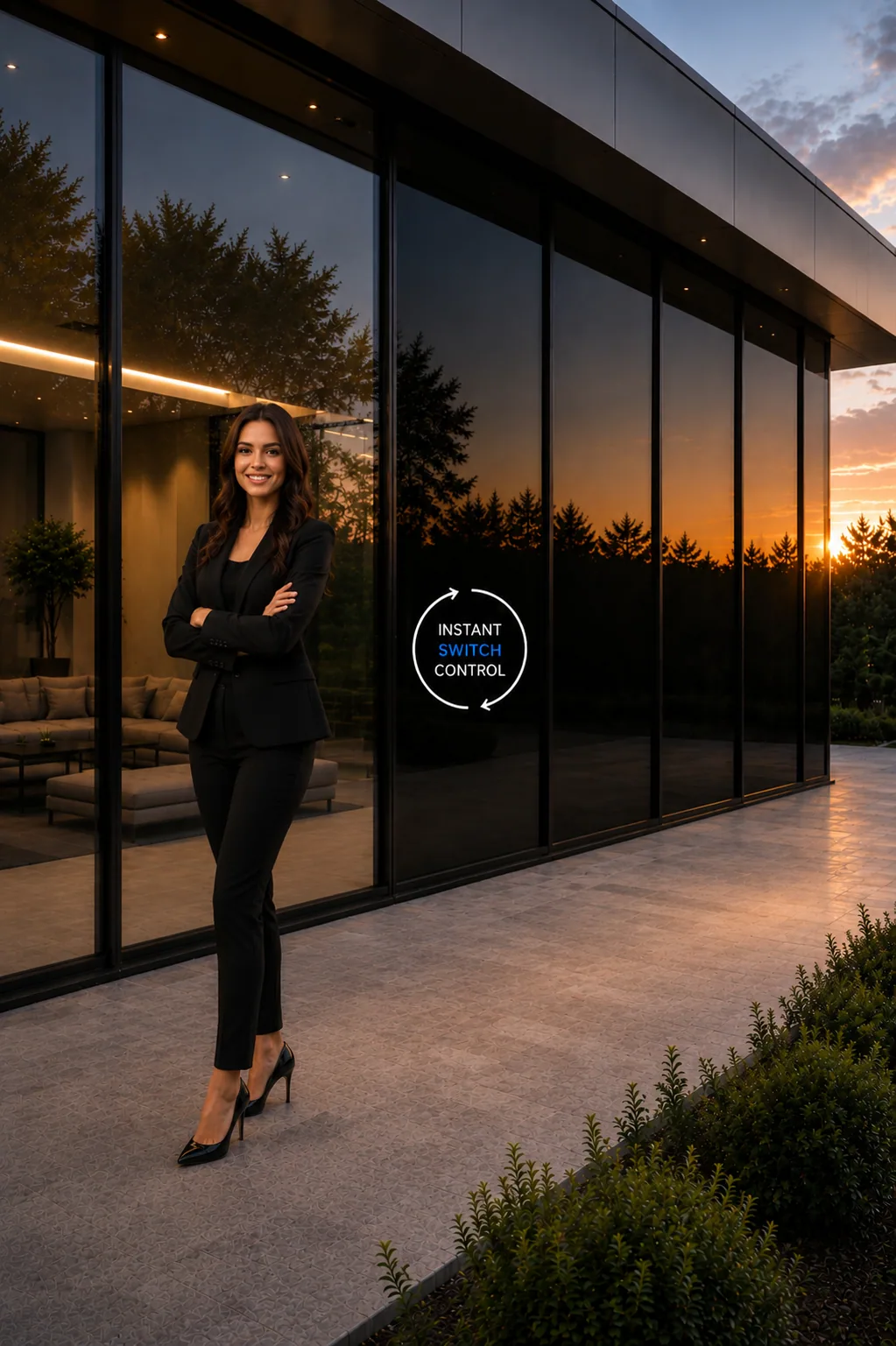
Exterior privacy glazing at a corporate training centre, on the face of the building.
Common questions
Yes. PriWatt names skylights among the applications DLC is made for. What a particular rooflight requires of the glazing build-up is set by the sloped-glazing provisions of the building code and by the authority having jurisdiction; the switchable panels are laminated assemblies of heat-treated or fully tempered low-iron glass, certified as safety glazing under SGCC 9894.
DLC, in almost every case. Overhead the requirement is glare and solar gain, not privacy, and DLC moves between a tinted transparent state and a deep dark one, down to 1.5% light transmission in the 1:15 ratio. PDLC frosts instead of dimming, and that is the right answer only where a rooflight is genuinely overlooked.
Dark. DLC is a normal-mode product, so the unpowered state is the dark one and power is drawn to make it clear. That is worth deciding deliberately on a rooflight, because it is the state the building sits in overnight and during an outage.
It does the job a rooflight blind was installed to do, without a mechanism over the space. There is nothing at height to service, nothing to re-tension and nothing that has to be reached when it fails.
DLC is made to 57 × 143 in. Larger areas are divided into panels. That is a joint line, not a limit, and on a rooflight the framing usually wants those joints anyway.
Built from the same six products
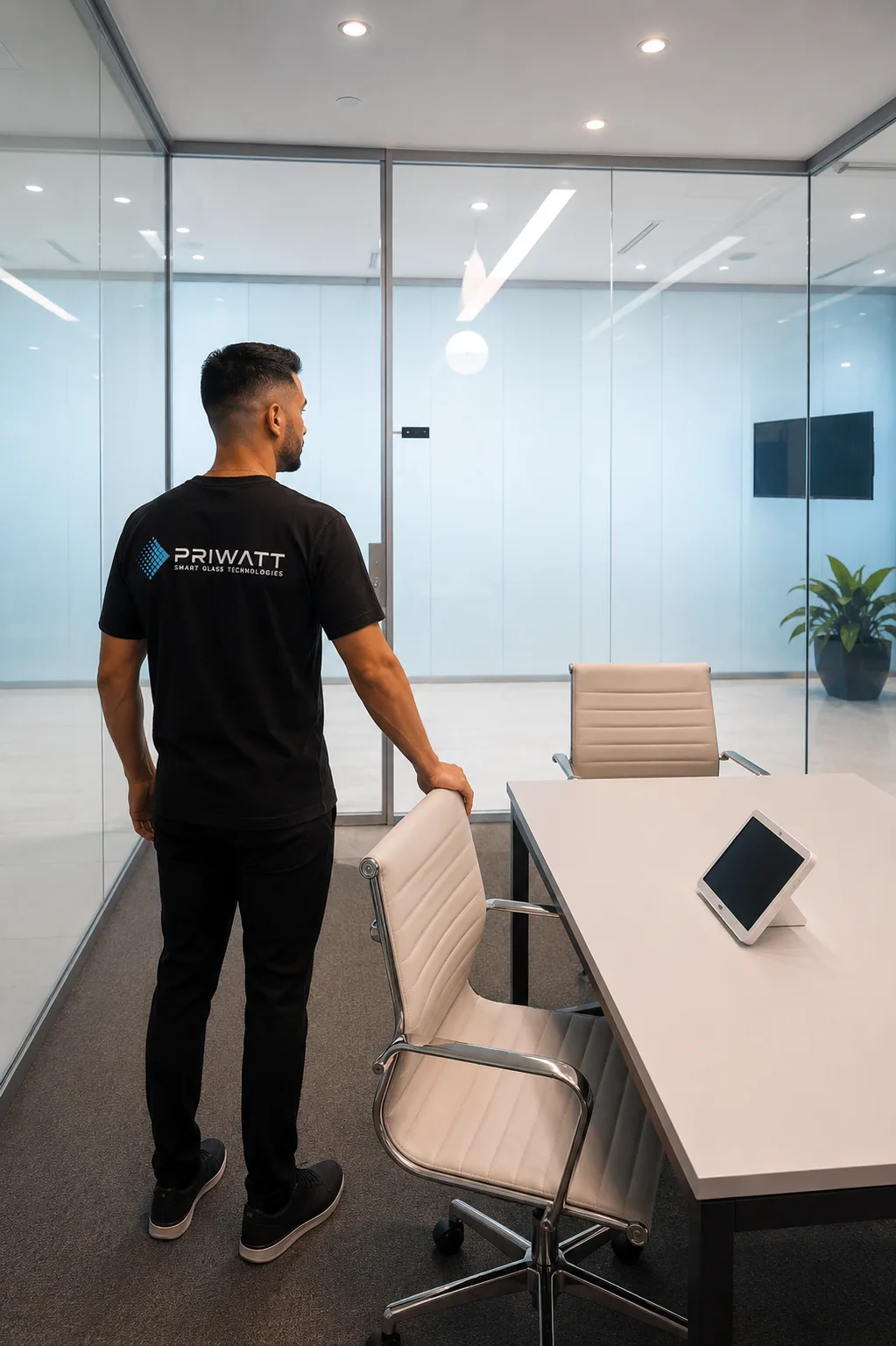
Office partitions
A wall of glass, not one panel: where the joints fall, whether the run switches together, and how a door in the middle is matched to the panels beside it.
Read more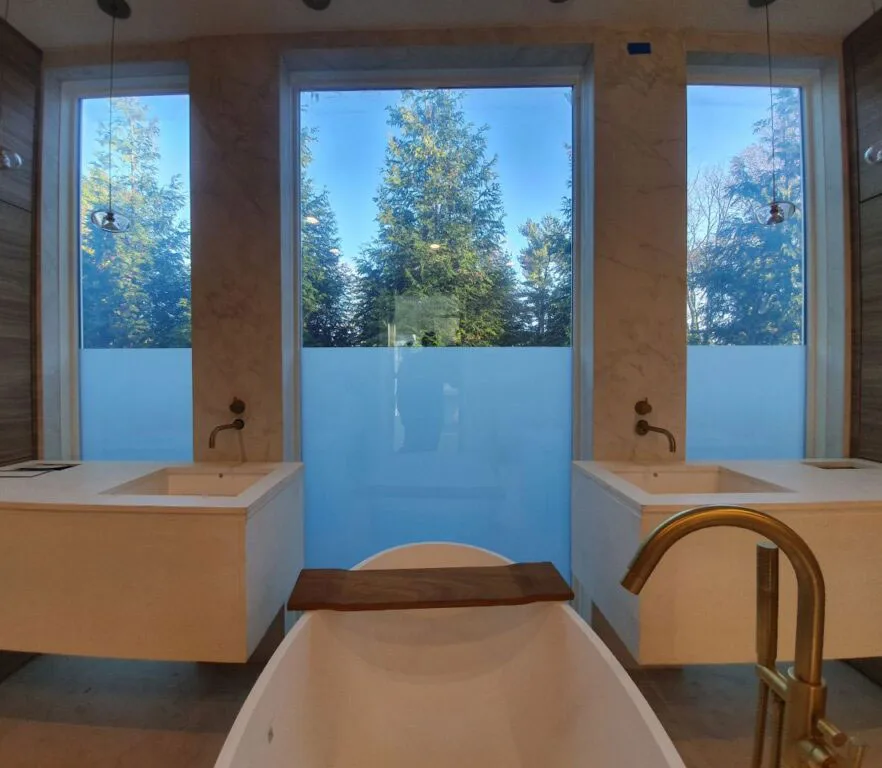
Windows
A window exists to be looked through, so reverse mode is usually the answer. And the honest limit: a switchable window frosts, it does not go dark.
Read more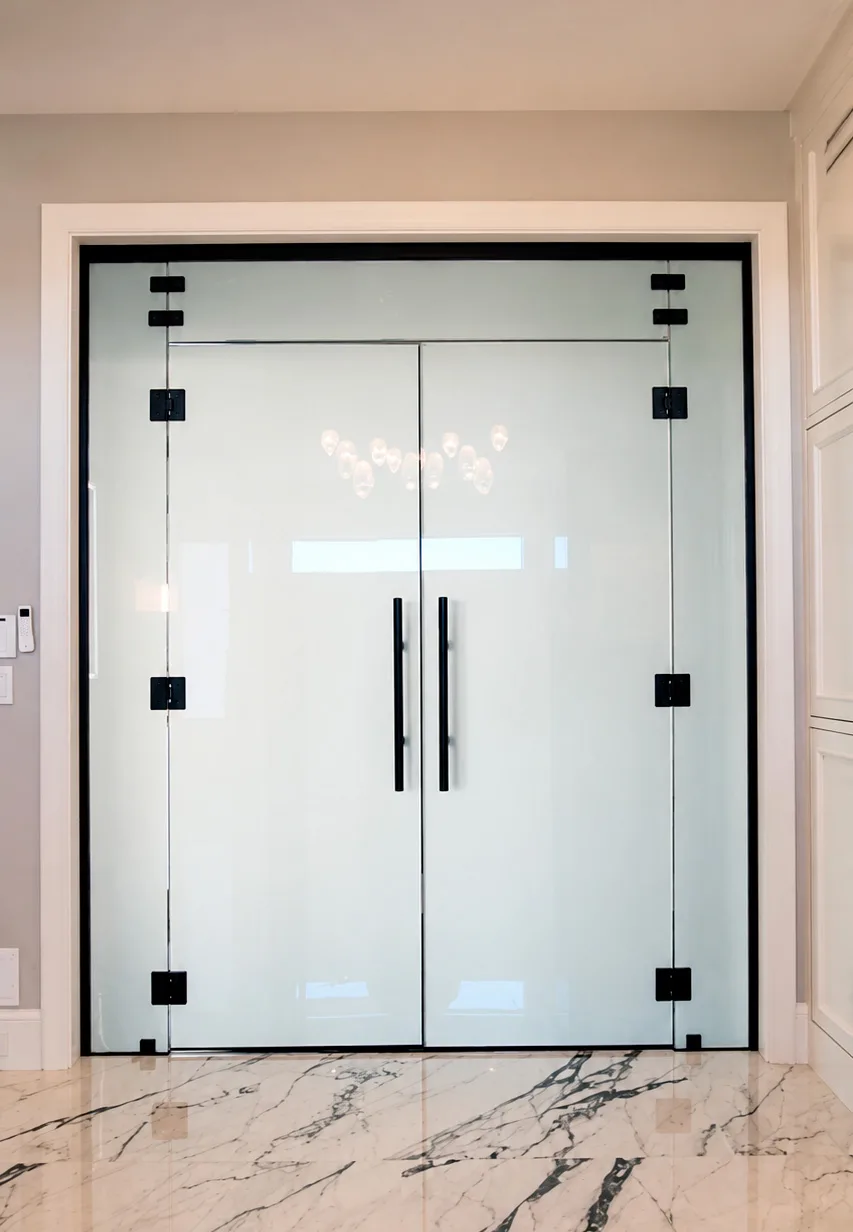
Doors
The one format where the glass moves, so the wiring becomes the detail and not the panel. Internal doors, entrances and glazed leaves in a partition run.
Read more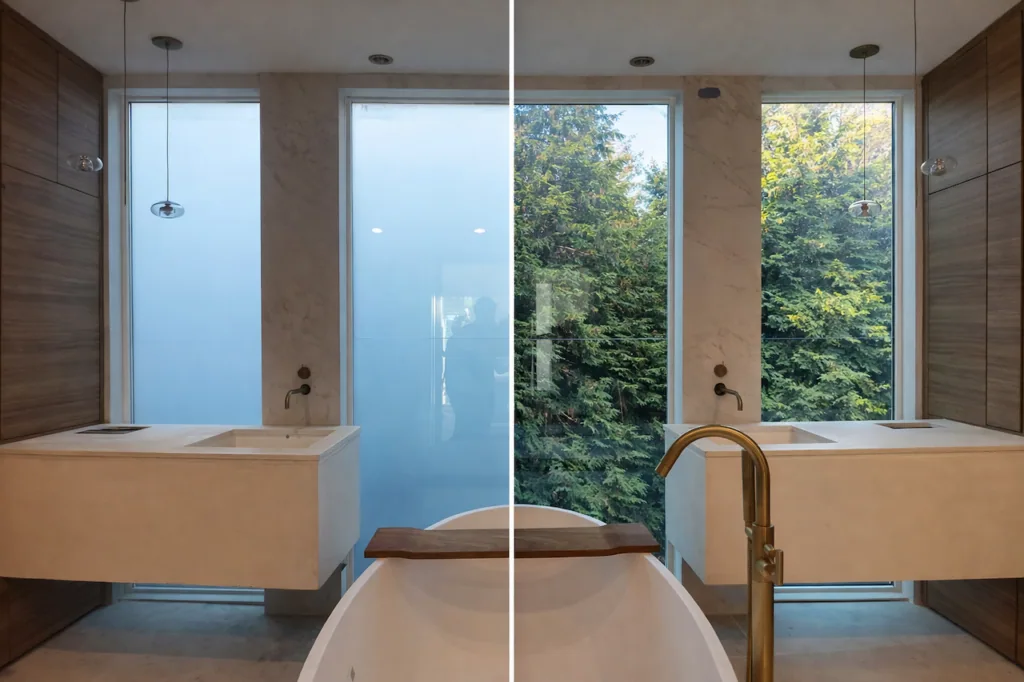
Shower enclosures
The room where the glass is the wall. Normal mode is frosted with no power, so a power cut leaves the enclosure private, the failure state a bathroom wants.
Read more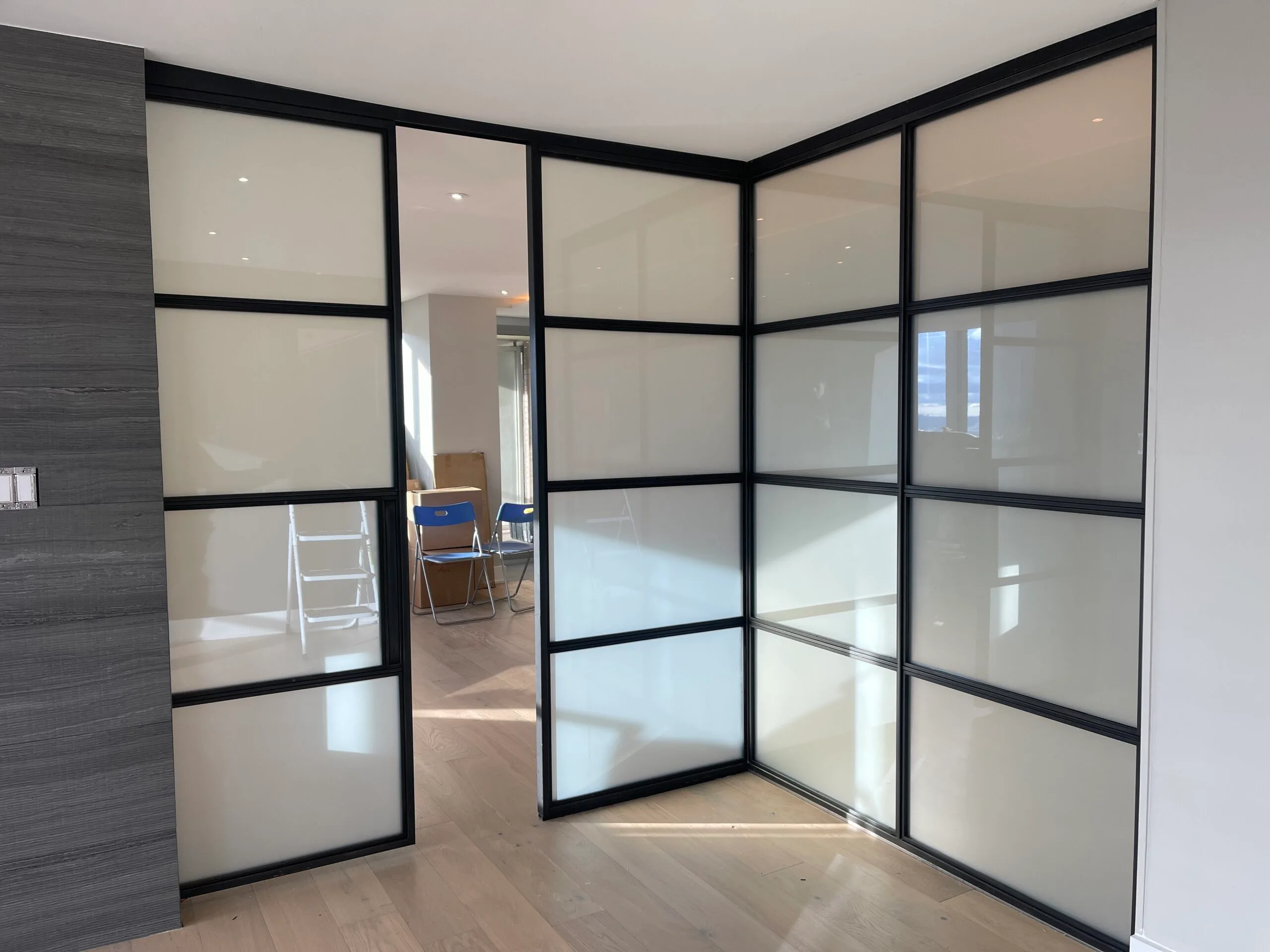
Room dividers
One room, or two. Fixed, sliding, stacking or folding. The question that belongs to this format alone is whether power has to reach a panel that moves.
Read more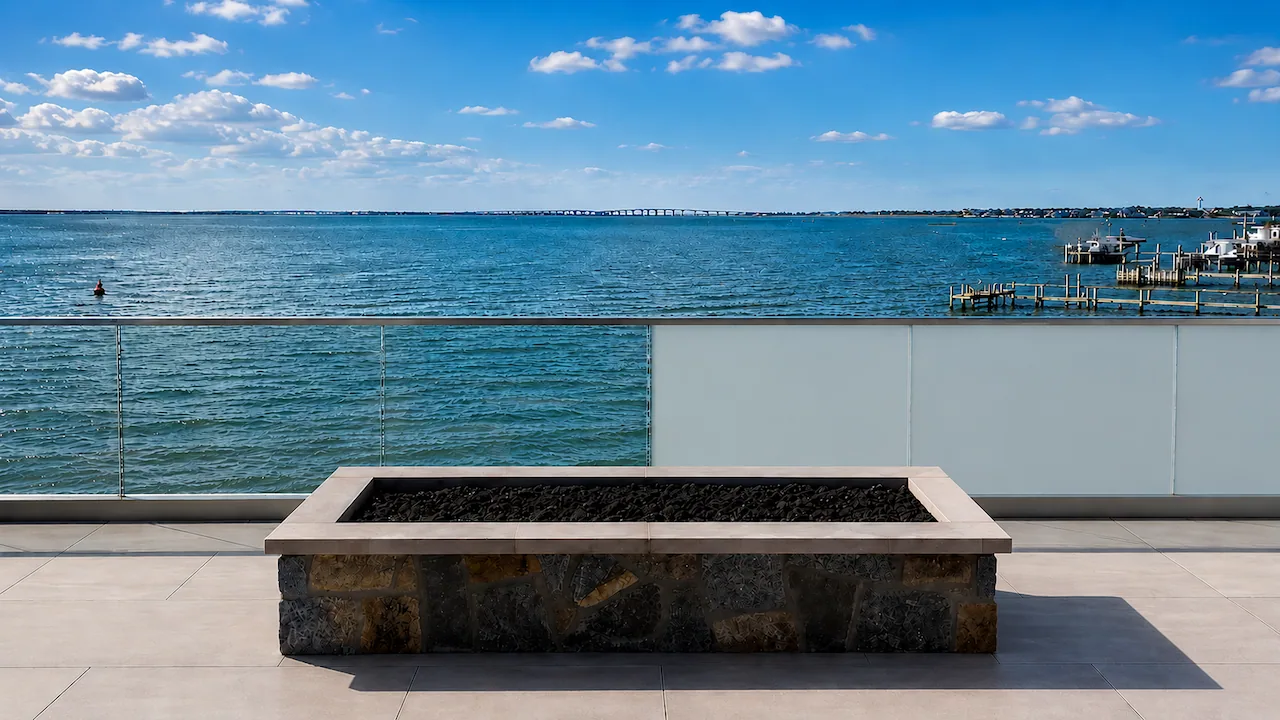
Railings and balustrades
Two projects in service: a New York waterfront terrace and a North Palm Beach pool deck. Reverse mode holds the view with no power drawn, and frosts for the hour it is wanted.
Read more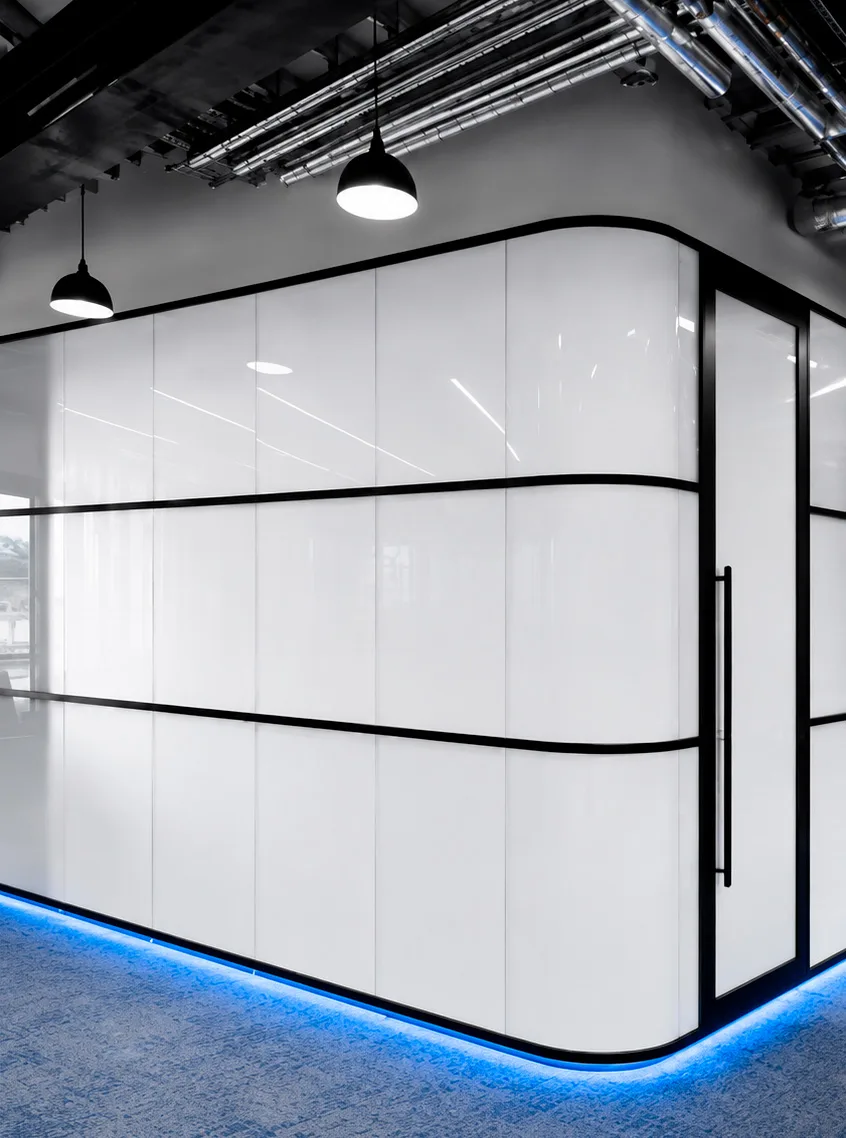
Specialized
Curves, display cases, cleanroom panels, studio sets and rear-projection surfaces. Rarely the shape that makes a project unusual; usually the edge, the movement or the duty cycle.
Read moreSend the opening, not the product code
Sizes, the shapes, whether the glass is already in the building and which state it should hold with no power. That is enough for a price and a lead time. Pompano Beach, Florida; 1-866-PRIWATT (1-866-774-9288).