
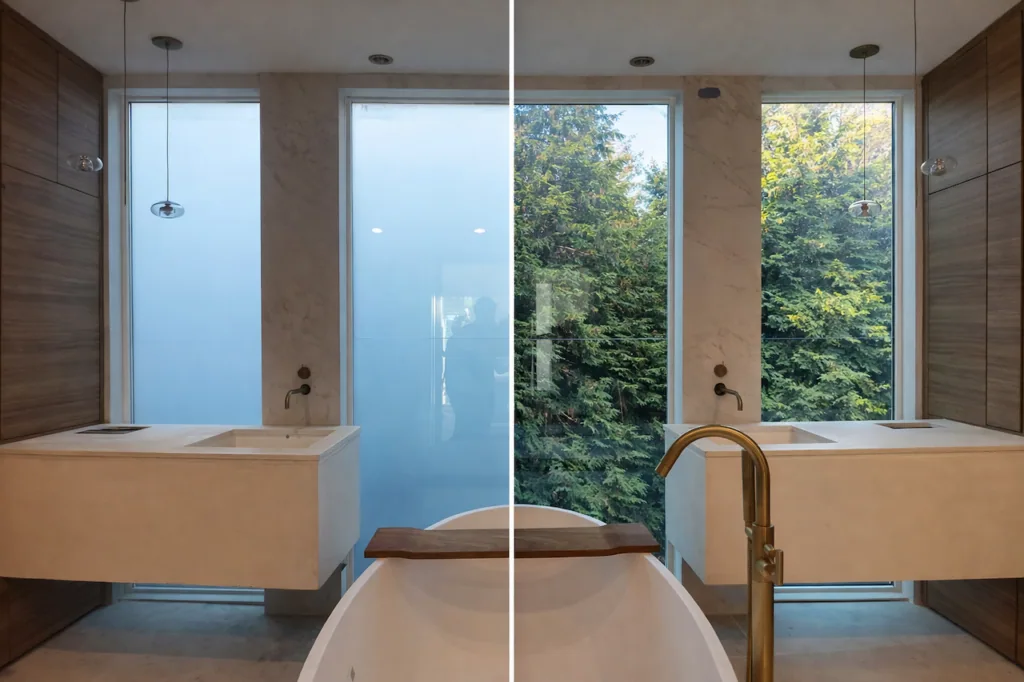
Shower enclosures
The enclosure is private when the power is off
A frameless glass shower is specified for light and for the room it gives back. What it does not give is privacy, and the usual answers (obscured glass, a curtain, a blind that lives in a wet room) undo the reason the glass was clear in the first place.
Switchable glass gives the enclosure both states. And in a bathroom the choice of product is not a preference: normal mode is frosted with no power, so the enclosure is private during a power cut, private if the transformer fails, and private if nobody ever touches the switch.
This is the room reverse mode is wrong for
Reverse mode, clear with no power, is the right answer on a window, a glazed door or a boardroom partition, because those are clear most of the day and the unit then draws power only for the minutes it is private. Run the same logic in a shower and it inverts: the enclosure would be clear every time the power failed.
| PDLC — normal mode | PNLC — reverse mode | |
|---|---|---|
| With no power | Private | Clear |
| In a power cut | Stays private | Goes clear |
| Power drawn in the private state | None | < 0.5 W/sq ft |
| Light transmission, clear | 90% film · 88–91% glass | 90% film · 91% glass |
| Haze in the private state, film | 95% | 94% |
| Parallel light transmission, glass | 80% clear · 7% private | 80% clear · 7% private |
| Suits a shower enclosure | Yes — the default | No |
PDLC is also the cheaper and the more mature of the two. For once the correct specification and the cheaper one are the same specification. The full comparison is on PDLC against PNLC, and every measured value is in the technical reference.
Working on one now? Send the enclosure sizes and which panels are fixed and we will price the panels themselves — a quotation with the schedule, the transformer and the lead time on it. Rate cards do not survive contact with a real opening. Still deciding? Start with twenty minutes with a project specialist.
What a bathroom asks that a partition does not
The edge is a detail, not an assumption
A switchable panel is a laminated assembly, and a laminate edge in a wet enclosure is detailed, not left to the fixings. How the edge is protected, and which edges sit inside the wet zone at all, is agreed on the shop drawing before the panel is made.
Where the wiring leaves
Every panel has a busbar and a tail, and in a bathroom that tail wants to leave at a head or a jamb, not at a sill. The exit is chosen with the enclosure detail, not after it.
The electrical side is a trade
The panel runs at low voltage from an isolation transformer. The supply to that transformer is mains work in a bathroom: a licensed electrician and the local code. It is not a plug-in appliance.
Safety glazing, as everywhere else
A shower enclosure is a hazardous location under the code. The laminated switchable products carry SGCC 9894 and are made from low-iron glass, heat-treated or fully tempered; the certificate is available in full. Film on an existing enclosure is a different question; see below.
A shower panel is nowhere near the limit
PDLC laminated glass is made to 70 × 143 in, and PDLC film to 72 × 143 in. A typical enclosure (a fixed panel and a door, or three sides of a walk-in) sits inside that with room to spare, so the enclosure is divided where the design wants a joint and not where the product forces one.
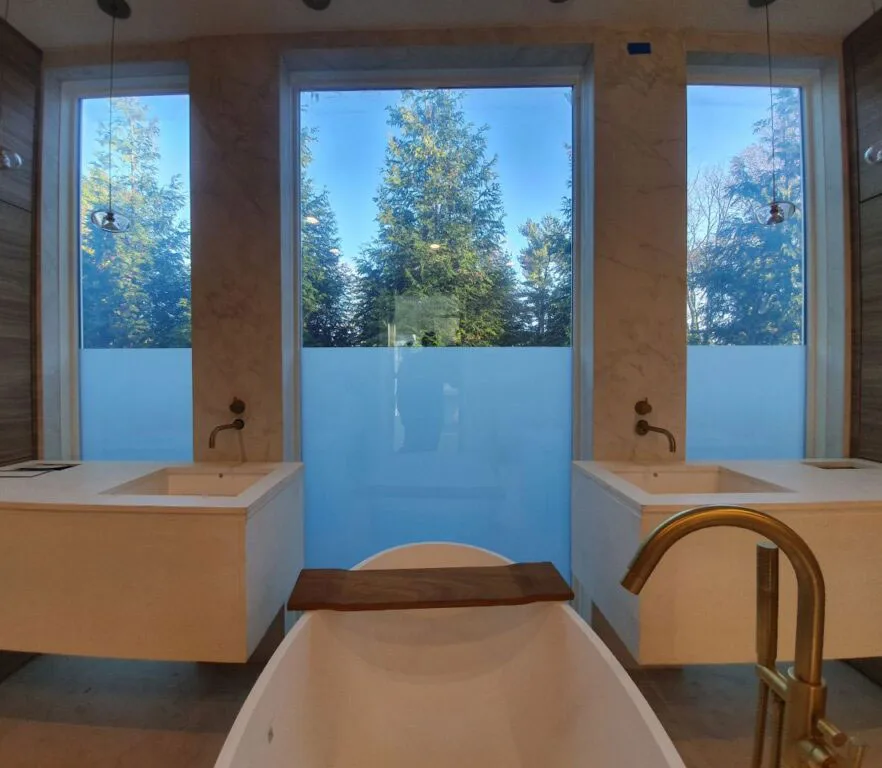
The same product answers the bathroom window, usually the other half of the problem. Film goes onto glazing that is already in the building; laminated glass is made for the opening. Both are covered on the residential page.
A shower is a hazardous location, and film applied to an enclosure that is already there does not change what that glass is certified as. What the certificate covers, and what to check before ordering, is on safety glazing.
Common questions
PDLC is specified for bathrooms and shower enclosures, and normal mode is the right default there because the panel is frosted with no power. The edge of the laminate and the route the wiring takes out of the enclosure both need detailing, and both are agreed at technical review before the panel is fabricated.
Film is applied to existing glazing, so a retrofit is possible where the glass is sound and one face is accessible and dry. Whether film or a new laminated panel is right for a particular enclosure depends on the fixings and on which face the film would sit. Send photographs with the sizes and it is answered directly.
A PDLC enclosure stays frosted. That is the unpowered state of the product, not a battery or a fail-safe circuit. No power at all means the private state, and that is why normal mode is the one specified for bathrooms.
PDLC laminated switchable glass runs from about $145 per square foot and PDLC film from about $65, before the transformer, the control and installation. The ranges and what moves them are set out on the pricing page.
Condensation on a cold glass surface is a property of the bathroom and not of the switchable layer. It behaves as it does on any glazed enclosure: ventilation and heating are what change it. The switchable layer is inside the laminate, so nothing in the frosted state is affected by water on the surface.
Wet rooms in service
A New York home
Bathroom and living spaces on separate circuits: a zoning decision that cannot be added later.
Boca Raton residence
The glaziers took the frames off first, so the film runs past the sightline with no visible edge.
Built from the same six products
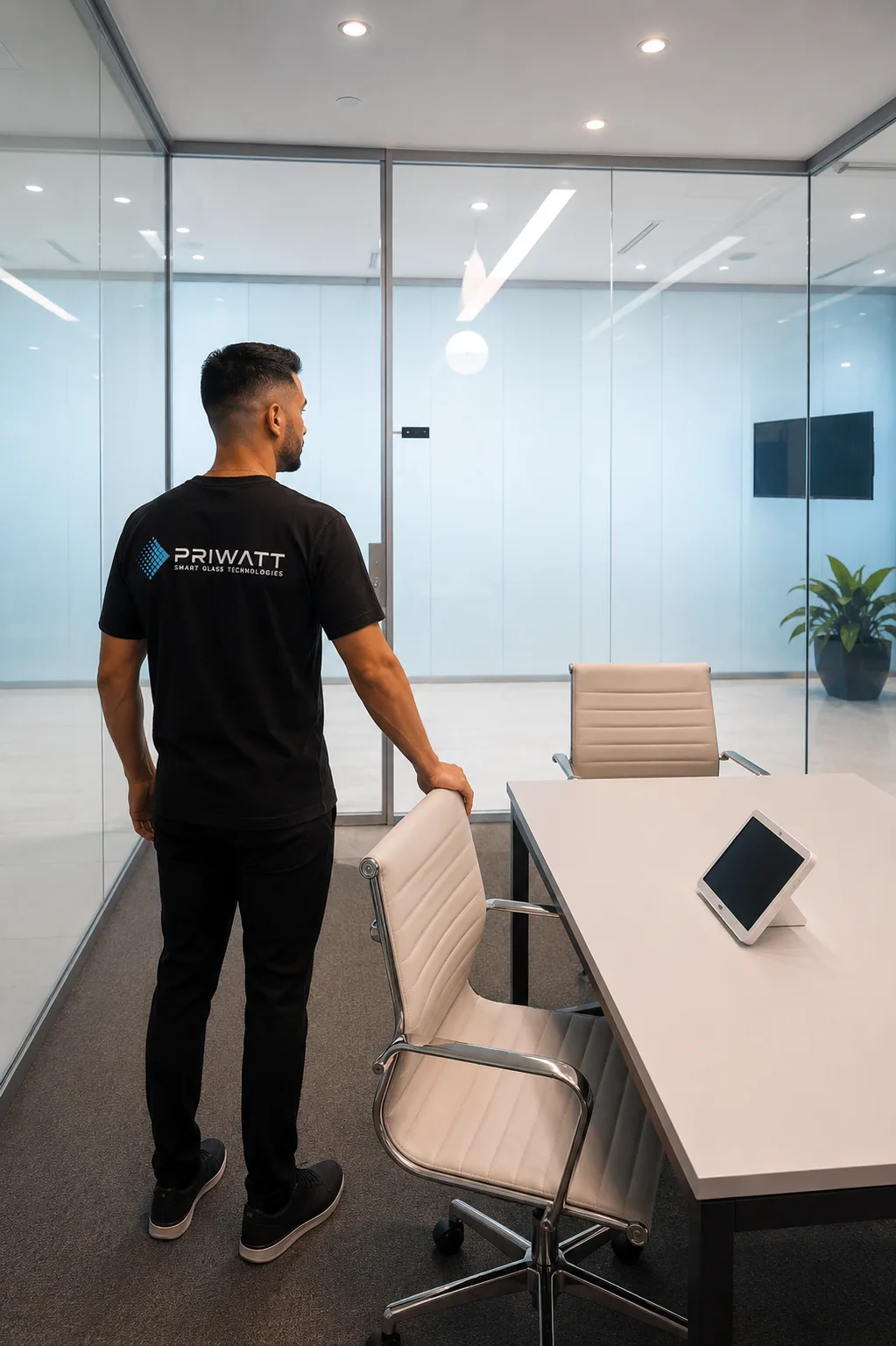
Office partitions
A wall of glass, not one panel: where the joints fall, whether the run switches together, and how a door in the middle is matched to the panels beside it.
Read moreWindows
A window exists to be looked through, so reverse mode is usually the answer. And the honest limit: a switchable window frosts, it does not go dark.
Read more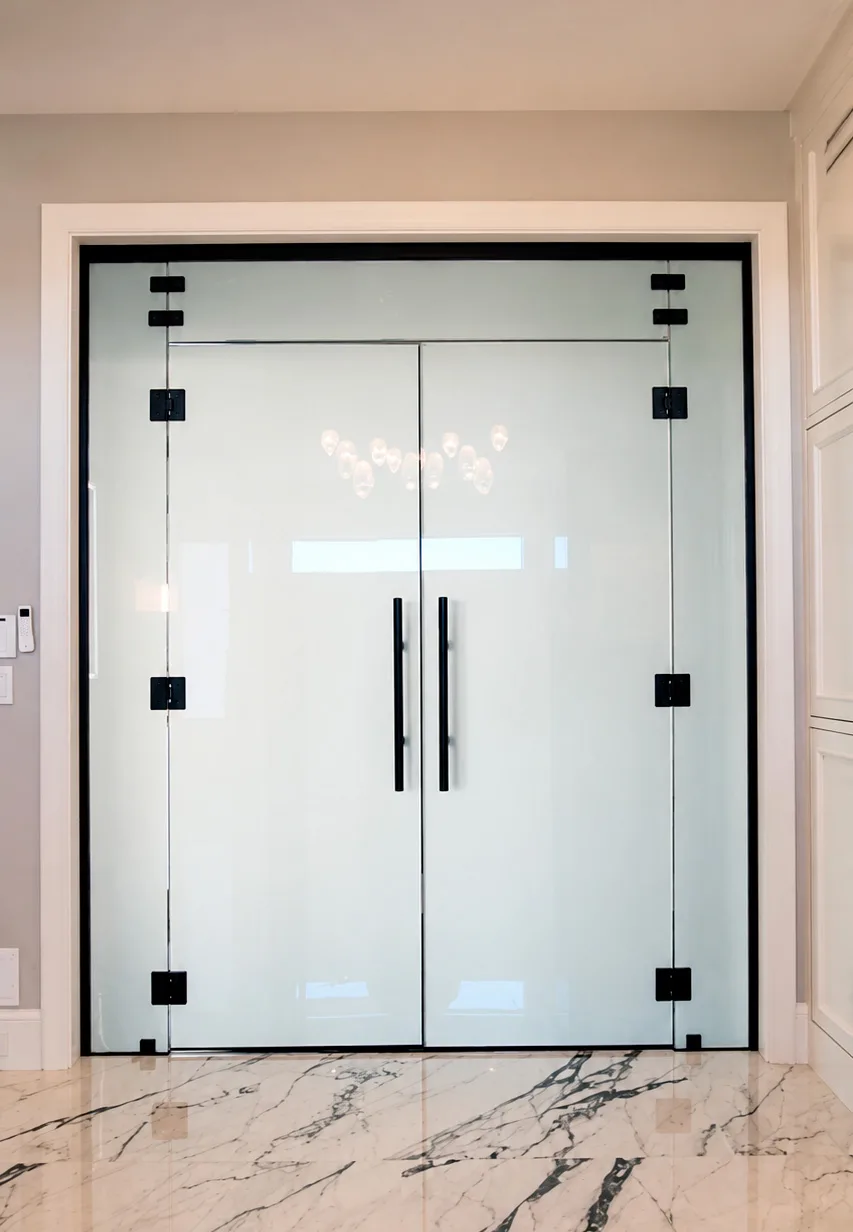
Doors
The one format where the glass moves, so the wiring becomes the detail and not the panel. Internal doors, entrances and glazed leaves in a partition run.
Read more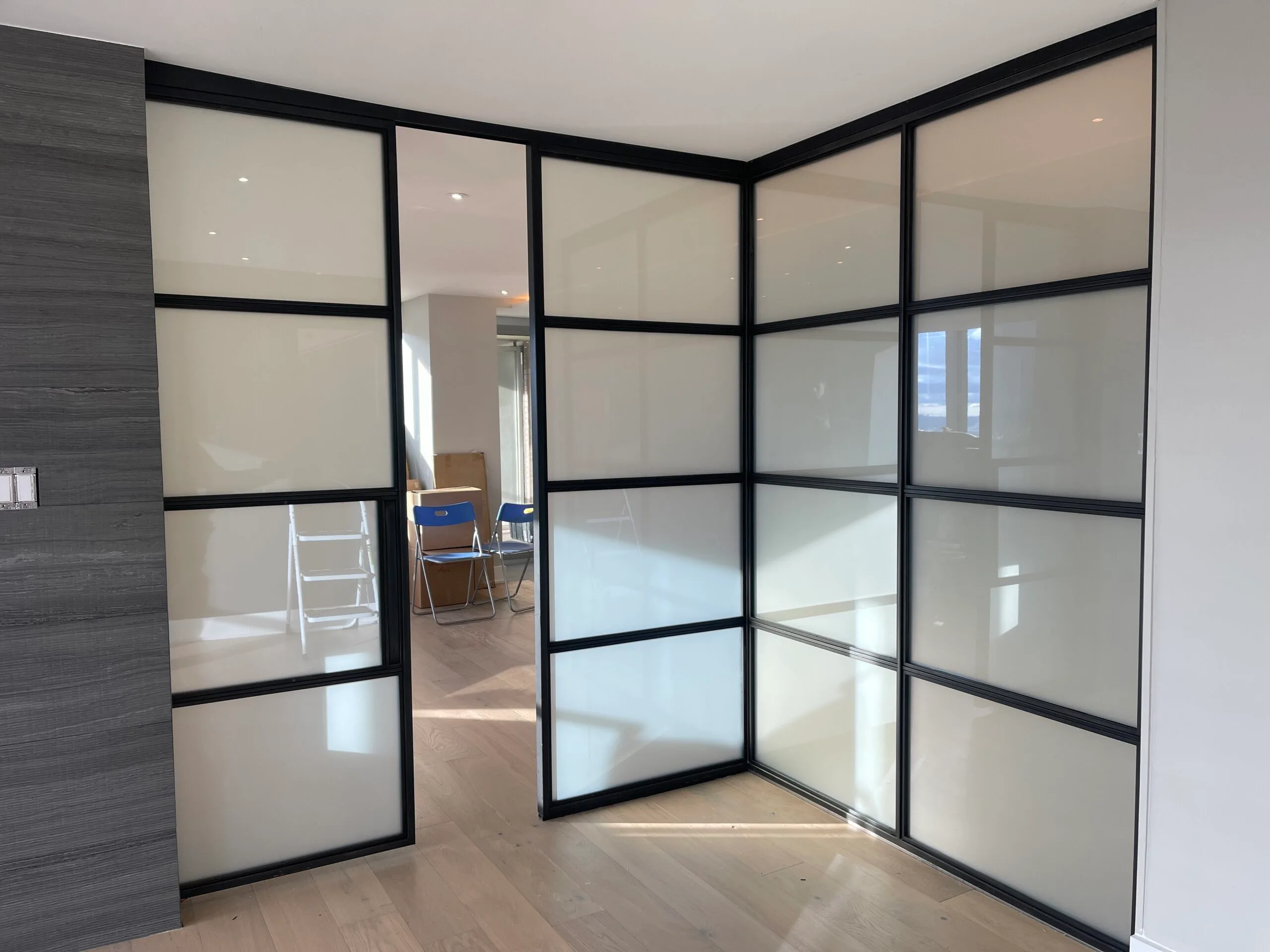
Room dividers
One room, or two. Fixed, sliding, stacking or folding. The question that belongs to this format alone is whether power has to reach a panel that moves.
Read more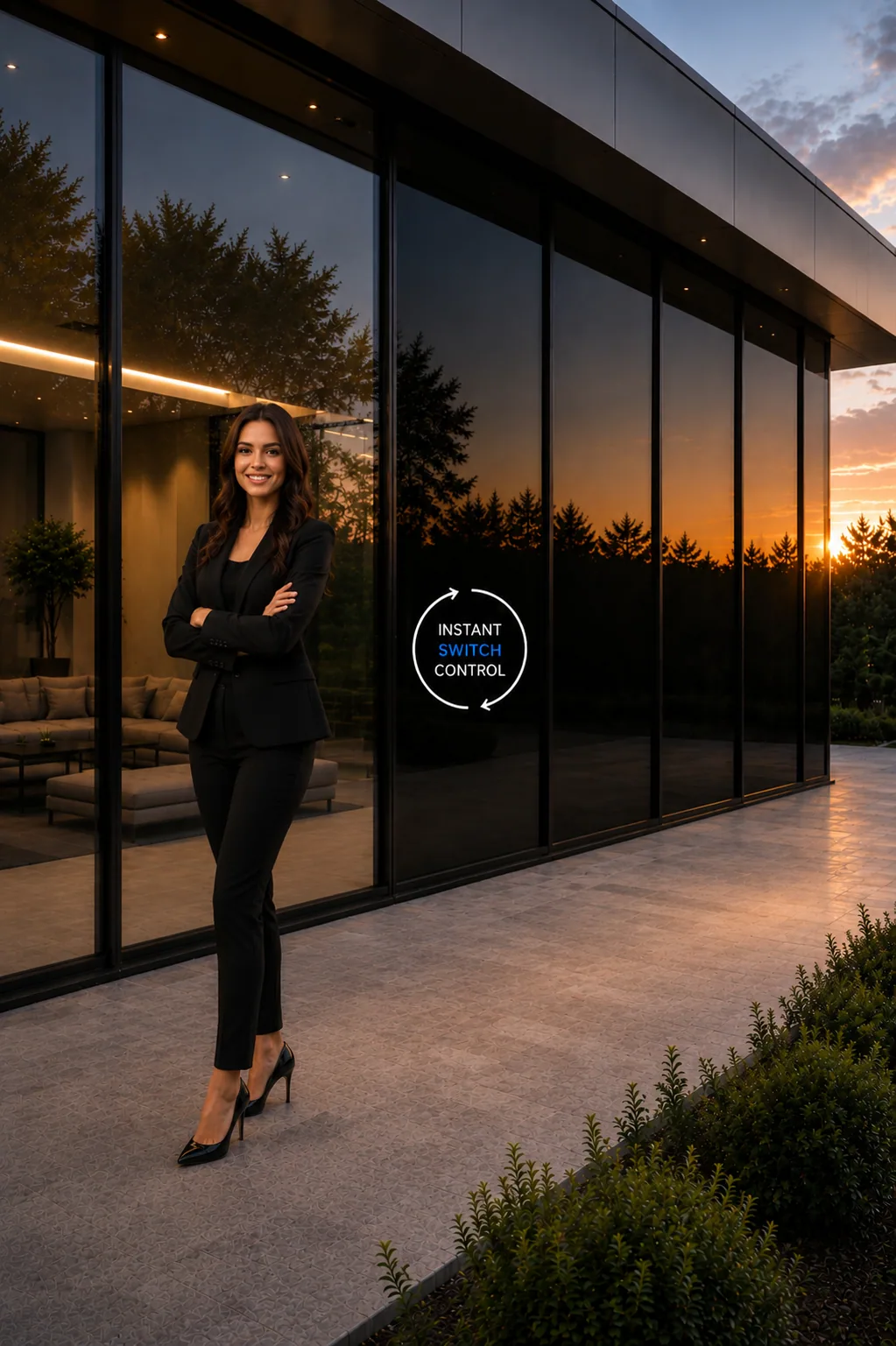
Skylights and overhead glazing
Overhead, the problem is usually the sun, not the neighbours. DLC moves between a tinted transparent state and a deep dark one: glare and solar gain, not privacy.
Read more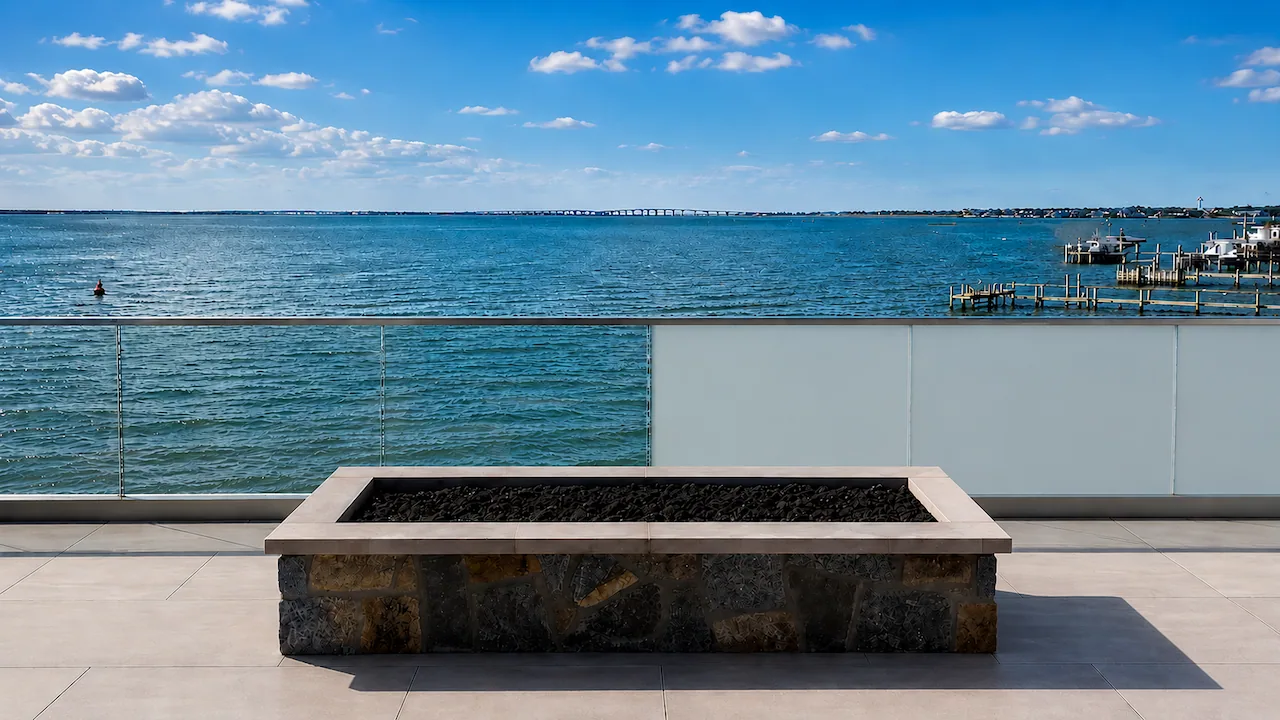
Railings and balustrades
Two projects in service: a New York waterfront terrace and a North Palm Beach pool deck. Reverse mode holds the view with no power drawn, and frosts for the hour it is wanted.
Read more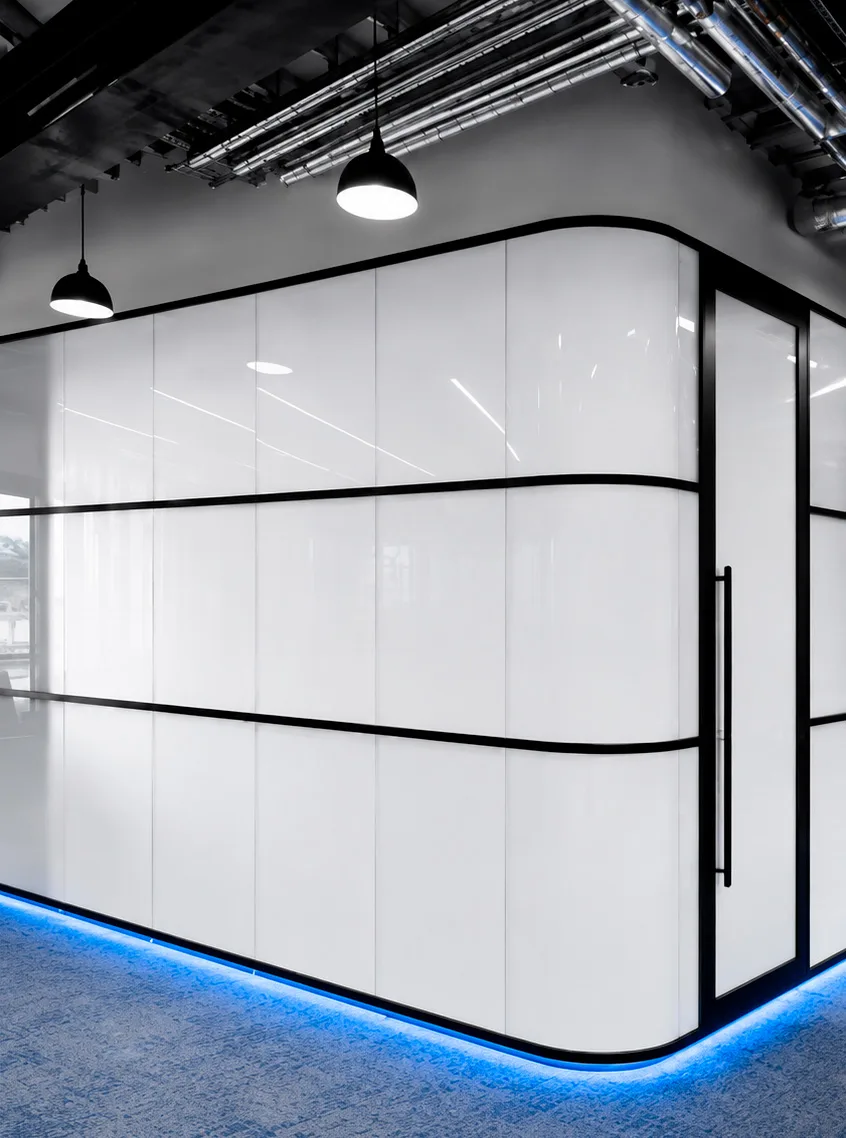
Specialized
Curves, display cases, cleanroom panels, studio sets and rear-projection surfaces. Rarely the shape that makes a project unusual; usually the edge, the movement or the duty cycle.
Read moreSend the opening, not the product code
Sizes, the shapes, whether the glass is already in the building and which state it should hold with no power. That is enough for a price and a lead time. Pompano Beach, Florida; 1-866-PRIWATT (1-866-774-9288).