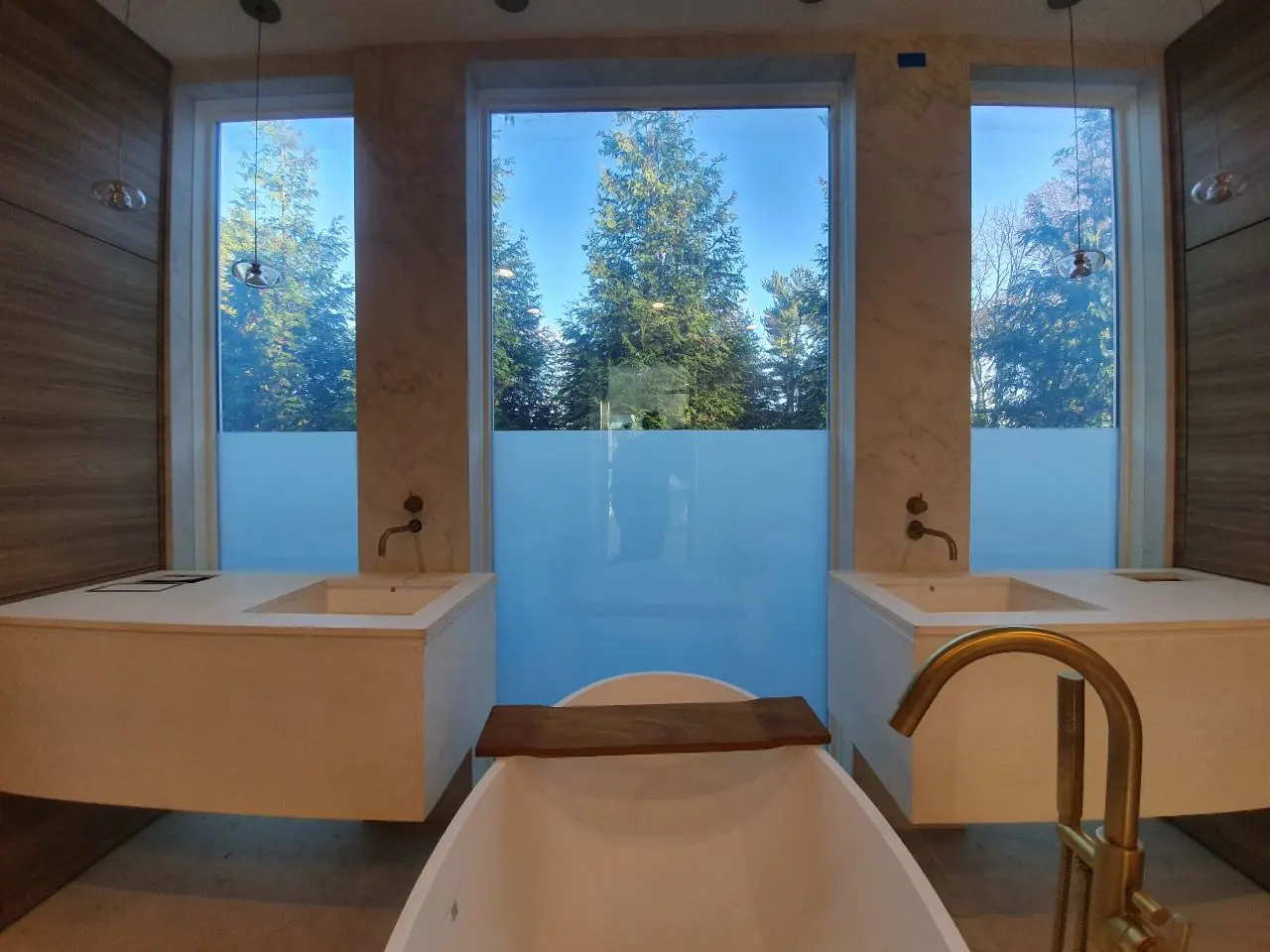
PriWatt film in the bathroom and common areas of a New York home
Two kinds of room, two different requirements
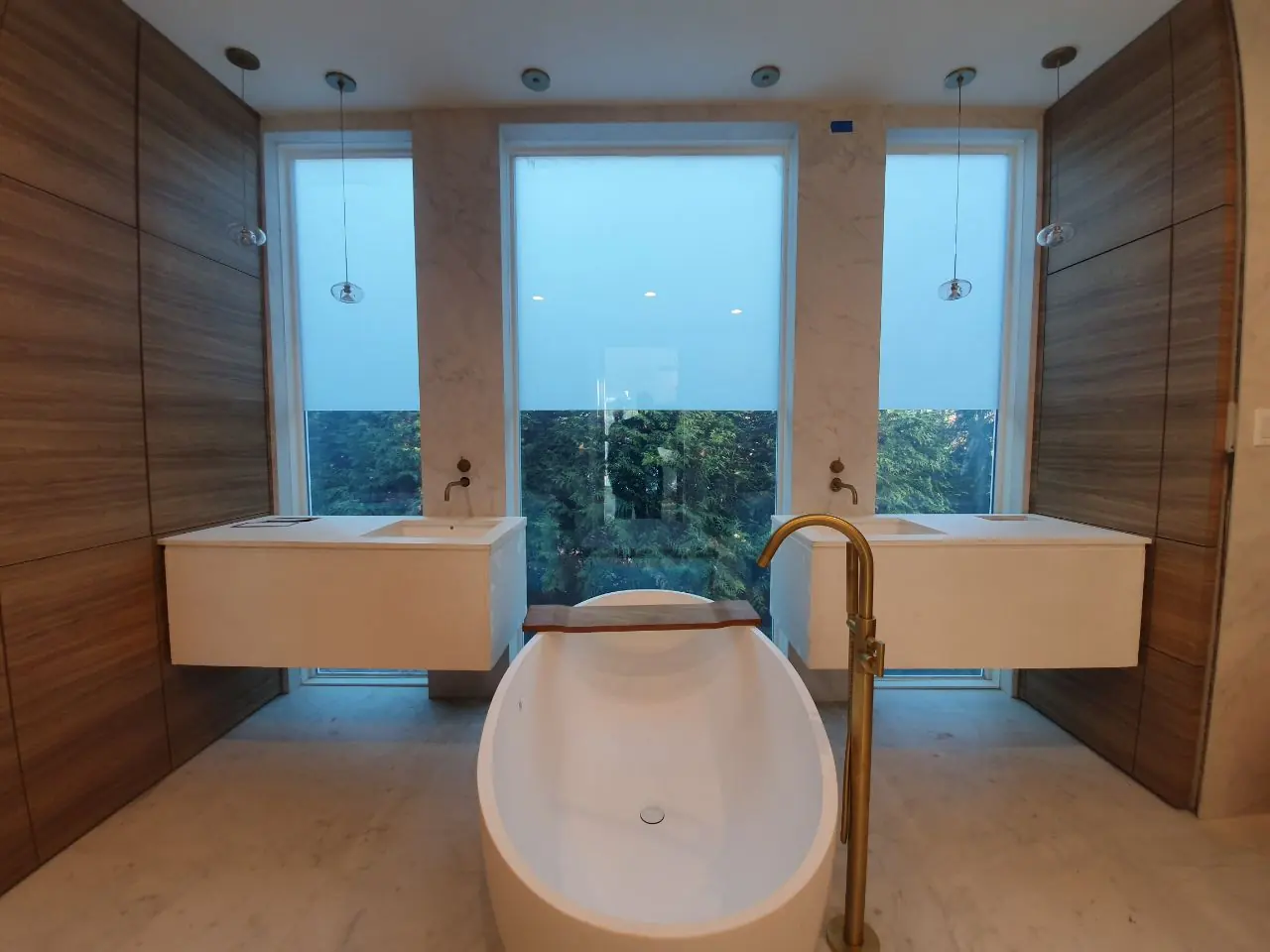
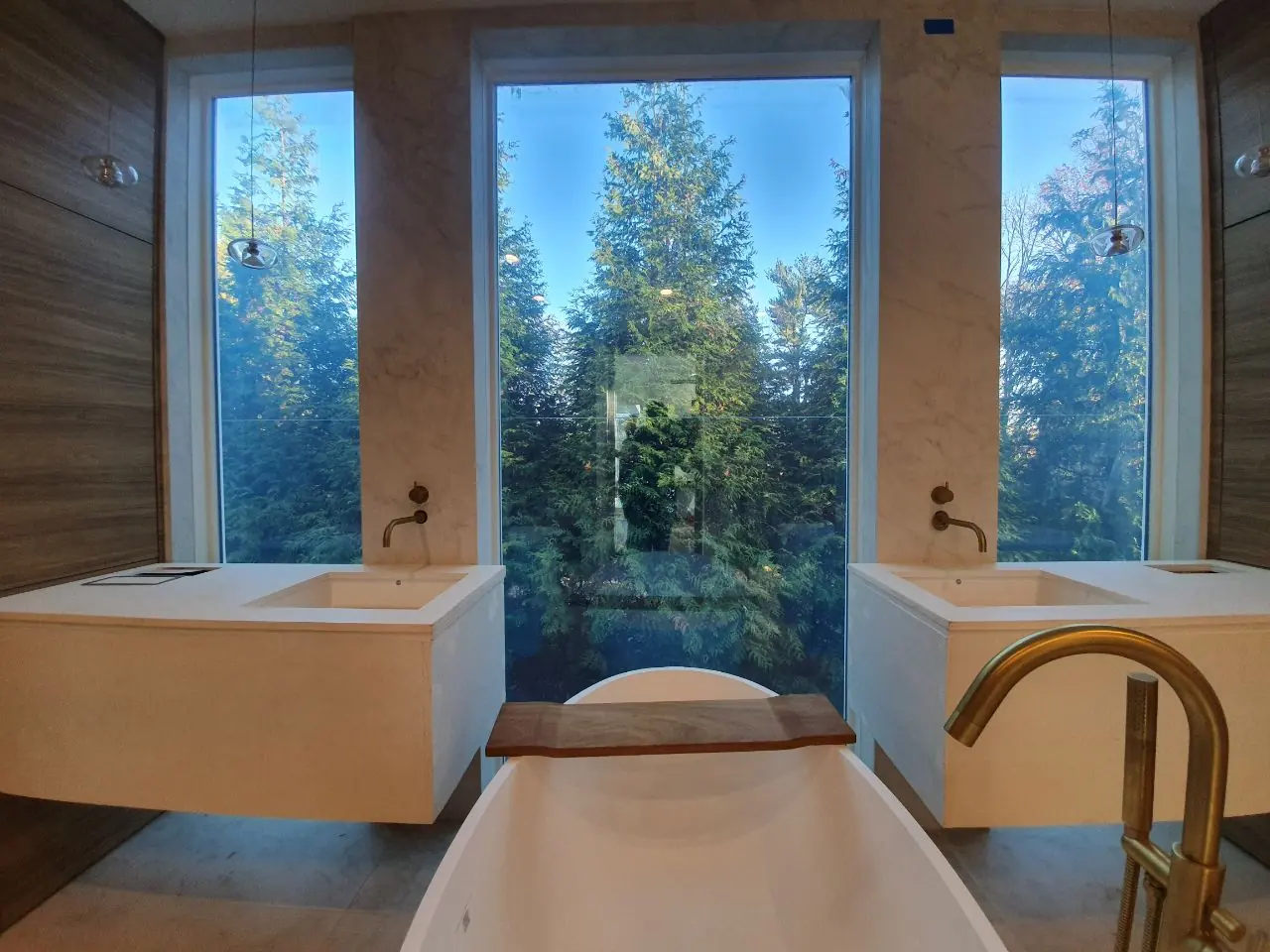
The film here went into a bathroom and into the common living spaces, which sounds like one job and is really two. A bathroom needs privacy that is absolute and intermittent. A living space needs privacy that is partial and situational: a corner closed off, an elevation screened at night, a room divided for an evening.
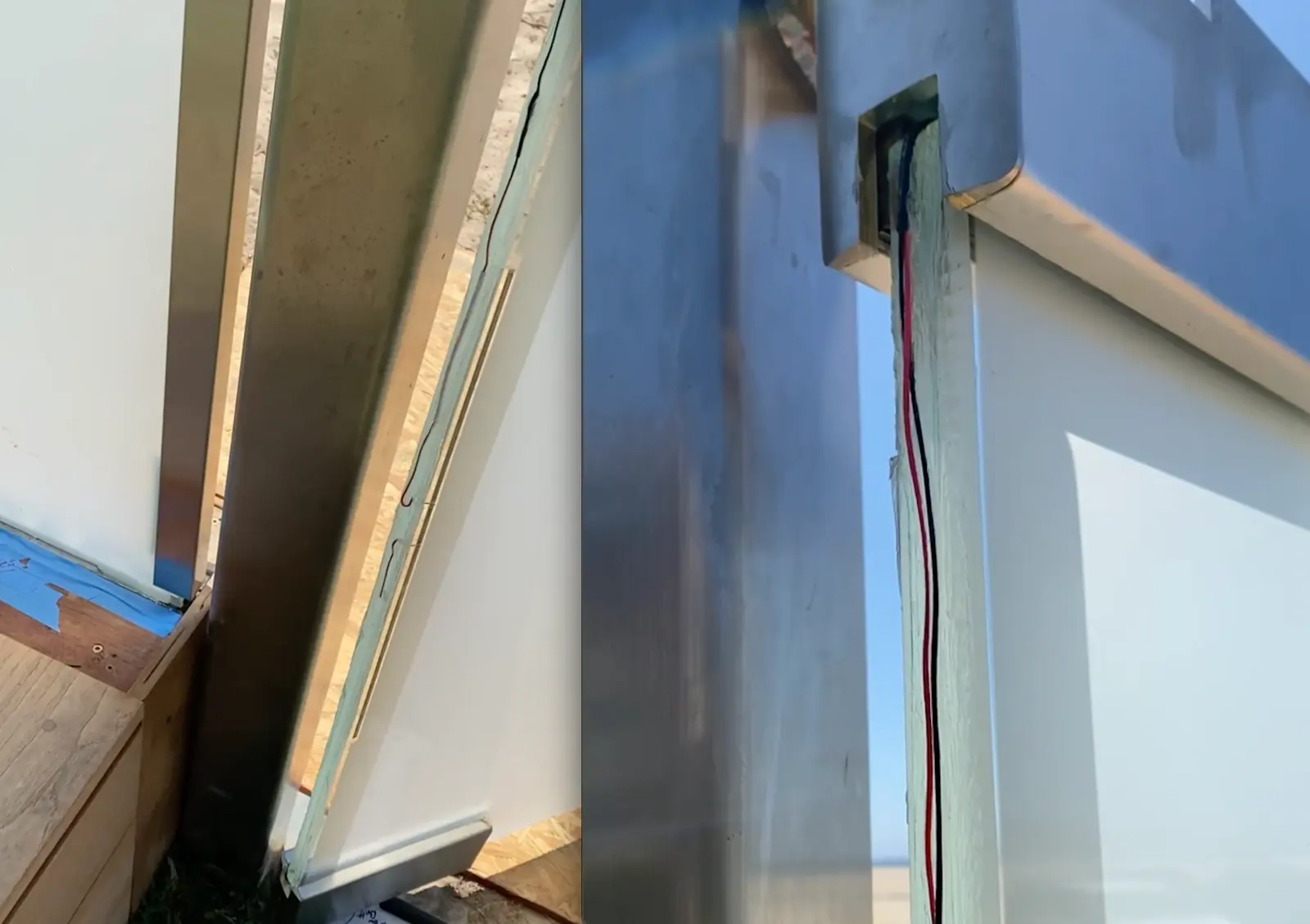
So the installation was wired for several switching options instead of one, so different parts of the glazing are controlled separately.
Zoning, which costs nothing now and cannot be added later
How many circuits a house has is decided while the wiring is being planned and is fixed once the framing is closed. It is the single most common regret on a residential switchable job, and none of it is about the glass.
- One circuit for everything: the cheapest, and the bathroom and the living room switch together
- One per room, usually right, and usually what people meant when they said "a switch"
- One per elevation or per zone, so a corner of a living space closes while the rest stays clear
- Individually per panel: rarely necessary, and worth pricing before dismissing on a room with a distinct view out of one pane
The transformer follows from that, not the other way round: a unit is sized to the area on its circuit, so the zoning decision determines how many units there are and where they live. See isolation transformers.
Applied film, or laminated between two panes
Most of this site describes PriWatt film as a self-adhesive layer applied to glass that already exists. It is also made in a non-adhesive form, laminated between two panes of low-iron glass at manufacture: the switchable layer sealed inside a unit, not stuck to the face of one.
| Applied film | Laminated between two panes | |
|---|---|---|
| Where it goes | Onto glass already installed | Into a panel being made |
| The edge | A sealed perimeter on the face of the pane | Inside the laminate, protected by construction |
| Water | Fine beside a shower; the edge is the vulnerable part | The right answer inside an enclosure, where the panel is wet by design |
| When to choose it | The glazing is staying | The glazing is being made or replaced |
The distinction matters most in exactly the room this project involved. A bathroom window is humid and applied film is right for it. The inside of a shower enclosure is wet, and that is a laminated panel. See shower and wet rooms.
The state each room should hold
In a house the answer differs room by room, and that is the argument for deciding it room by room instead of buying one product for the whole job.
A bathroom should be private with no power, which is normal mode, so an outage closes it. A living space should almost always be clear with no power, because that is how the room was designed to look and because the glass draws nothing for the ninety per cent of the week nobody touches it; that is reverse mode.
Both are made as film and as laminated glass, and a house can have both. What it cannot have is the decision changed after the wiring is in.
Specified on this project
PriWatt PDLC switchable film
Self-adhesive film applied to glass already in the building. Private unpowered, clear when switched.
Residential
Bathrooms, glazed stairwells, terraces and railings.
Shower and wet rooms
Where the edge detail is the specification.
A project like this one
A home where different rooms want different answers, and the wiring has to be planned for that before anything is applied. PriWatt manufactures in Pompano Beach, Florida. Every quote is worked from the project’s own drawings, so send dimensions. A photograph with the sizes written on it does the same job. Earlier than that, book the call.