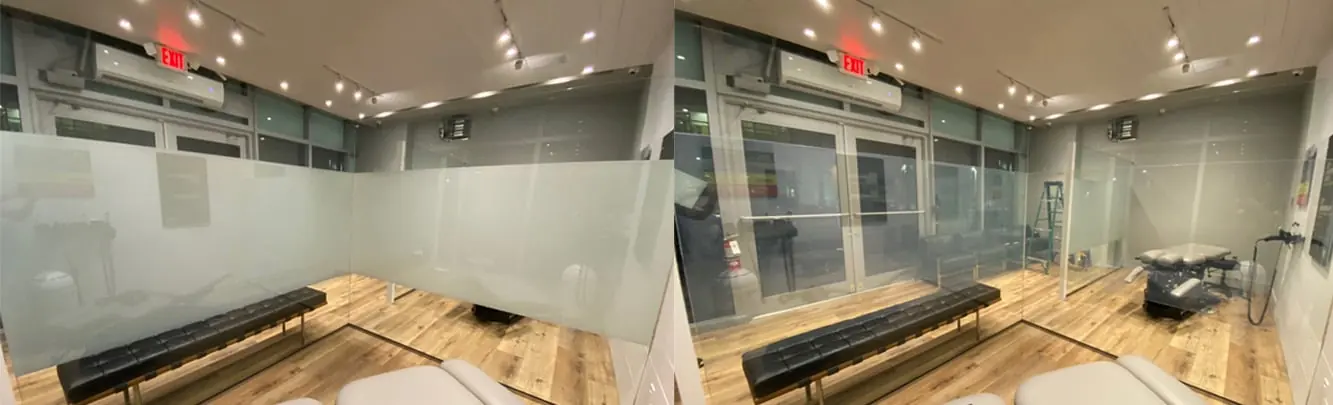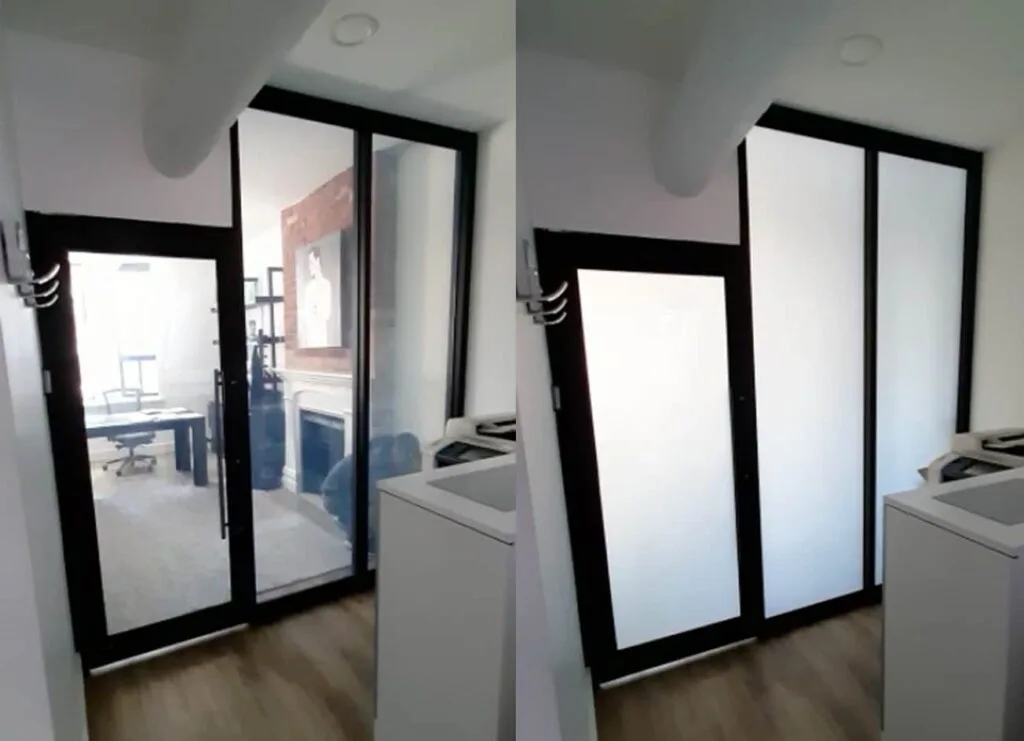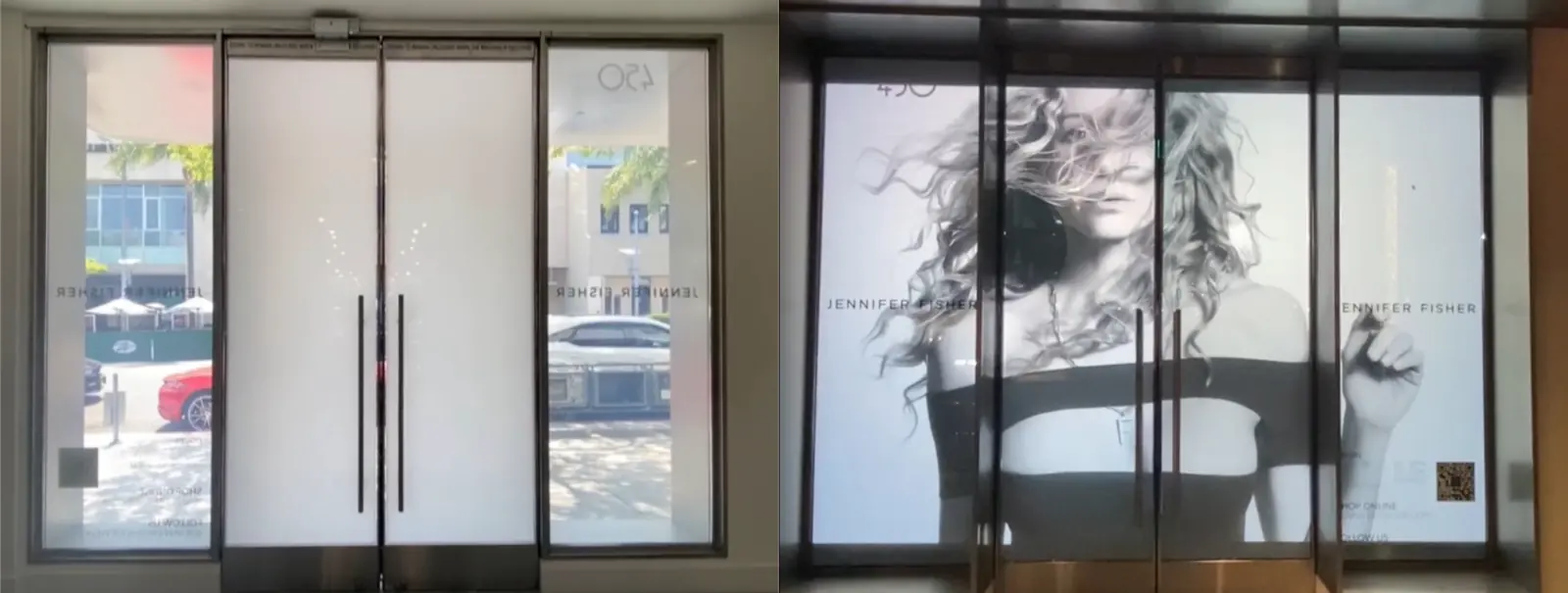
PriWatt film in the offices of Alderfer Glass, New Jersey
The customer here sells glass for a living
Alderfer Glass is a glazing company. It handles, cuts, fits and warranties glass every working day, it knows what fails and it has no reason to be impressed by a product description.
It put 350 square feet of PriWatt film into its own meeting rooms and offices. That is worth more as evidence than most of the projects on this site, and the only kind nobody can write copy about.
What a glazier is actually judging
Not the switching; everyone’s switches. The questions a glass company asks about a switchable product are the ones that decide whether they would put their own name on it in front of a customer.
- What happens at the busbar over time, because that edge is where switchable products fail: patchy switching first, then none
- Whether the film goes on cleanly to a real pane, in a real frame, with the imperfections real glass has
- What the warranty says and who administers it, since the glazier is the one the client calls
- Whether the low-voltage side is somebody’s defined scope or a gap between trades
- What a replacement looks like in five years: one panel, or the run
Those are the same questions the pricing page says separate a cheap quotation from a comparable one, and the two to ask any supplier are on it: what is your UL file number, and how is the busbar anchored.
The meeting rooms double as the screen
The panels are used for projection as well as privacy, which in a glazing company’s meeting room means drawings and elevations at full size on the wall the room is made of.
It is the same property doing both jobs. A switched PDLC panel scatters light from randomly aligned liquid-crystal droplets instead of blocking it: 94–95% haze, measured, and that is what a rear-projection screen is. Nothing is dropped from the ceiling and nothing is stored anywhere. How it is set up, and what ambient light does to it, is on rear-projection surfaces.
Privacy
Under 200 ms from clear to private, at a switch, with the room still daylit.
Projection
The same private state is the screen. Rear projection works in a room with moderate ambient light, and that is what a meeting room has.
One surface
No screen to unroll, no whiteboard on the wall, and nothing to specify twice for a room that already has a glass wall in it.
For glaziers reading this
This is how most PriWatt work reaches a building, and it does not require becoming a specialist in it. A laminated switchable panel is glazed like any other laminated panel; film is applied to a pane you have already fitted. Added to that: a low-voltage connection, a transformer, and a drawing that says where the tail leaves each panel.
The terms, the training and what is supplied with a panel are on installers and glaziers. The tracks are separated because a glazier, a fabricator and a window manufacturer each need a different first answer.
Specified on this project
PriWatt PDLC switchable film
Self-adhesive film applied to glass already in the building. Private unpowered, clear when switched.
Offices and boardrooms
Partitions, meeting rooms and executive offices — the application this belongs to.
Rear-projection surfaces
A switched panel is a 94–95% haze diffusing surface, which is what a projection screen is.
A project like this one
A glazing company, a fabricator, or any trade that wants to add switchable panels to what it already installs. PriWatt makes the glass and the film in Pompano Beach, Florida, and quotes every project off its own drawings. Send dimensions, or a photograph with the sizes written on it. No drawings yet? Take the call instead.