Rear-projection surfaces
In its private state, the glass is a projection screen
A switchable panel does not go dark when it is switched private. It scatters light, at 94 to 95 per cent haze while transmitting most of what falls on it. That is the physical description of a diffusing screen. Put a projector on the far side and the partition that gives a meeting room its privacy is the surface it presents onto.
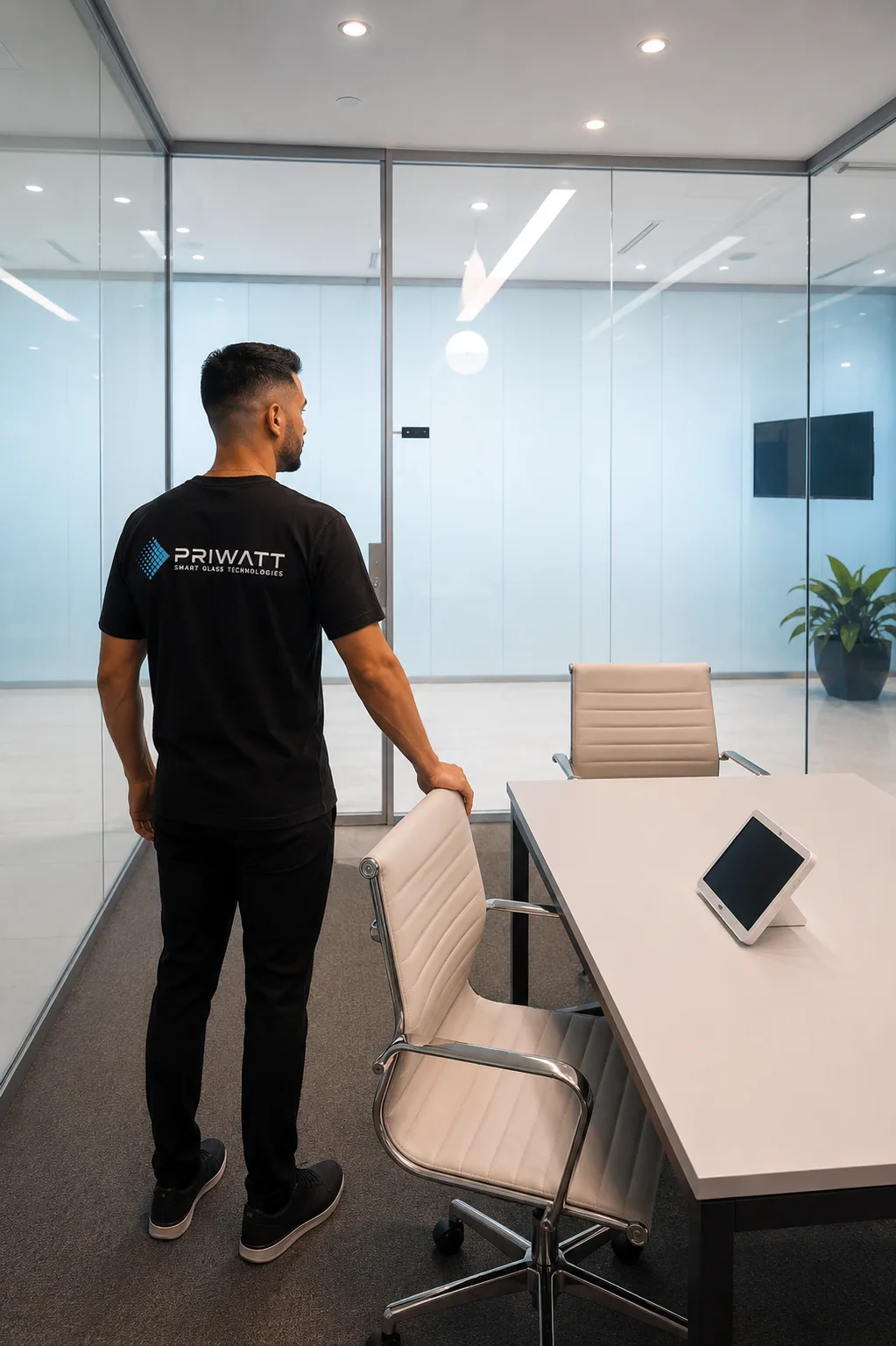
At the Berkley Group in Toronto that is exactly how the glass is used: privacy on demand in the meeting rooms, and the same panel as a whiteboard and a rear-projection surface. Its polarising behaviour lifts contrast enough to project in daylight with moderate ambient light in the room.
The haze figure is the specification
Rear projection needs a surface that scatters the image evenly and does not simply pass it through. That is what a switched PDLC or PNLC panel is:
| PDLC | PNLC (reverse) | |
|---|---|---|
| Haze, private state — the screen | 95% film | 94% film |
| Haze, clear state | 2.4% film | 3% film |
| Parallel light transmission, glass | 80% clear · 7% private | 80% clear · 7% private |
| State with no power | Private — a screen at rest | Clear — a window at rest |
| Time to become a screen | < 200 ms | < 5 ms |
| Time to clear again | < 10 ms | < 150 ms |
| Maximum panel | 70 × 143 in glass · 72 × 143 in film | 57 × 143 in |
A single panel of PDLC glass is 5 ft 10 in by 11 ft 11 in. That is a projection surface larger than most rooms have wall for, in a partition that was going to be there anyway. Nothing to unroll, nothing to lower, no frame around it.
Have a project open? Send the panel size and where the projector can go. A quotation comes back as a panel schedule with a transformer and a date, priced on the panels you actually need. Nothing drawn yet? Book twenty minutes with a project specialist.
What it is, and what it is not
It is a surface, not a display
There is no electronics in the glass and no image in the panel. The picture comes from a projector behind it, and the glass does what a rear-projection screen does: scatter it evenly towards the room.
The projector has to be behind it
Rear projection means the throw is on the far side of the glass, so the room behind the partition has to give up the depth the projector needs. Front projection onto a switched panel is a different proposition and a worse one.
Ambient light still matters
The Toronto installation projects in daylight with moderate ambient light in the room. That is a real working condition and not a darkened one, but a bright south-facing wall is still a bright wall, so the lighting design belongs in the conversation.
The panel is doing two jobs
That is the argument. The privacy specification pays for the partition; the projection surface, the whiteboard and the absence of a screen in the ceiling come with it.
Which mode, for a room that presents
Both modes make the same screen. They differ in the state the room sits in when nothing is switched, and that is decided by how the room is used the rest of the week.
A presentation room — PDLC
Frosted with no power, so the screen is the resting state and the glass clears for the times the room is open to the floor. It is also the cheaper product and the larger panel.
A glazed meeting room — PNLC
Clear with no power, and that is what an open-plan office wants for most of the working day. It becomes a screen in under 5 ms, and draws power only while the meeting is on.
Either way, one control
Wall switch, remote or the building system. A room that presents usually wants the partition on the same control as the projector, an integration decided with the AV contractor.
Common questions
Onto the private state, from behind. A switched panel is a diffusing surface at 94 to 95 per cent haze. That is a rear-projection screen. PriWatt has it in service at the Berkley Group in Toronto, where the partition is used as a whiteboard and a projection surface as well as for privacy.
The Toronto installation projects in daylight with moderate ambient light, helped by the polarising behaviour of the panel, and that lifts contrast. It is not a darkened-room requirement, but ambient light and projector brightness still decide how good the image is and belong in the design.
A screen. There is no electronics in the glass and no image in the panel. The picture comes from a projector on the far side and the glass scatters it evenly towards the room.
It is used as one in Toronto. The switched panel is a flat, light, diffusing surface, and dry-erase marker behaves on glass the way it does on any glass board.
One panel of PDLC glass reaches 70 × 143 in, or 5 ft 10 in by 11 ft 11 in. Larger surfaces are made from several panels, and where the joints fall is a design decision worth making before the projector is positioned.
Where this already exists
The Berkley Group, Toronto
Privacy on demand, a whiteboard and a rear-projection surface in the same partition, with an acoustic rating of Rw 35–36 dB.
Offices and boardrooms
The application page: what changes between a meeting room, a private office and an open floor.
Film and television
Studios and sets, where the panel is switched on camera, not for privacy.
Projected onto, in service
Ferrari Purosangue launch
PDLC glass used as a projection surface before switching transparent to reveal the Ferrari Purosangue.
A private home cinema
600 sq. ft. of PDLC film installed across a private home cinema, with a detailed look at the installation process.
Miami Dade College
205 sq. ft. of PDLC glass powered by a single 300 W transformer, combining classroom privacy with projection capability.
Alderfer Glass
A glazing company that specified it for its own offices. A different kind of evidence.
Fubar, Netflix
A screen credit, and why a switchable wall reads the way it does on camera.
Built from the same six products
Office partitions
A wall of glass, not one panel: where the joints fall, whether the run switches together, and how a door in the middle is matched to the panels beside it.
Read more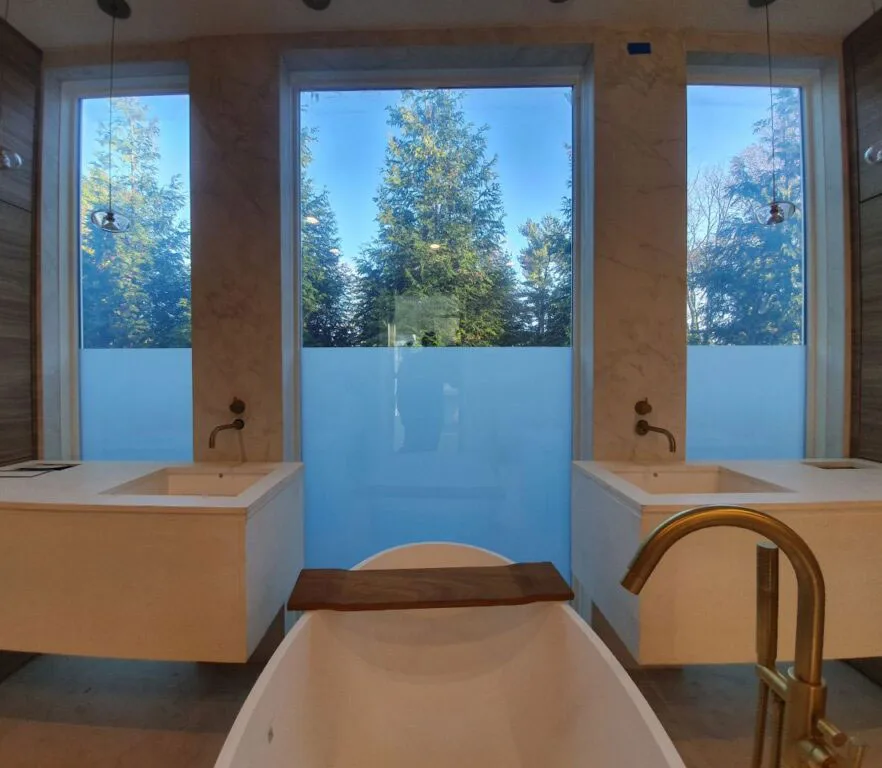
Windows
A window exists to be looked through, so reverse mode is usually the answer. And the honest limit: a switchable window frosts, it does not go dark.
Read more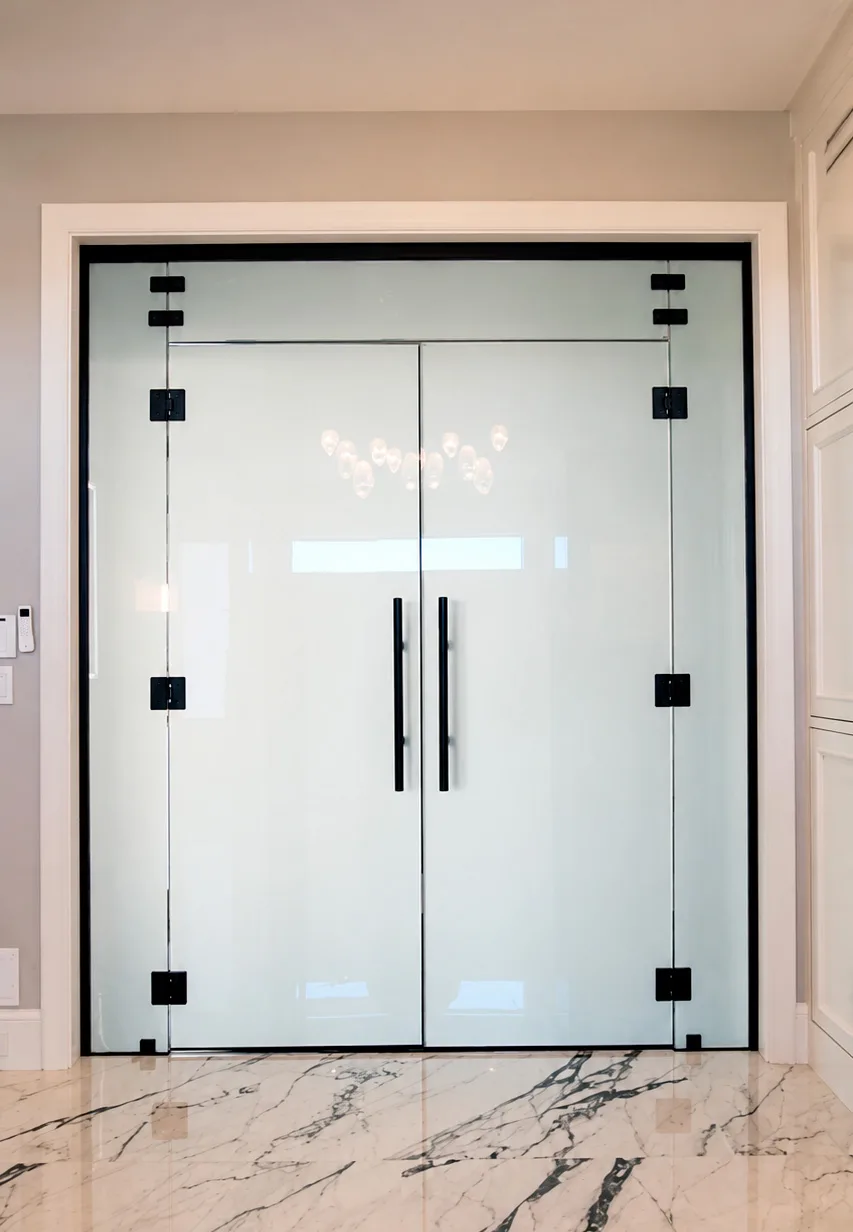
Doors
The one format where the glass moves, so the wiring becomes the detail and not the panel. Internal doors, entrances and glazed leaves in a partition run.
Read more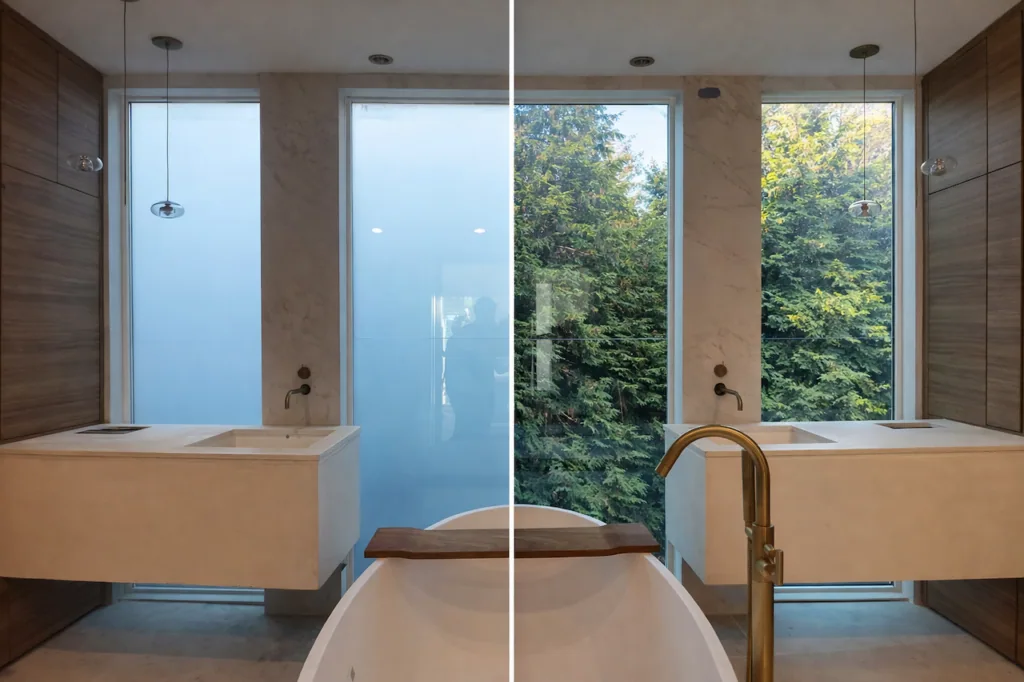
Shower enclosures
The room where the glass is the wall. Normal mode is frosted with no power, so a power cut leaves the enclosure private, the failure state a bathroom wants.
Read more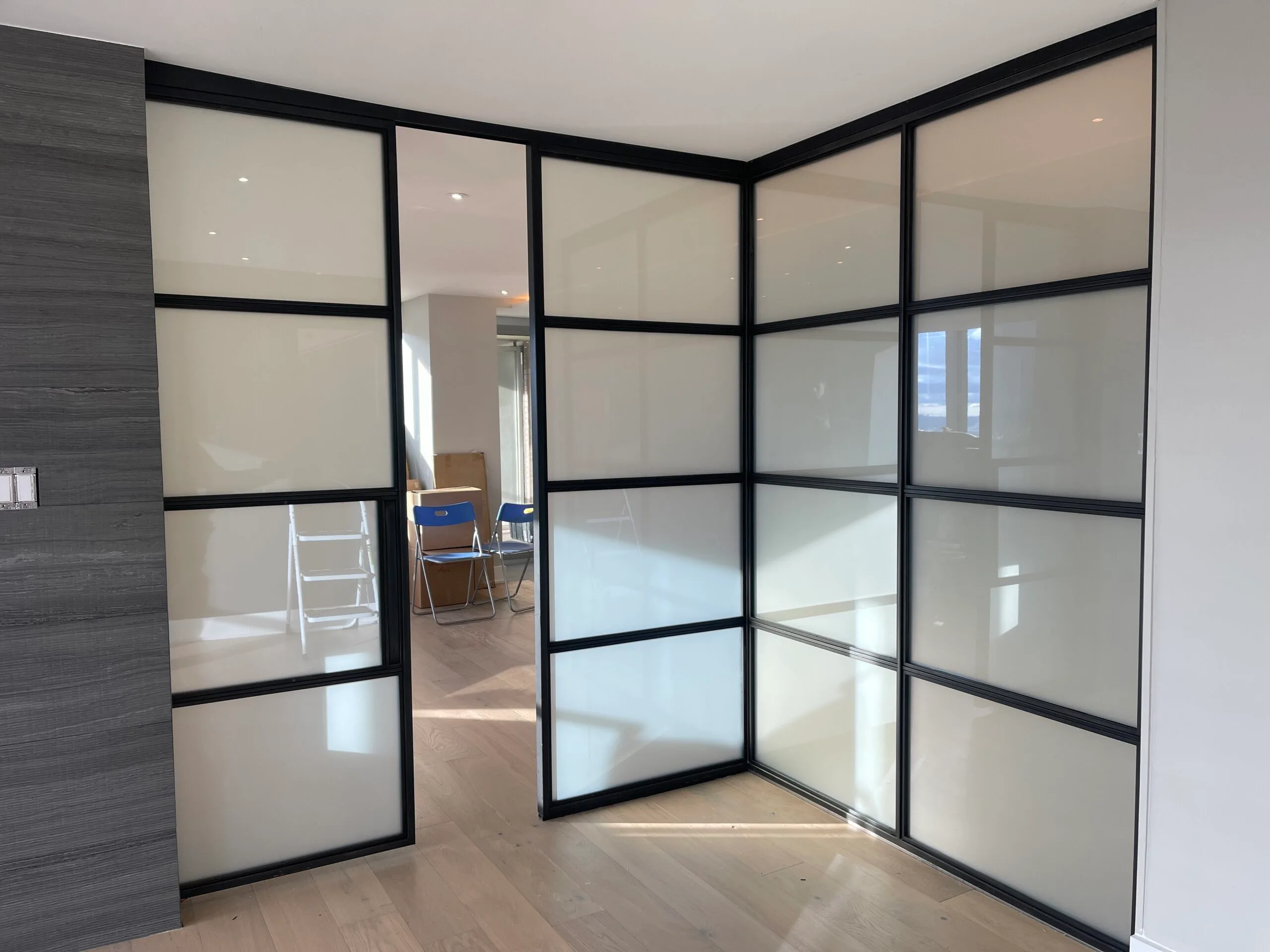
Room dividers
One room, or two. Fixed, sliding, stacking or folding. The question that belongs to this format alone is whether power has to reach a panel that moves.
Read more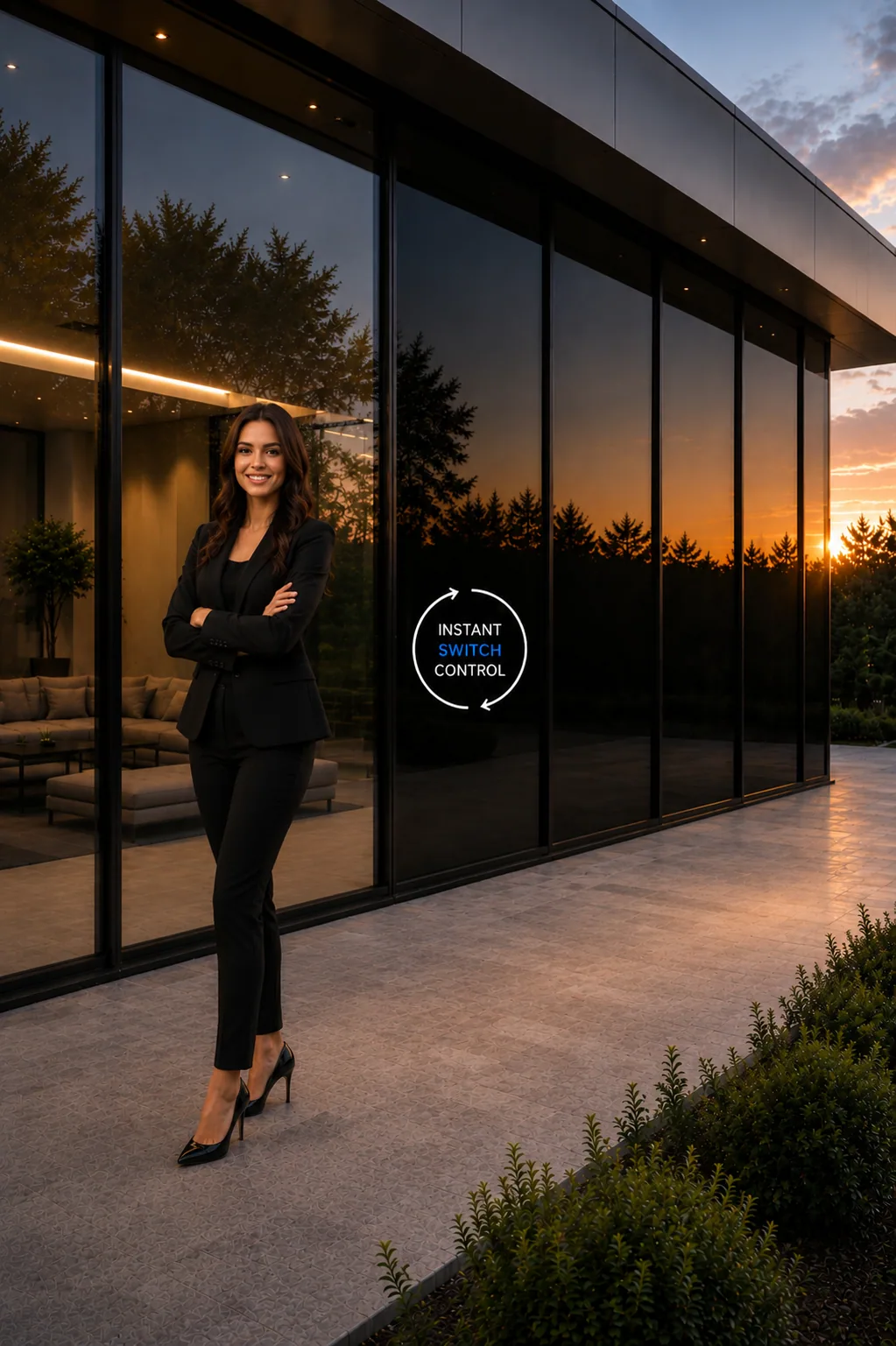
Skylights and overhead glazing
Overhead, the problem is usually the sun, not the neighbours. DLC moves between a tinted transparent state and a deep dark one: glare and solar gain, not privacy.
Read more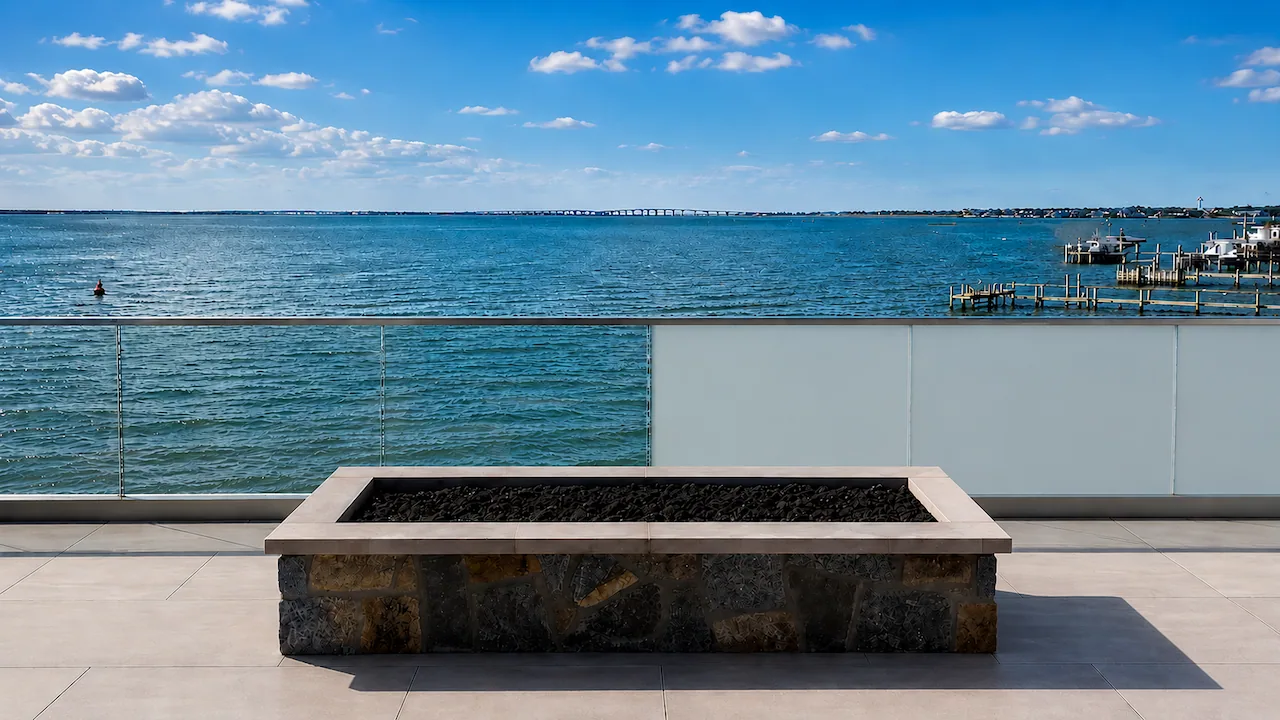
Railings and balustrades
Two projects in service: a New York waterfront terrace and a North Palm Beach pool deck. Reverse mode holds the view with no power drawn, and frosts for the hour it is wanted.
Read more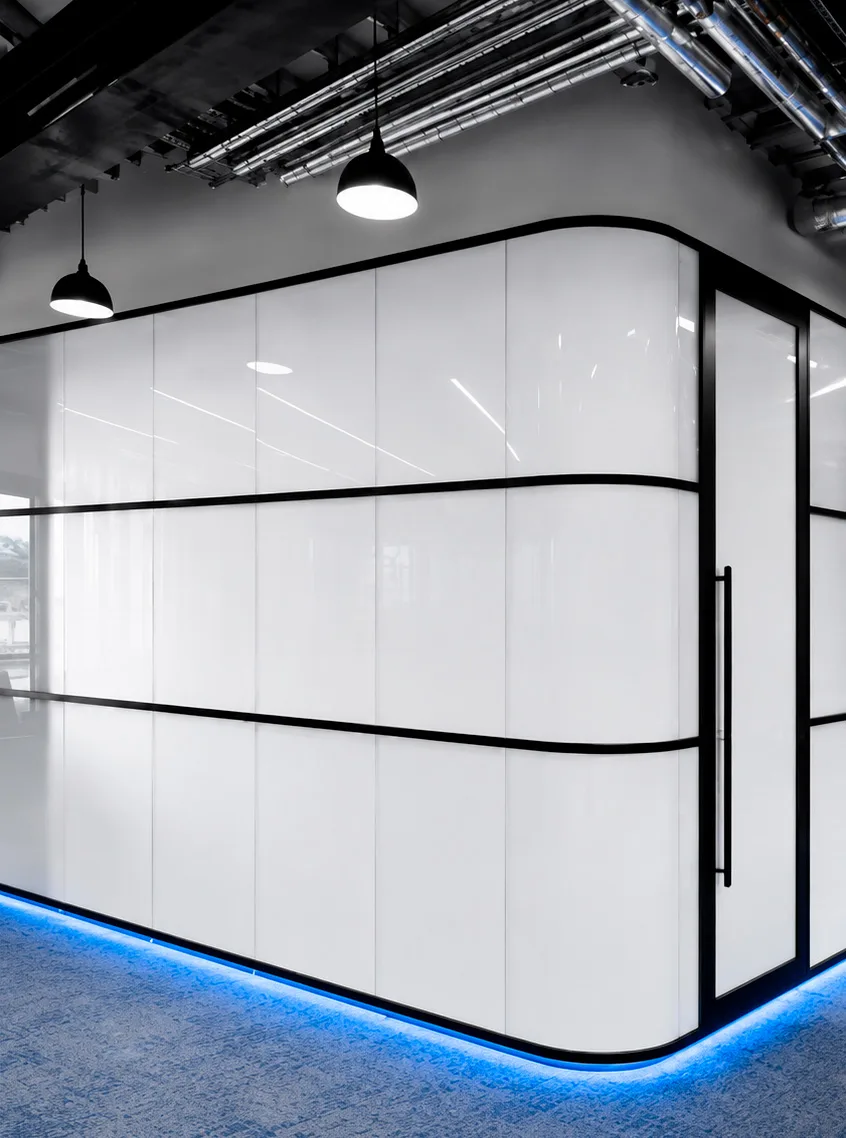
Specialized
Curves, display cases, cleanroom panels, studio sets and rear-projection surfaces. Rarely the shape that makes a project unusual; usually the edge, the movement or the duty cycle.
Read moreSend the opening, not the product code
Sizes, the shapes, whether the glass is already in the building and which state it should hold with no power. That is enough for a price and a lead time. Pompano Beach, Florida; 1-866-PRIWATT (1-866-774-9288).