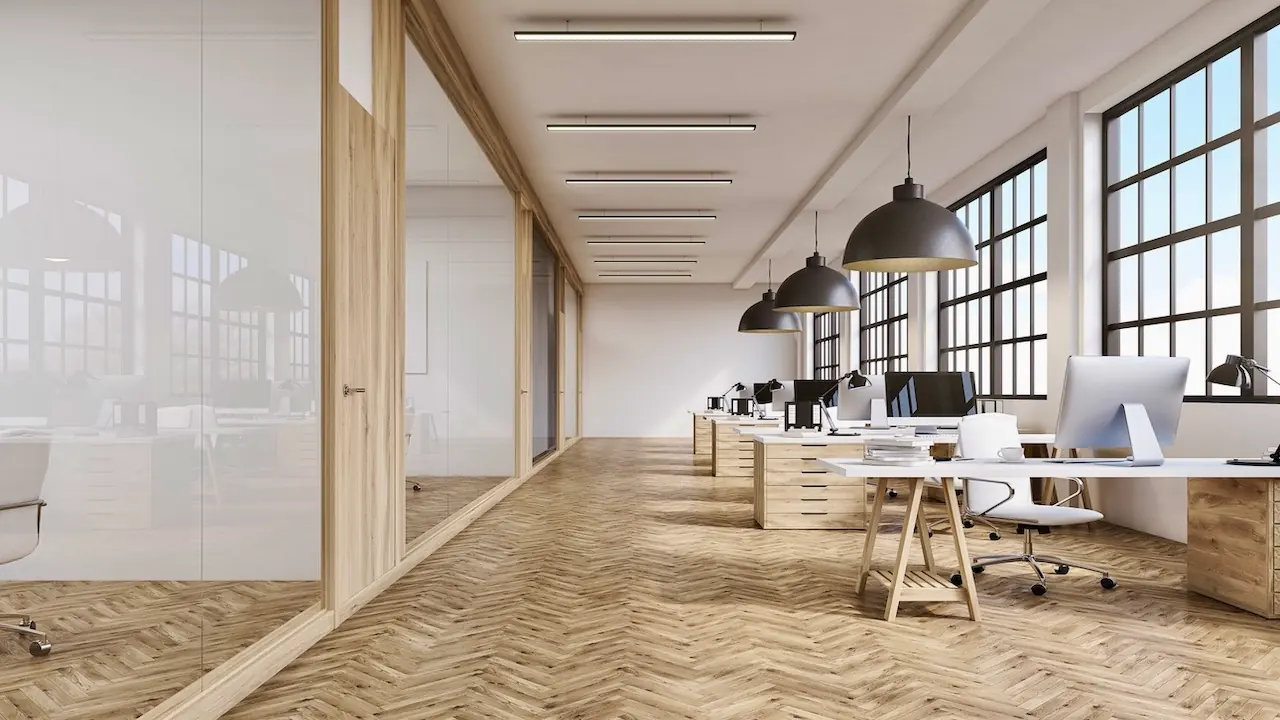
PriWatt switchable glass in Netflix’s Fubar
A screen credit, and what sits behind it
PriWatt switchable glass appears in Fubar, Netflix’s action-comedy series set around the CIA. That is the whole of what this page claims: the product is on screen.
It earns a page anyway, because it is the fifth production on this site to use switchable glass, and the reasons are consistent enough to be useful to anyone building a set. Those reasons are set out below, drawn from the four projects where the build itself is documented and not from this one.
Why a switchable wall reads the way it does on camera
Production design uses glass that changes state as shorthand for a controlled environment: a facility where somebody decides what is visible. It works on screen for a practical reason and not a symbolic one, because the change is instantaneous and silent, so it can happen inside a take, on a line, without a cut.
- Under 200 ms from clear to private, faster than an actor crosses a room
- No sound, so the sound department is not working around a mechanism
- Controlled from off camera, so no crew member enters frame and nothing is struck between takes
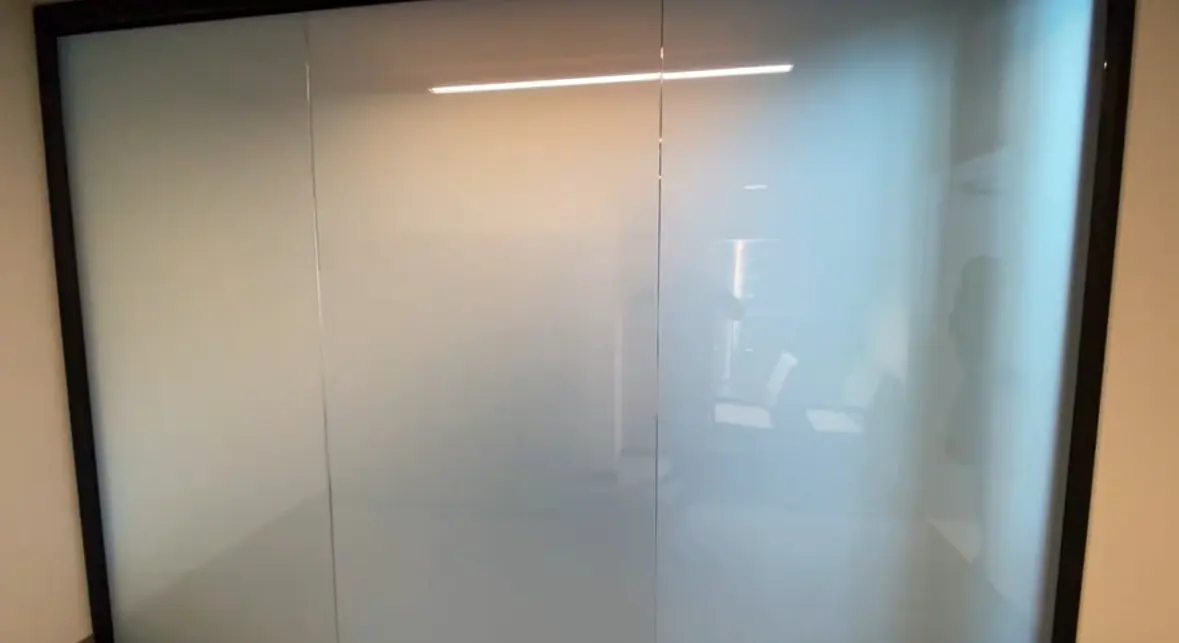
- The private state is a lit surface, not a dark one, because it scatters light instead of blocking it
That last property is the one set builders exploit hardest. It is why three switchable structures could be lit from behind on the Stitched set, and why a switched panel doubles as a rear-projection surface.
The four builds this site can actually show you
A newsroom
The first US-based NHK World-Japan studio: the backdrop when the camera is on and private when it is not.
A moving wall
Four sliding leaves running opposite ways on Netflix’s Blown Away, wired in two days, and the hardest kind of switchable panel to power.
A set that has to look built
The chief medical officer’s office on Star Trek: Strange New Worlds, switched on camera, not for privacy.
And a fourth that is not a set at all but works on the same physics: the Purosangue projected onto a switchable panel at Ferrari’s New York dealership, with the car standing behind the screen it was being shown on.
One thing it is not, on screen or off
A security measure. The source this page was written from describes switchable glass as "an active defense strategy" in the context of a series about intelligence work, which is a good line and is not true of the product. It removes line of sight. It resists nothing, it is not tested to any attack standard, and the rating of a pane is the pane’s before and after. See safety glazing and code.
Which is fine. On a set, looking like a secure facility is the entire brief.
Specified on this project
PriWatt PDLC switchable glass
The switchable layer laminated inside the panel, made to the opening. Private unpowered.
Film and television
Studios and sets, where visibility is directed rather than managed.
Rear-projection surfaces
A switched panel is a 94–95% haze diffusing surface, which is what a projection screen is.
A project like this one
A set, a studio build, or a production that needs a wall to change state inside a take. PriWatt makes the glass and the film in Pompano Beach, Florida, and quotes every project off its own drawings. Send dimensions, or a photograph with the sizes written on it. No drawings yet? Take the call instead.