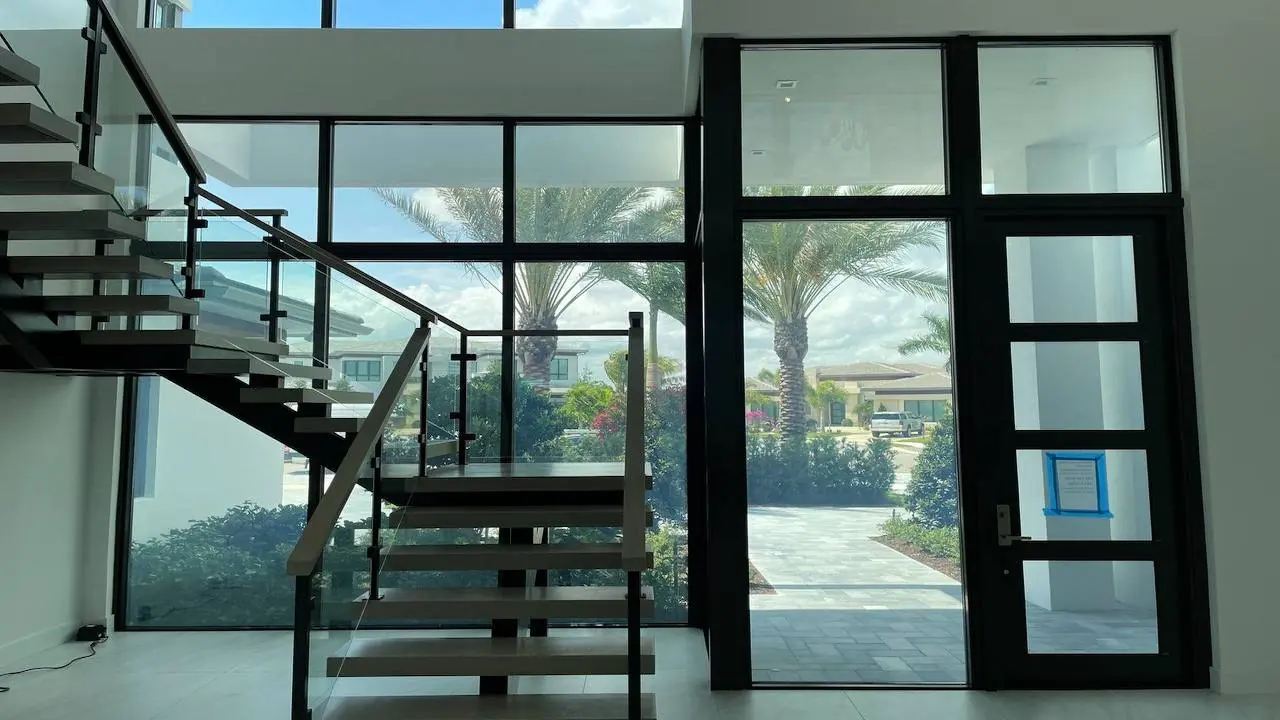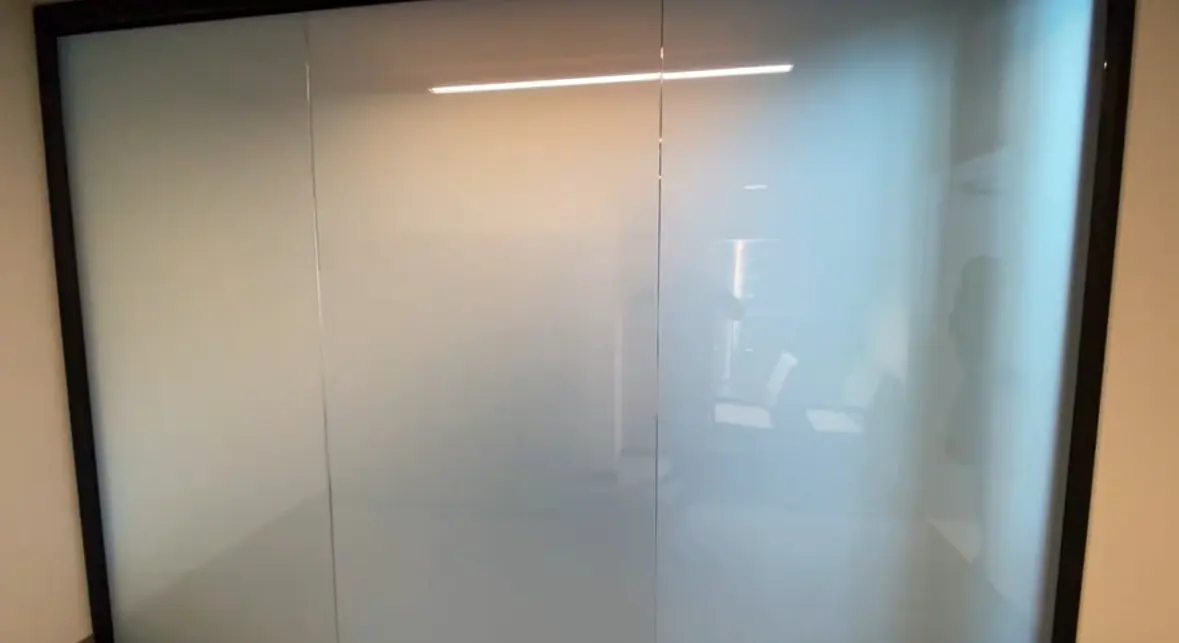
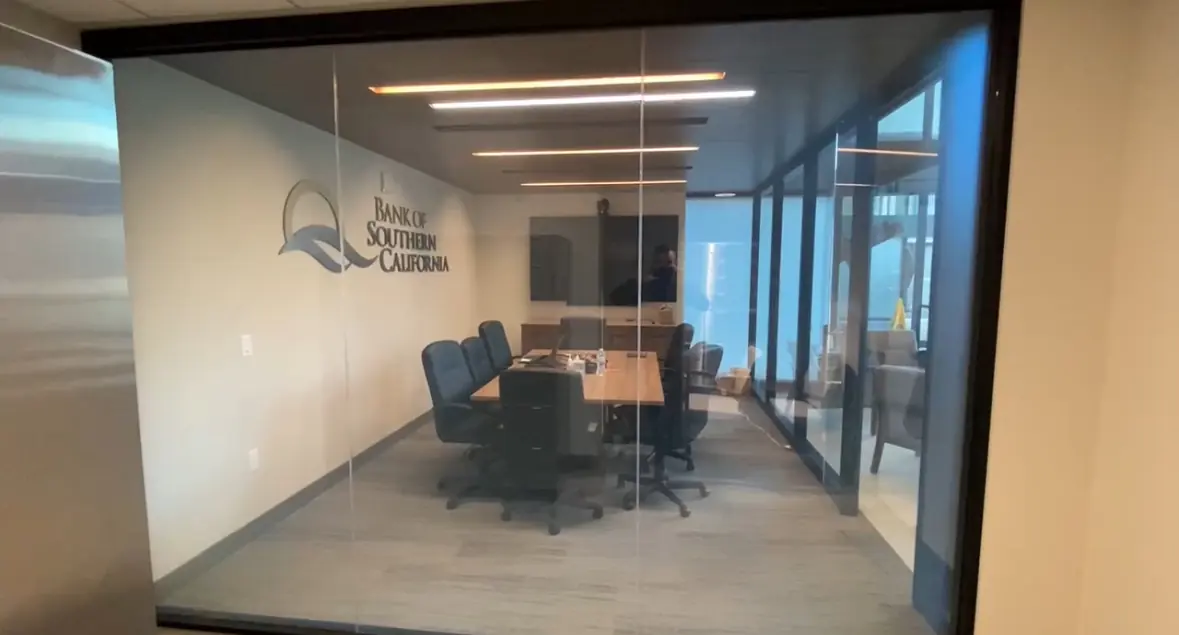
PriWatt laminated switchable panels at Freedom Holding Corp
Made to the opening, not applied to it
Freedom Holding Corp fitted switchable glazing through its executive offices and meeting rooms, and did it with laminated panels cut to the architecture, not with film applied to glass that was already there.
That is the less common of the two routes, and worth knowing when it is the right one, because it changes the programme, the tolerance and what happens if a dimension is wrong.
Laminated panels against film, decided properly
| Laminated switchable glass | Self-adhesive film | |
|---|---|---|
| What it is | The switchable layer sealed inside the laminate at manufacture | A layer applied to the inboard face of a pane that exists |
| When it is right | The glazing is being made or replaced anyway | The glazing is staying |
| The edge | Designed — the busbar sits inside the laminate and the tail leaves through a detailed edge | Found — the tail has to reach a transformer through framing already closed |
| Tolerance | The panel is manufactured to a dimension and the opening must receive it | Cut to the pane, so a survey error costs a sheet, not a panel |
| If a dimension is wrong | A new panel, and the lead time again | Recut |
| Site work | Glazing — the panel arrives finished | Application and wiring, room by room |
Row four is why "precision-cut" and "custom-fitted" are not marketing words on a job like this. A laminated switchable panel cannot be trimmed: the busbar runs along an edge and the interlayer is sealed. It is made to a measurement and it either fits the opening or it is remade. That puts the survey and the shop drawing squarely on the critical path.
The full comparison, and the question that decides it (does the pane already exist?), is on glass or film.
What laminated buys that film cannot
The build-up is specified
Thickness, low iron, an acoustic or impact make-up: all of it is chosen at manufacture. On a retrofit the pane is whatever it already was.
The edge is protected
The busbar is inside the laminate, not at the boundary of an applied layer, and the boundary is where switchable film fails when it is made badly.
Nothing is applied on site
The panel is glazed in like any other. No application, no dust, no curing, and nothing depending on the condition of an existing pane.
Against which film wins on almost every occupied building, because the pane is already in the wall and taking it out is a bigger job than the requirement justifies. Neither is better; they answer different questions.
The claim this page does not make
The version published elsewhere lists energy efficiency among the benefits, on the grounds that switchable glass removes the need for blinds and therefore improves light management and interior climate control. There is no measurement behind it, and these panels are interior partitions: not part of the thermal envelope, with no solar load on them to manage.
What can be stated is electrical and is published: 48 V AC, under 0.5 W per square foot in the state that draws, and nothing in the other. Where solar performance genuinely is the requirement the product is DLC dynamic shading, and its transmission figures are in the technical reference.
Specified on this project
PriWatt PDLC switchable glass
The switchable layer laminated inside the panel, made to the opening. Private unpowered.
Offices and boardrooms
Partitions, meeting rooms and executive offices — the application this belongs to.
Office partitions
How a glazed run is built: where the joints fall, and how one transformer serves a wall.
A project like this one
An executive floor being built instead of retrofitted, where the panels can be made to the opening. The glass and the film are made in Pompano Beach, Florida, and nothing here is priced off a rate card. Send dimensions, or a photograph with the sizes written on it, and the quote comes back against your panels. If you are not that far along, book the call.