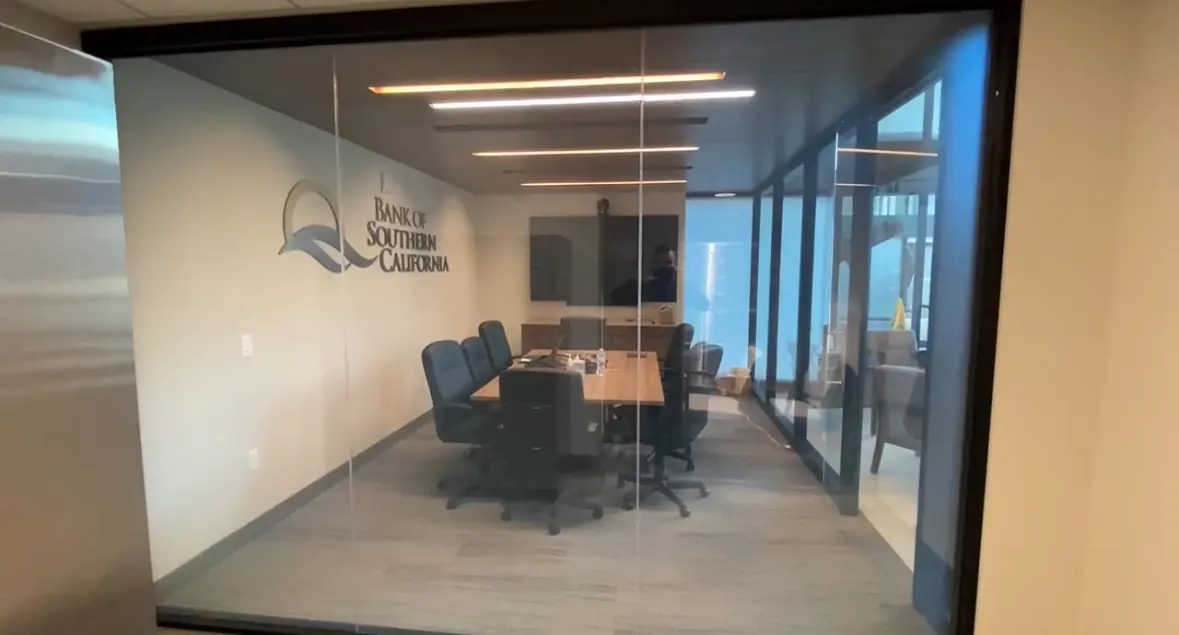
Bank of Southern California specifies PriWatt switchable glass
The conversation everyone can see and nobody should hear about
A bank’s interior is asked to do two things that pull against each other. It has to look open, because a closed door in a branch reads as something being decided about someone; and it has to be private, because what is discussed at the desk is a client’s money.
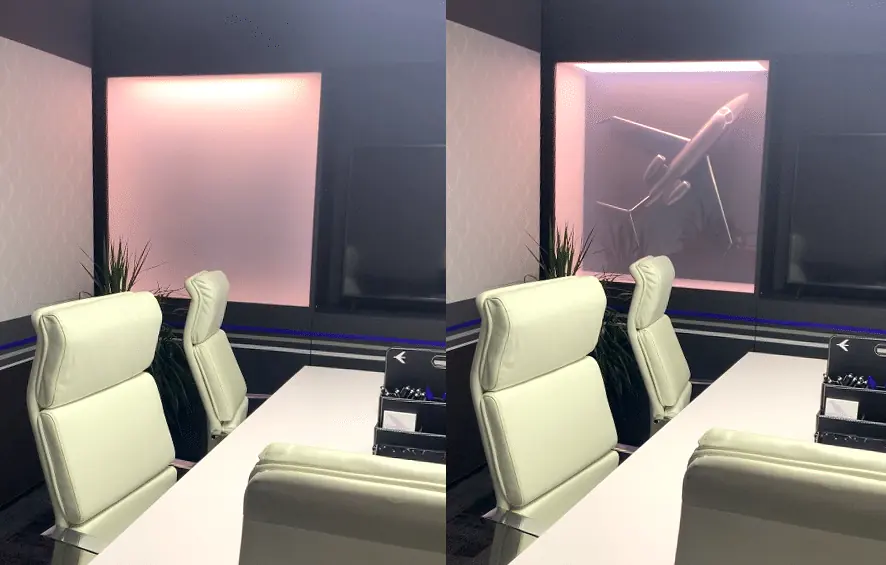
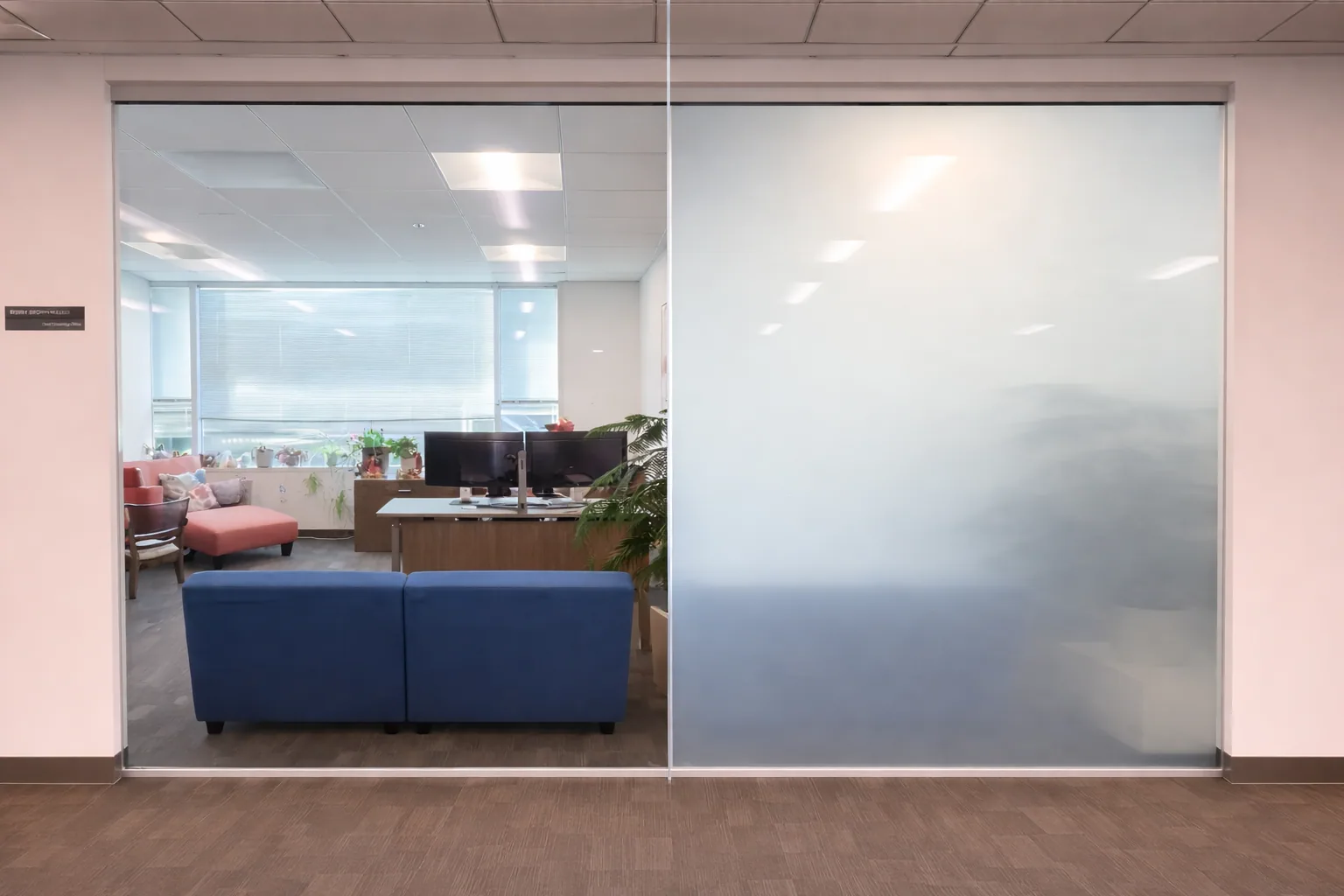
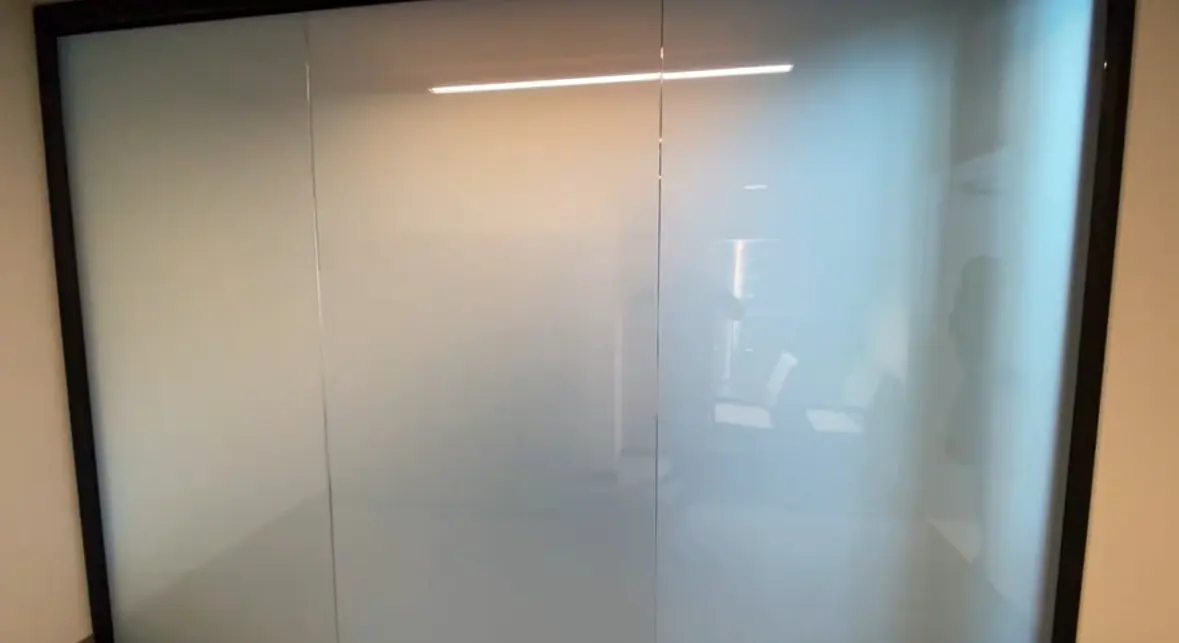
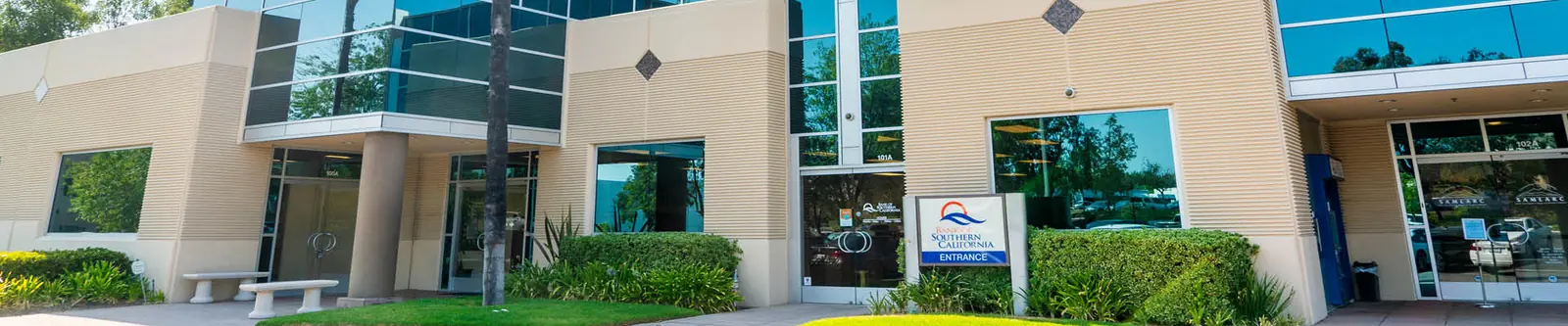
Bank of Southern California specified PriWatt switchable glass for its office space: glass walls that are transparent by default and opaque at a switch.
Why blinds are the wrong instrument here specifically
In most offices a blind is merely inelegant. In a room where money is discussed it also carries a signal, and the signal is the problem: a blind goes down at a moment somebody chooses, in view of a floor that notices. The room announces that it has become private.
Switchable glass changes state without a gesture. Nothing descends, nothing is drawn, and there is no interval during which a person is standing at the glass operating something. From outside the room the wall simply is what it is.
No moving parts in reach of a client
Nothing to pull, nothing to jam, nothing a visitor can adjust. The state is changed by whoever is chairing the meeting, from a switch or a remote.
Daylight in the private state
The panel scatters light instead of blocking it, so closing a room does not turn it into an interior one. That is the practical difference from a blind.
Nothing to launder or replace
Fabric ages, marks and is eventually the oldest thing in the room. Glass is cleaned with the rest of the glazing.
The decision that comes before the product
Which state should the glass hold when nothing is switched on? It sounds like a detail. It is the specification.
| Normal mode — PDLC | Reverse mode — PNLC | |
|---|---|---|
| With no power | Private | Clear |
| Suits a room that is | Closed more often than open | Open more often than closed |
| During a power cut | Goes private and stays private | Goes clear and stays clear |
| Drawing current | Only while it is clear | Only while it is private |
| Concealment | Around 98% | About 93–94% |
For a branch or an advisory floor the honest answer is usually the right-hand column: the space is open all day and closed for twenty minutes at a time, so clear is the state it should default to and a power cut should not turn the floor opaque. Where a room is private most of the day — an underwriting office, a room where files are open — normal mode is both cheaper and correct. Reverse mode sets out the difference in full.
What switchable glass does not do
It is visual privacy. It is not acoustic privacy, and in a room where the requirement is confidentiality that distinction matters more than anywhere else. Sound is a property of the whole partition — the glass make-up, the head and sill detail, the junction with the ceiling — and it is specified per build-up. If a room has to be both unseen and unheard, say so at technical review: it changes the glass, not the switchable layer.
What is measured and published — switching times, concealment, power draw, panel limits, cycle life — is in the technical reference.
Specified on this project
PriWatt PDLC switchable glass
The switchable layer laminated inside the panel, made to the opening. Private unpowered.
Offices and boardrooms
Partitions, meeting rooms and executive offices — the application this belongs to.
Office partitions
How a glazed run is built: where the joints fall, and how one transformer serves a wall.
A project like this one
A branch, an advisory floor or any room where the conversation is confidential and the architecture is meant to look open. PriWatt makes the glass and the film in Pompano Beach, Florida, and quotes every project off its own drawings. Send dimensions, or a photograph with the sizes written on it. No drawings yet? Take the call instead.