Windows
The window is clear when nobody is doing anything
A window exists to be looked through. That single fact decides almost everything about specifying a switchable one, and it puts reverse mode first here: the glass is clear with no power, draws nothing for the ninety per cent of the week nobody touches it, and turns private for the hour it is wanted.
Run it the other way round and the window is frosted every hour it is not switched, which undoes the reason there is a window.
Three windows, three different answers
Overlooked, and the view matters — PNLC
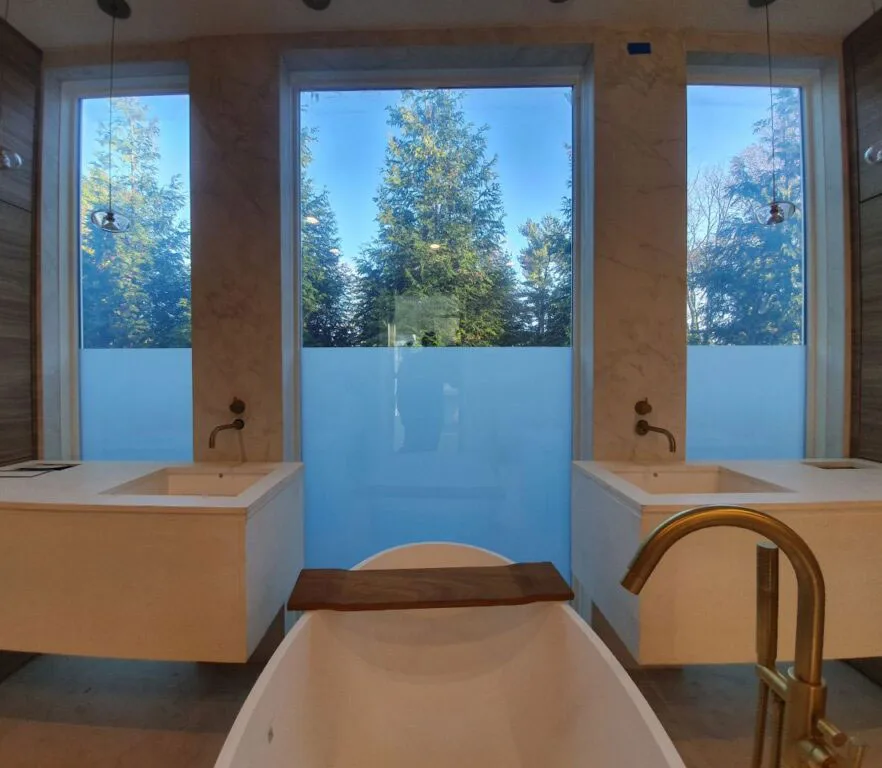
A bedroom onto a neighbour, a bathroom onto a street, a ground-floor room at the front. Clear with no power, private at a switch, and no blind in front of the glass the room was designed around.
Private most of the time — PDLC
A bathroom window frosted by default is not a compromise. It is the correct resting state. It is also the cheaper product, and a power cut leaves it private.
Sun, not eyes — DLC
A west elevation is a glare problem before it is a privacy one. DLC moves between a tinted transparent state and a deep dark one, down to 1.5% light transmission. Shading, not concealment.
Working on one now? Send the window sizes, or an elevation and we will price the panels themselves — a quotation with the schedule, the transformer and the lead time on it. Rate cards do not survive contact with a real opening. Still deciding? Start with twenty minutes with a project specialist.
A switchable window does not go dark
The private state scatters light instead of blocking it. PDLC still transmits 83 to 90 per cent of the light falling on the glass: you cannot see through it and the room stays bright.
For a bathroom, a study or a street-facing living room that is exactly right. For a bedroom where somebody wants to sleep past sunrise, a hotel room, or any window where the requirement is blackout, it is the wrong product and a blind is the right one. DLC is the exception inside the range, a different product at a different price.
The full argument is on film against blinds, including the case where the blind stays.
Whether the glass is already in the wall
| Film on the existing window | Laminated switchable glass | |
|---|---|---|
| When it applies | The window is in and staying | New work, or the glazing is being replaced anyway |
| What happens on site | Applied to the inside face, in hours | The unit is made and glazed in |
| Maximum panel | 72 × 143 in PDLC · 57 × 143 in PNLC and DLC | 70 × 143 in PDLC · 57 × 143 in PNLC and DLC |
| Cold range | -20 to 60 °C | -10 to 60 °C |
| Existing coatings | Tinted, reflective or low-E glass changes the result — confirm the make-up first | Specified with the unit |
| Insulated units | Not a retrofit. The switchable layer goes inside the unit when it is built | See the IGU page |
An exterior window is usually an insulating unit, not a single pane, and a switchable layer goes inside that unit at the point it is made. It cannot be added to a sealed one later. Solar gain and HVAC load are covered on switchable glass in an IGU. The trade-offs between film and glass in general are on smart glass or smart film.
Common questions
Yes, to the inside face, where the glass is sound and accessible. Nothing is re-glazed. Existing tinted, reflective or low-emissivity coatings change the optical result, so the make-up is worth confirming before ordering, not after.
No. The private state frosts; it does not block. PDLC still transmits 83 to 90 per cent of the light. The room stays bright and nobody can see in. If blackout is the requirement, this is the wrong product.
Usually reverse. A window is clear for most of the week, so that is the state it should hold with no power, and the unit draws power only while it is private. Normal mode suits a window that is private most of the time, such as a bathroom.
The switchable layer goes inside the unit when the unit is made. It cannot be added to a sealed insulating unit afterwards. For an existing double-glazed window the options are film on the inside face, or replacing the unit.
PDLC does a little: the solar heat gain coefficient on laminated glass moves from 0.74 clear to 0.31 private, and infrared blocked from 20% to 80%. DLC is the product where solar gain is the actual requirement.
Windows already doing this
Baptist Health South Miami
Exterior clinical windows, retrofitted without disturbing an approved impact assembly.
UPS, New York
Ground-floor windows legible from the pavement, made private without losing the daylight.
Daytona, Florida
Bathroom windows eight feet from the public path to the beach.
Boca Raton residence
The glaziers took the frames off first, so the film runs past the sightline with no visible edge.
Jennifer Fisher, Beverly Hills
A shopfront that closes without a shutter, and why concealment is not resistance.
M/Y Small World
77 sq. ft. of custom-cut PDLC film across eight shaped windows with radiused corners.
Built from the same six products
Office partitions
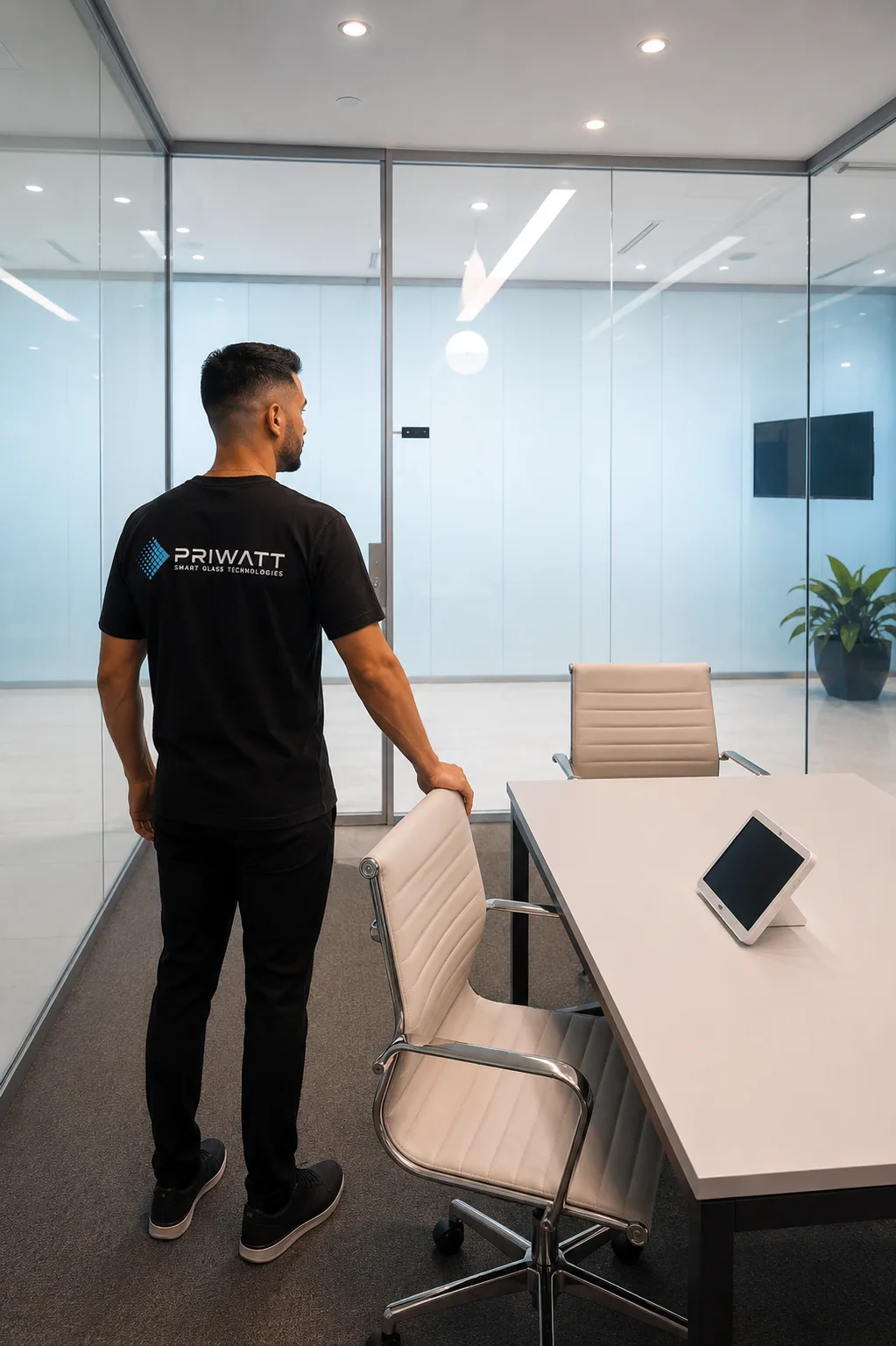
A wall of glass, not one panel: where the joints fall, whether the run switches together, and how a door in the middle is matched to the panels beside it.
Read more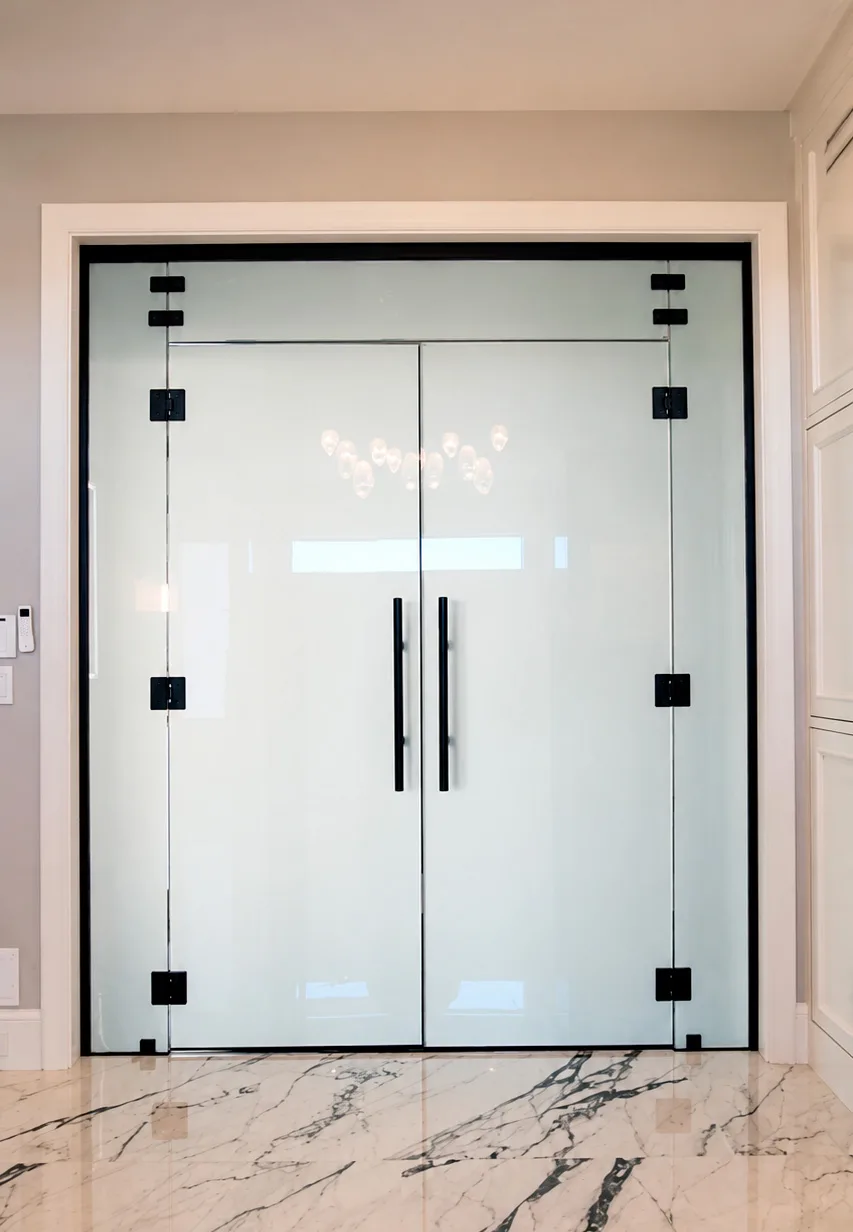
Doors
The one format where the glass moves, so the wiring becomes the detail and not the panel. Internal doors, entrances and glazed leaves in a partition run.
Read more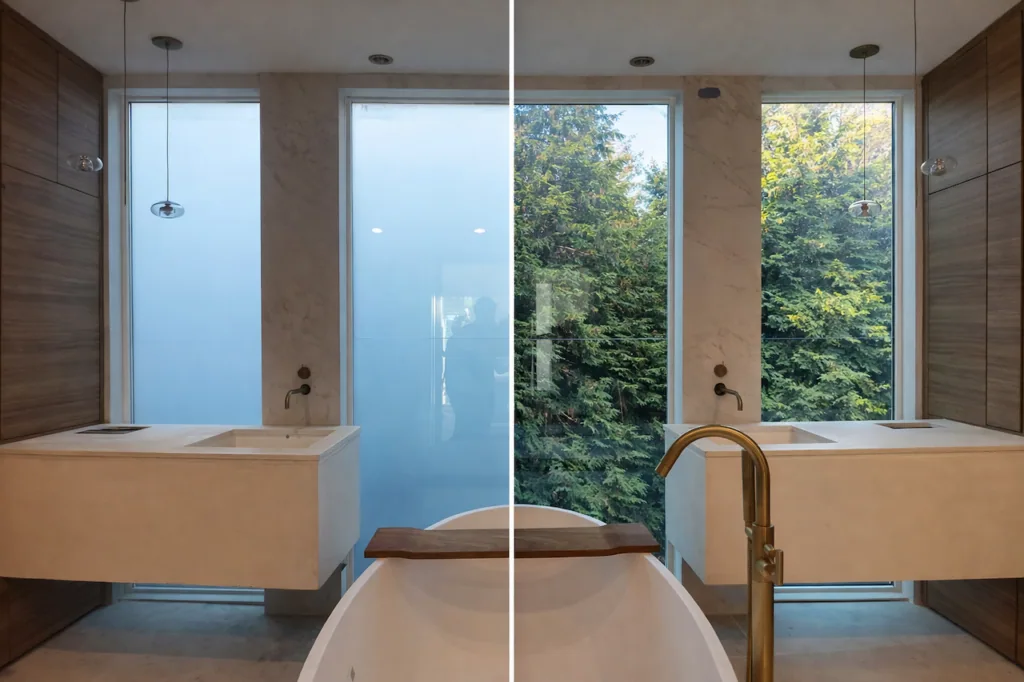
Shower enclosures
The room where the glass is the wall. Normal mode is frosted with no power, so a power cut leaves the enclosure private, the failure state a bathroom wants.
Read more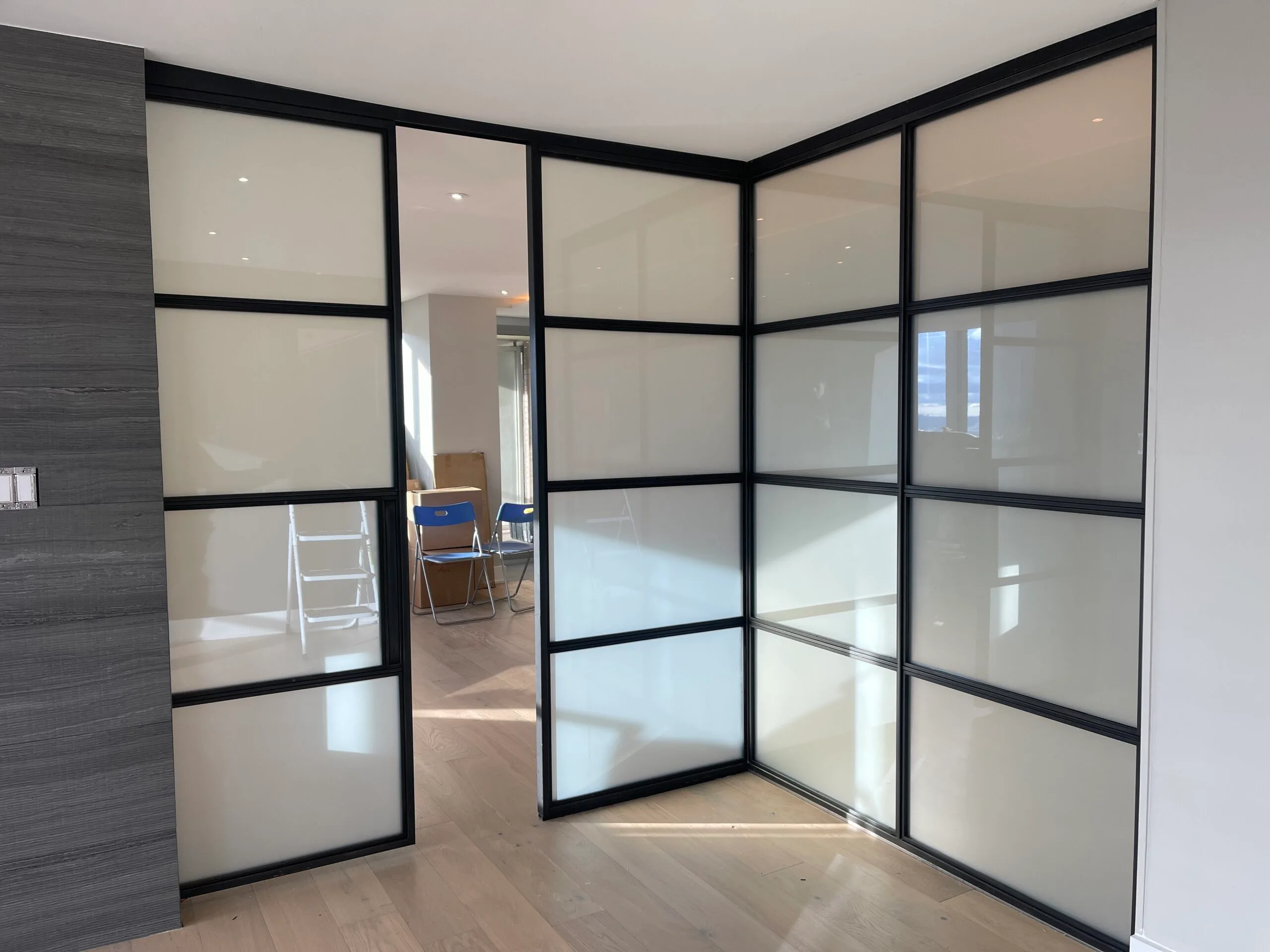
Room dividers
One room, or two. Fixed, sliding, stacking or folding. The question that belongs to this format alone is whether power has to reach a panel that moves.
Read more
Skylights and overhead glazing
Overhead, the problem is usually the sun, not the neighbours. DLC moves between a tinted transparent state and a deep dark one: glare and solar gain, not privacy.
Read more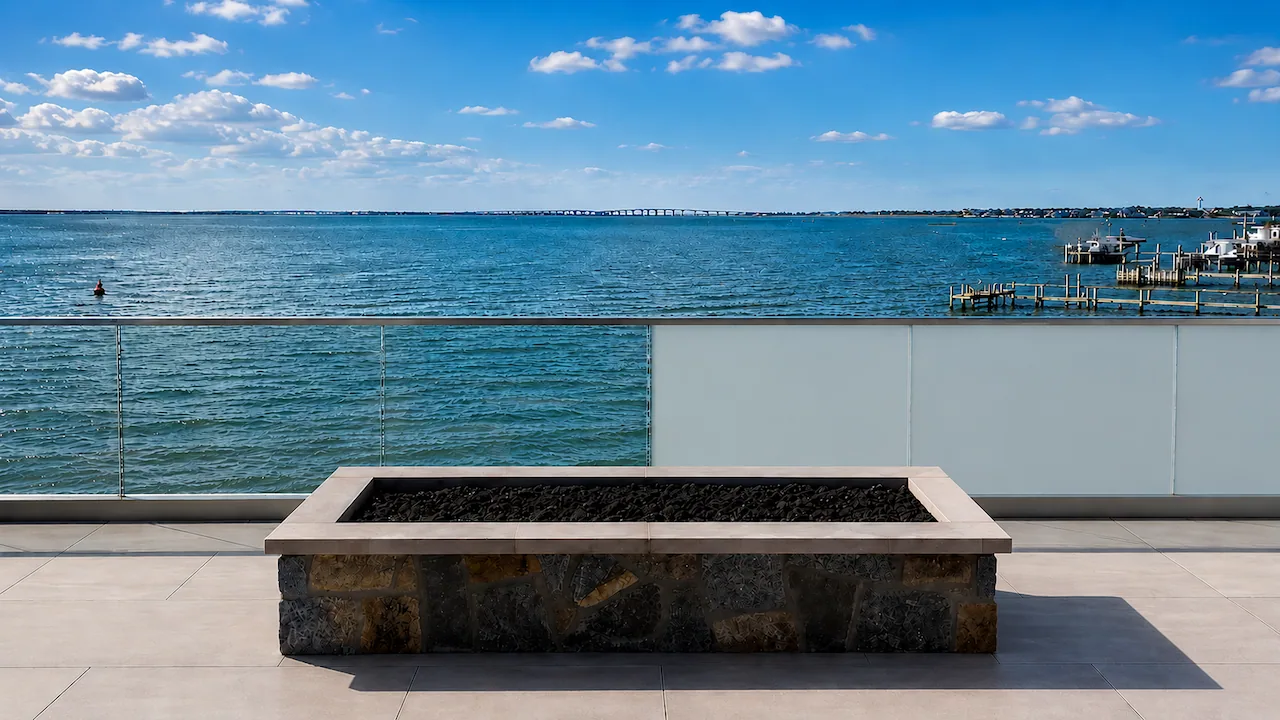
Railings and balustrades
Two projects in service: a New York waterfront terrace and a North Palm Beach pool deck. Reverse mode holds the view with no power drawn, and frosts for the hour it is wanted.
Read more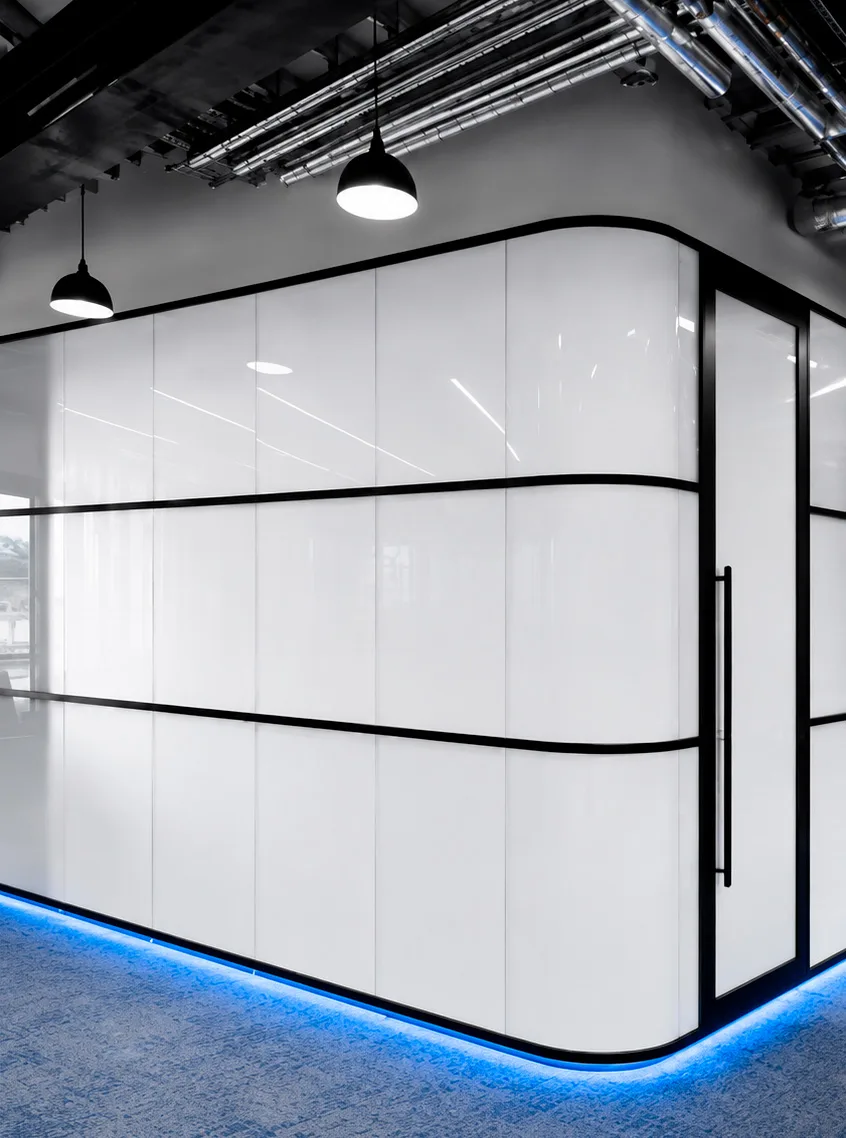
Specialized
Curves, display cases, cleanroom panels, studio sets and rear-projection surfaces. Rarely the shape that makes a project unusual; usually the edge, the movement or the duty cycle.
Read moreSend the opening, not the product code
Sizes, the shapes, whether the glass is already in the building and which state it should hold with no power. That is enough for a price and a lead time. Pompano Beach, Florida; 1-866-PRIWATT (1-866-774-9288).