01
Consultation
Glass sizes, layout, and how privacy is actually used in the space day to day.

Blinds were designed for windows in buildings that no longer get built. They block the light the glazing was specified to bring in, collect dust in a room that is cleaned on a contract, and cut across the one architectural line the interior was drawn around. Worst of all, they are fixed: open or shut, adjusted by hand, in a building where every other system has learned to respond.
Switchable film does not cover the glass. It makes the glass the thing you control.
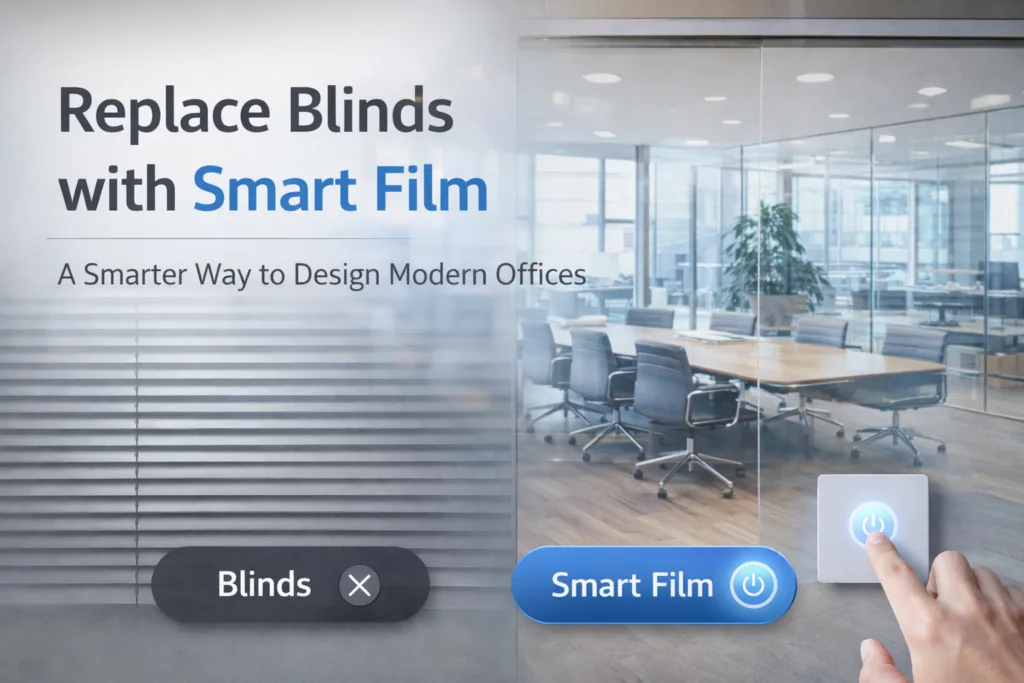
With film on the glass, privacy stops being a property of the room and becomes a state it can be put into: clear to opaque in about a second, at a switch, in the middle of a conversation. No cord, no slats, nobody standing up to close anything.
Blinds add a layer: a headbox, a stack, a colour that never quite matches. Film adds nothing at all. The wall is glass, and the glass changes state.
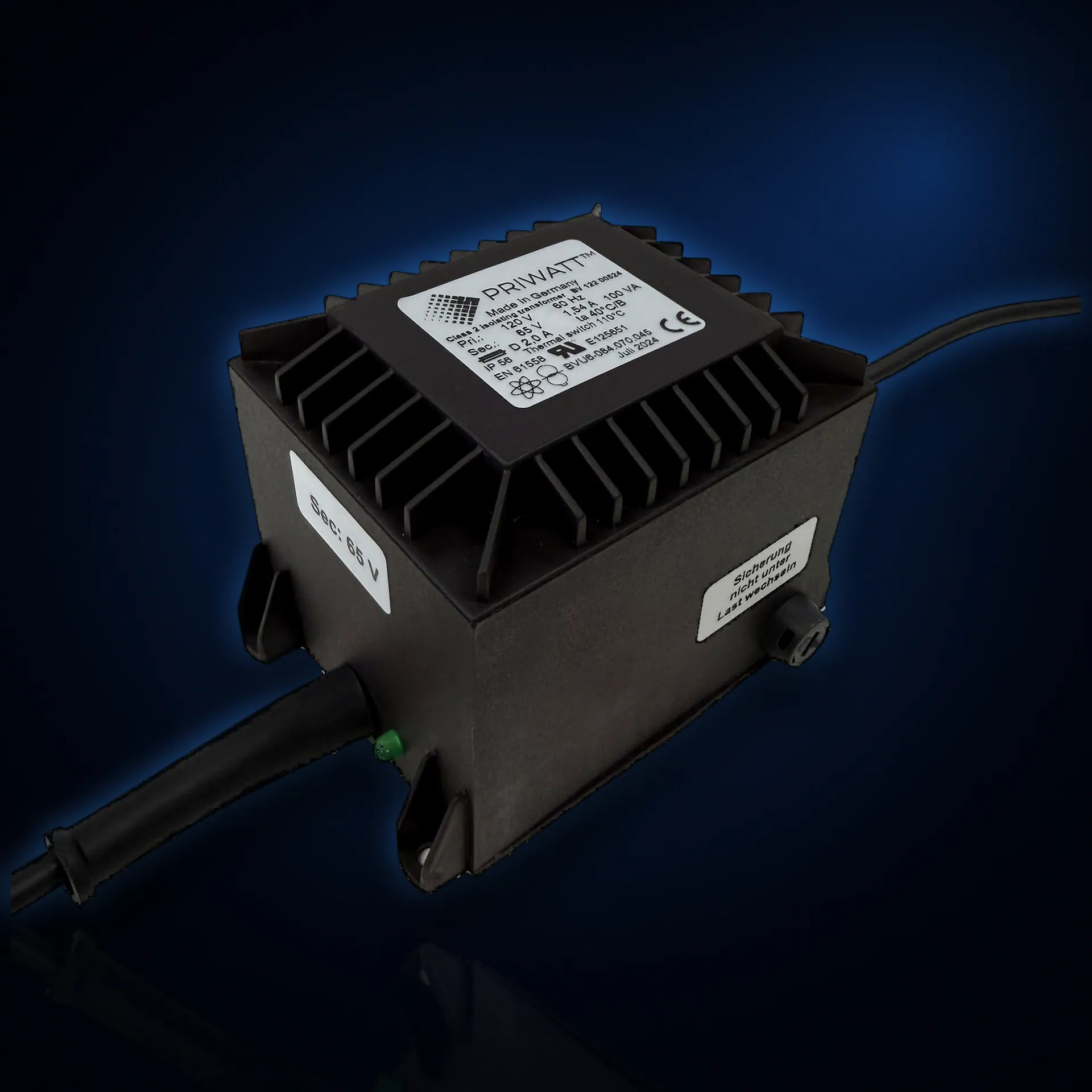
Working on one now? Send the window or partition sizes and you get back a quotation: the panel schedule, the transformer, the lead time. Not a price per square foot. If the drawings are not there yet, twenty minutes with a project specialist gets you further.
True, and worth answering with the number instead of around it.
A switchable panel draws under 0.5 watts per square foot, and only in the state that needs power. A 100 square foot glazed partition therefore draws under 50 watts while it is switched. Hold it that way for eight hours and that is roughly 0.4 kilowatt-hours. The rest of the day it draws nothing at all.
Which state costs you that is the part worth specifying deliberately. A meeting room is transparent for most of the working week, so a reverse-mode panel spends most of the week drawing nothing and takes power only for the meeting. Normal mode inverts it, and that is correct for a room that is private most of the time. Choose the mode against how the room is genuinely used and the running cost mostly disappears.
| Motorised blinds | Switchable film | |
|---|---|---|
| Moving parts | Motor, tube, fabric, brackets | None |
| Power | While moving | < 0.5 W/sq ft, while switched |
| Speed | Seconds to travel | Under a second |
| What is cleaned | The fabric, on a schedule | The glass, with the rest of the glazing |
| Rated life | Mechanical, because it is a mechanism | > 800,000 switching cycles on PDLC film |
| What it does to the elevation | A headbox and a stack | Nothing. The glass is the glass |
Eight hundred thousand cycles is the published figure for PDLC film. At twenty switches a working day it is past the life of the fit-out. That is a different kind of claim from a mechanism rated in operations because it wears.
There is one, and it is not a small one.
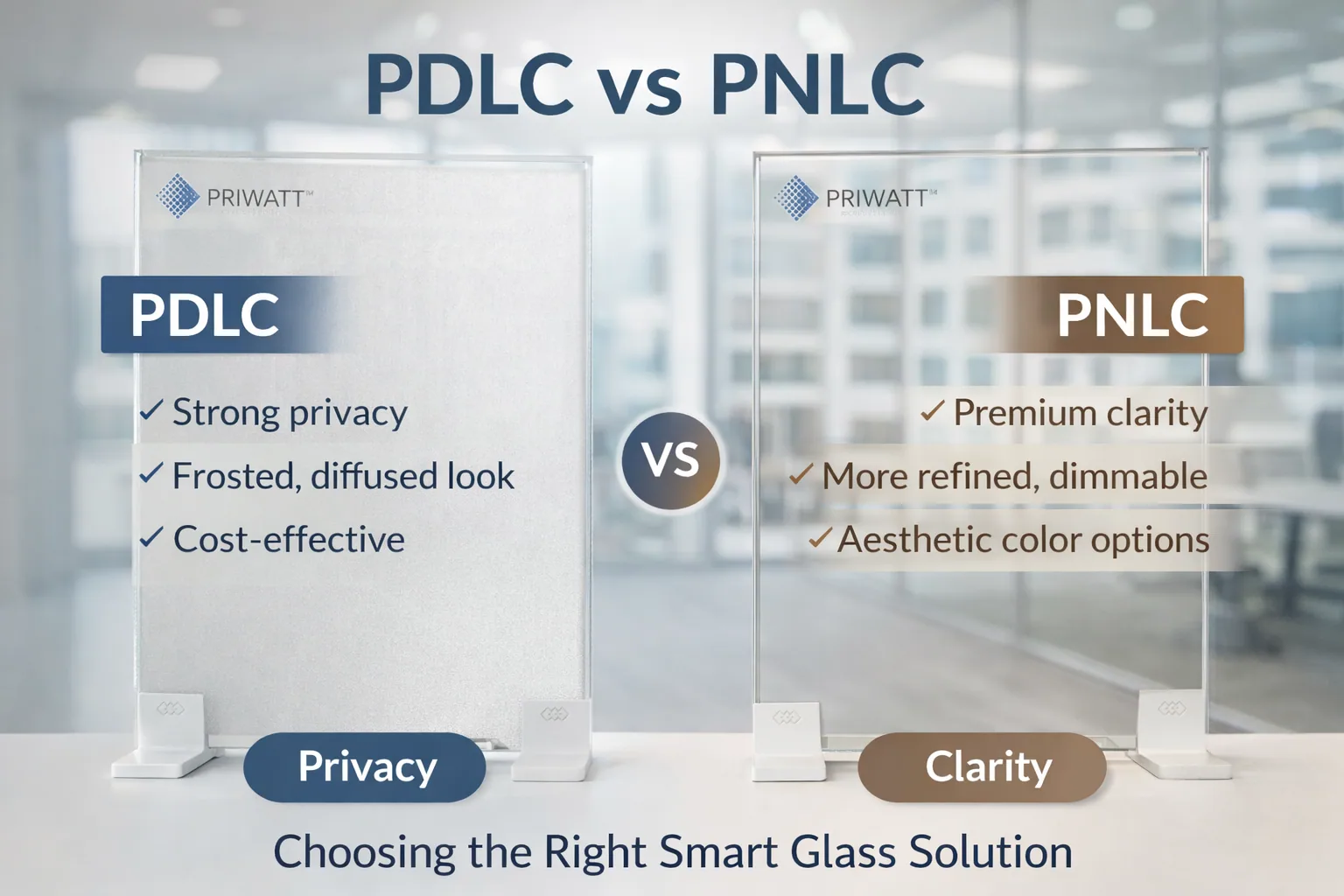
A room that has to go dark. Switchable film in its private state does not block light, it scatters it: PDLC still transmits 83 to 90 per cent of what falls on the glass. You cannot see through it and the room stays bright. For a boardroom that is exactly right, because nobody wanted to sit in the dark. For a bedroom, a hotel room, a screening room or anywhere blackout is the requirement, it is the wrong product and a blackout blind is the right one.
DLC is the exception inside our own range. It reaches 1.5 per cent transmission and it genuinely dims, but it is a different product at a different price, specified for glare and solar gain and not as a retrofit alternative to a roller blind.
The honest version of this comparison is that switchable film replaces the blind that was there for privacy. Where the blind is there for darkness, it stays.
Glass sizes, layout, and how privacy is actually used in the space day to day.
Full glass coverage or specific zones, matched to both the function and the architecture.
Specification agreed, then made, with the timeline and the price fixed before it starts.
Usually finished within hours, onto the glass already in the building, with no construction.
Then it is simply part of the room: switched from the wall, from a remote, or from the automation system that already runs the lighting.
Film goes onto glazing that is already in the building, so it is a refurbishment answer and not a construction one. Where the glass is being made anyway, on a new fit-out or a replacement partition, the switchable layer is laminated into the panel instead.
Self-adhesive film for glass already in place: the retrofit case.
Laminated switchable panels, for new work and replacement glazing.
What this looks like across a floor, and what it costs a fit-out.
That is the usual case. Self-adhesive film goes onto the existing glazing, so nothing is re-glazed and the area stays in use. GE Vernova converted offices, a conference room and the boardroom this way, and the National Library of Medicine did the same across its partitions in Bethesda.
No. The private state scatters light instead of blocking it, so the glass turns frosted and the room stays bright. PDLC still transmits 83 to 90 per cent of the light. If the requirement is blackout, a blind is the right answer and this is not.
Under 0.5 watts per square foot, and only in the state that needs power. A 100 square foot partition draws under 50 watts while switched and nothing the rest of the time. Reverse mode is clear with no power, so a meeting room draws nothing for most of the week.
The glass holds its unpowered state: frosted on normal mode, clear on reverse. That is not a battery or a fail-safe circuit. It is simply what the material does with no current, and it is why the mode is chosen against how the room is used.
Film is applied to the glass in place, usually in hours, not days, with no construction and no area closed. The lead time sits in fabrication and not on site.
PDLC film starts around $65 per square foot before the transformer, the control and installation; the ranges are on the pricing page. The comparison worth making is not rate against rate. It is the blind, its fitting, its cleaning contract and its eventual replacement, against a surface with no moving parts.
Send the glass sizes or the floor plan and we will tell you which of the two fits, and what it takes. PriWatt is made in Pompano Beach, Florida.