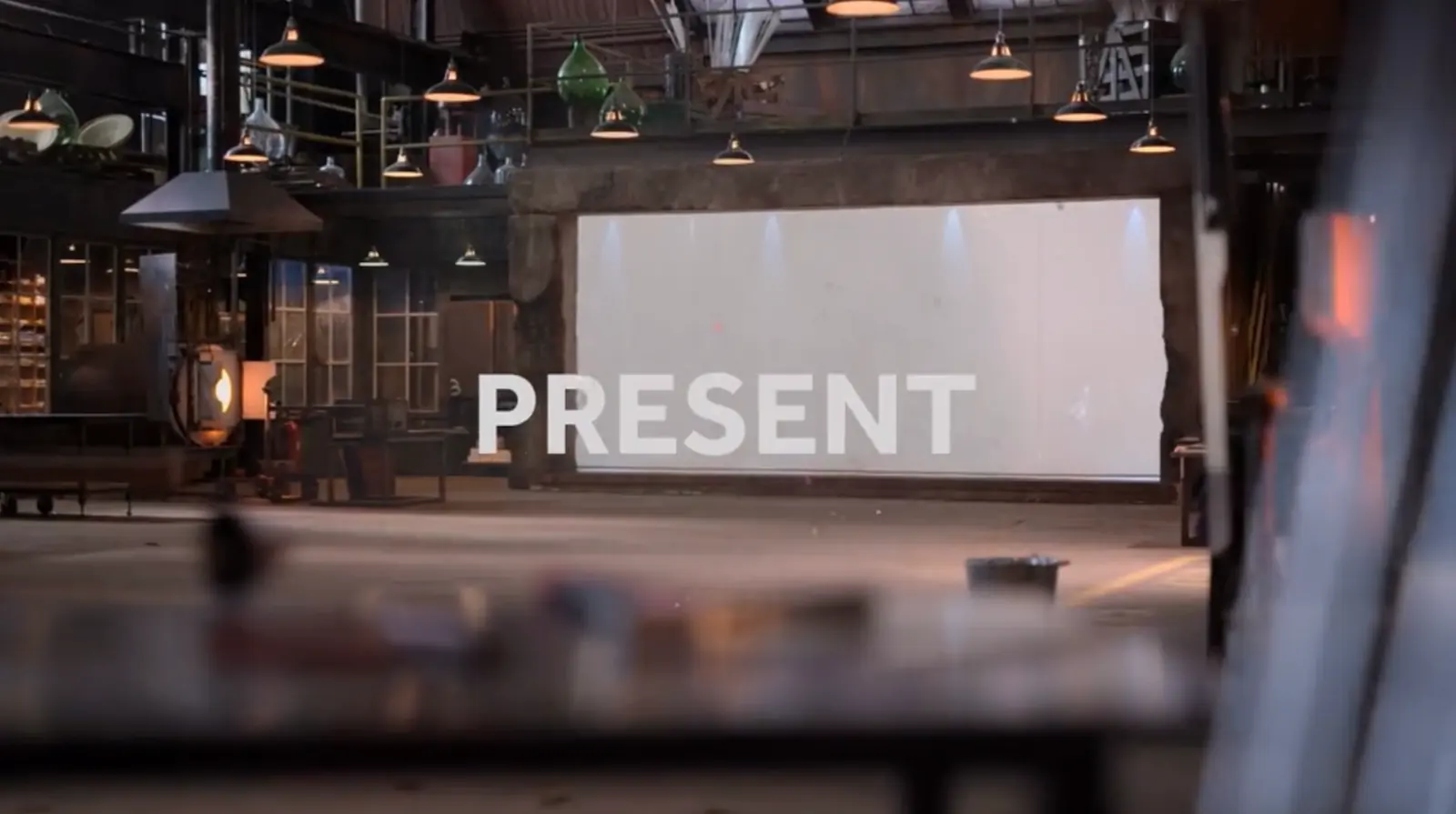
A switchable sliding door on the set of Netflix’s Blown Away
Four leaves, two directions, and power that has to follow them
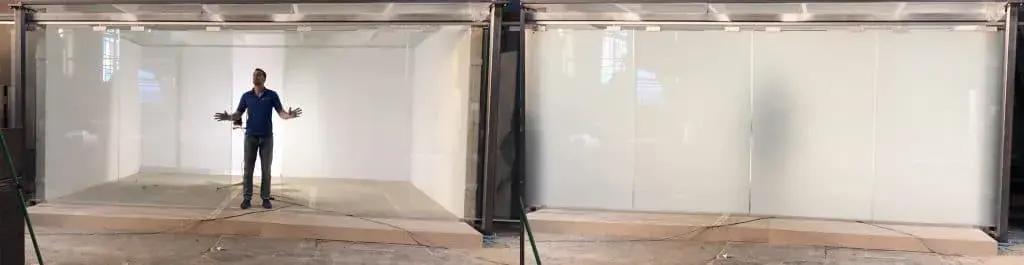
Blown Away is shot in a working hot shop — furnaces, molten glass, ten artists and a camera crew moving between them. The set needed a division that could be closed on camera and opened again without a grip walking into shot, and it had to be glass, because the whole subject of the programme is on the other side of it.
What went in was a four-panel sliding door in PriWatt switchable glass, the leaves running to opposite sides. Installed and wired in two days.
The problem a sliding switchable door actually has
It is not the glass. A switchable panel is a switchable panel whether it is fixed in a partition or hung on a track. The problem is that every panel needs a busbar and a tail, and on a sliding leaf the far end of that tail is somewhere different depending on where the door is.
- Four leaves means four busbars and four supplies, not one
- Two of them travel one way and two the other, so the cable runs are not mirror images
- Either power travels with the leaf through the track, or the leaf only switches where it parks
- Whichever is chosen has to be agreed with whoever supplies the track, before the glass is made
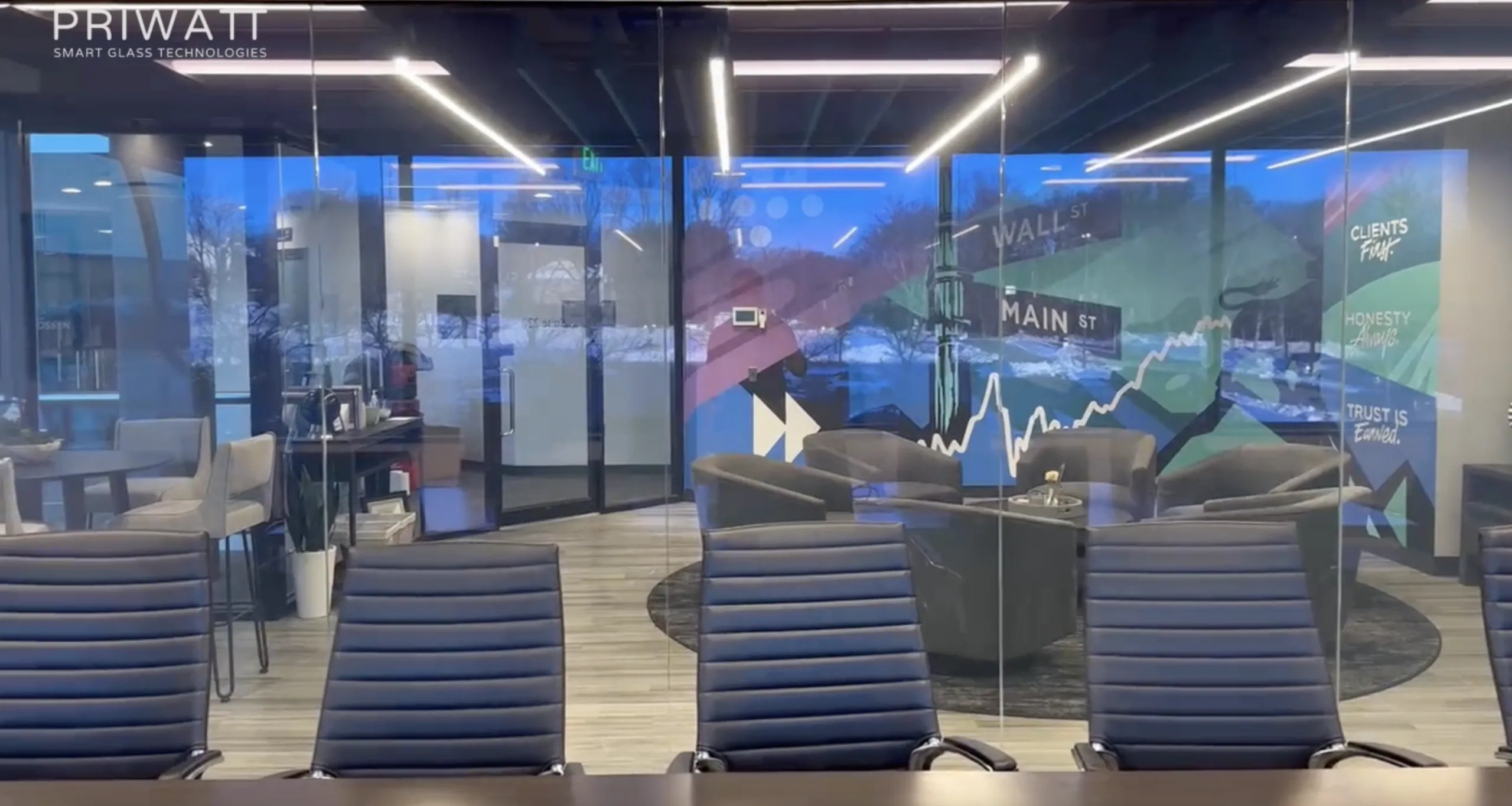
On a set the second option is usually the right one, because the state that matters is the closed one: that is the shot. The same decision, in an office or a house, is on room dividers and, for a hinged leaf, on doors.
Why a production reaches for this instead of a flat
It changes on cue
Clear to opaque in under a second, from a switch off camera. No crew member enters the frame and nothing has to be struck between takes.
It is silent
Nothing moves. A blind, a flat or a curtain all make a noise the sound department then has to work around; a state change makes none.
It is a real division
The door is glass, so the space reads as one room when it is open. It is not a backdrop pretending to be a wall.
Two days from arriving to working is the other reason. A production schedule does not have a fortnight for a partition, and the wiring is the part that takes the time, which is exactly why it is drawn before anything is delivered.

One thing this set did not need, and most do
A hot shop is not a subtle environment, and the glazing here is a division, not a barrier. Where a switchable panel is doing structural work (a guard, a balustrade, a door in a public route) the panel underneath has to be rated for it, and the switchable layer changes nothing about that. It is a common misreading, and worth stating plainly: see safety glazing and code.
PriWatt has been specified on other productions on the same reasoning — the first US-based NHK World-Japan news studio, and the chief medical officer’s office on Star Trek: Strange New Worlds.
Specified on this project
PriWatt PDLC switchable glass
The switchable layer laminated inside the panel, made to the opening. Private unpowered.
Film and television
Studios and sets, where visibility is directed rather than managed.
Room dividers
One room, or two — and what changes when the divider moves.
A project like this one
A set, a studio or any division that has to change state on cue and make no sound doing it. PriWatt makes the glass and the film in Pompano Beach, Florida, and quotes every project off its own drawings. Send dimensions, or a photograph with the sizes written on it. No drawings yet? Take the call instead.