Ferrari projects the Purosangue onto switchable glass in New York
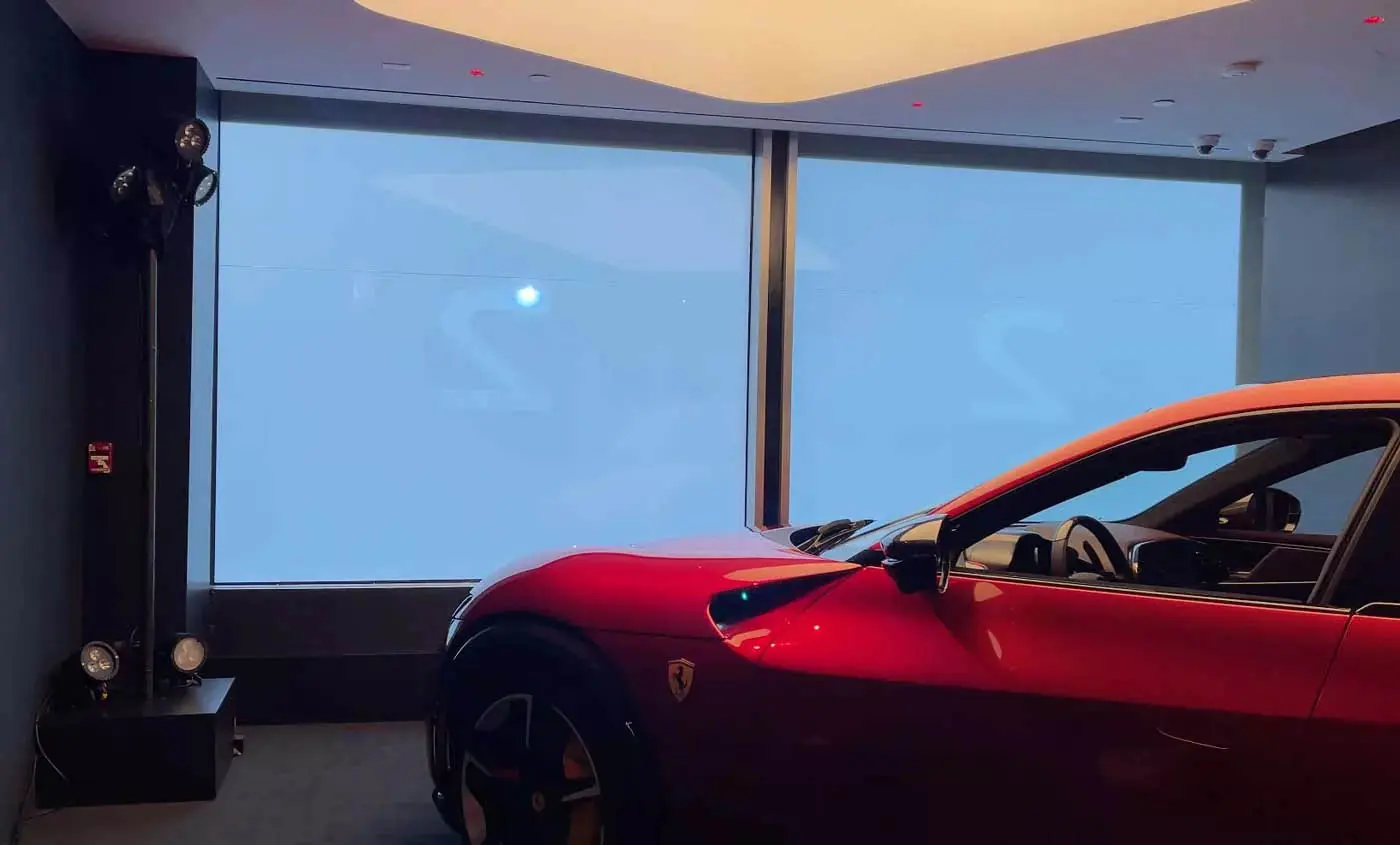
The screen the car was standing behind
Ferrari launched the Purosangue, the first four-door car the marque has built, at its New York dealership. The problem with a reveal is that the two things an audience wants are in conflict: the film that explains the car, and the car itself. Show the film and the car is behind a screen. Take the screen away and there is nowhere to project.
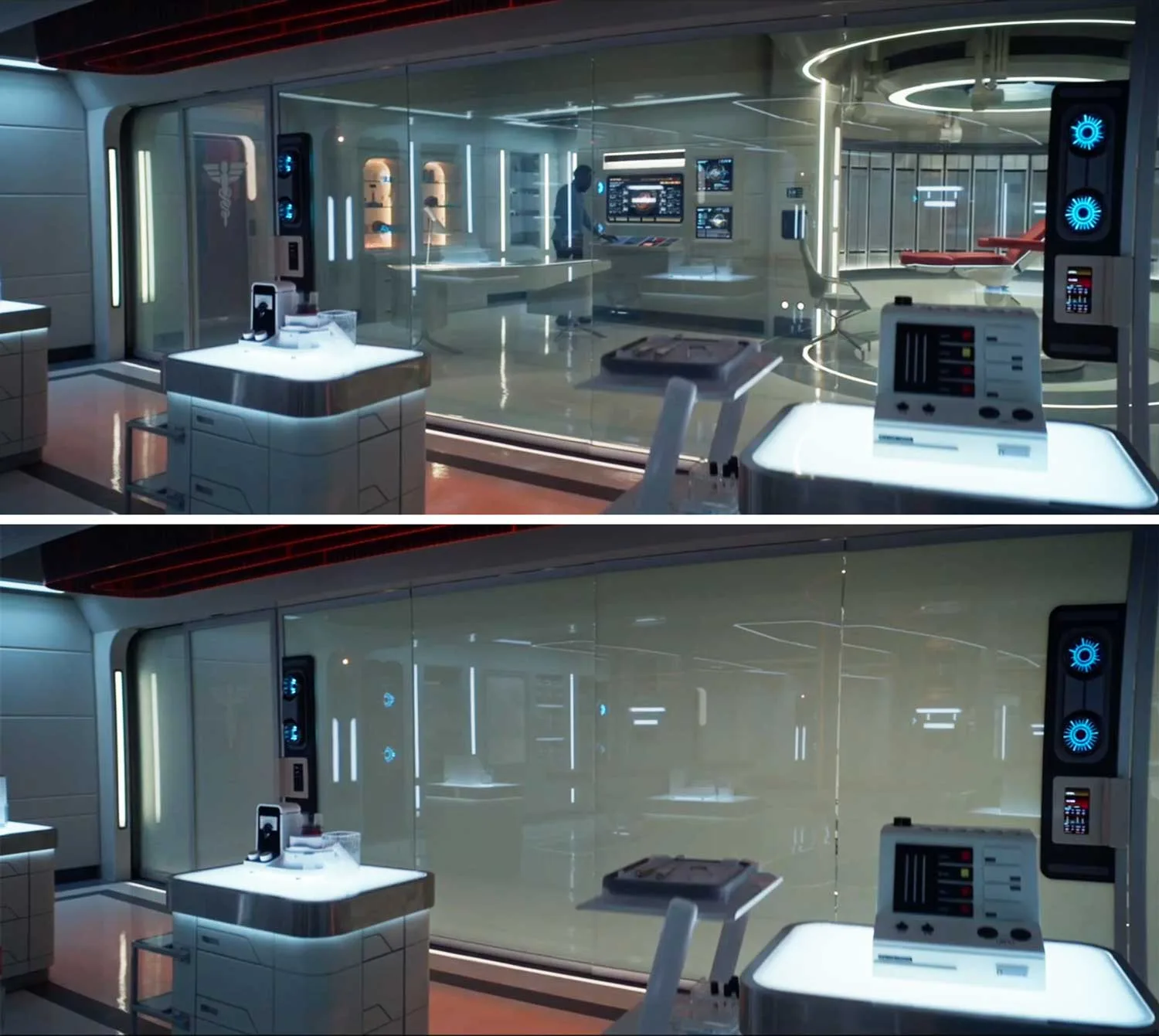
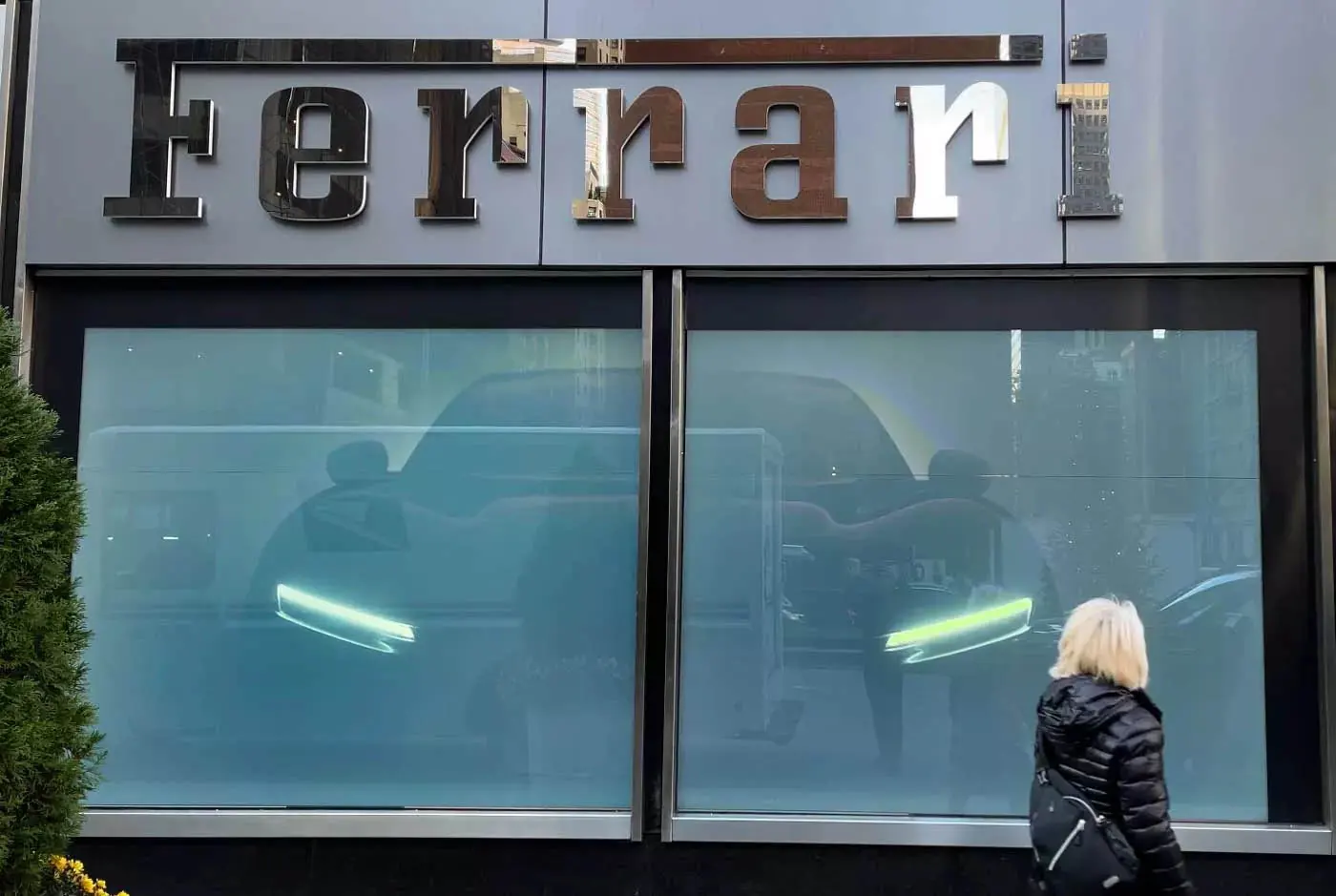
Here they were the same surface. The presentation was projected in HD onto a switchable glass panel from a projector mounted in the ceiling. At the end of it the panel was switched, the image went with it, and the car was standing behind the glass the audience had been watching.
Why a switched panel makes a projection screen
It is not a trick, and it is not a second product. In its private state a PDLC panel works by scattering light instead of blocking it: the liquid-crystal droplets sit at random angles and send light in every direction. Measured, that is 94–95% haze, the property a rear-projection screen is bought for. The panel is a diffuser because of the thing that makes it private.
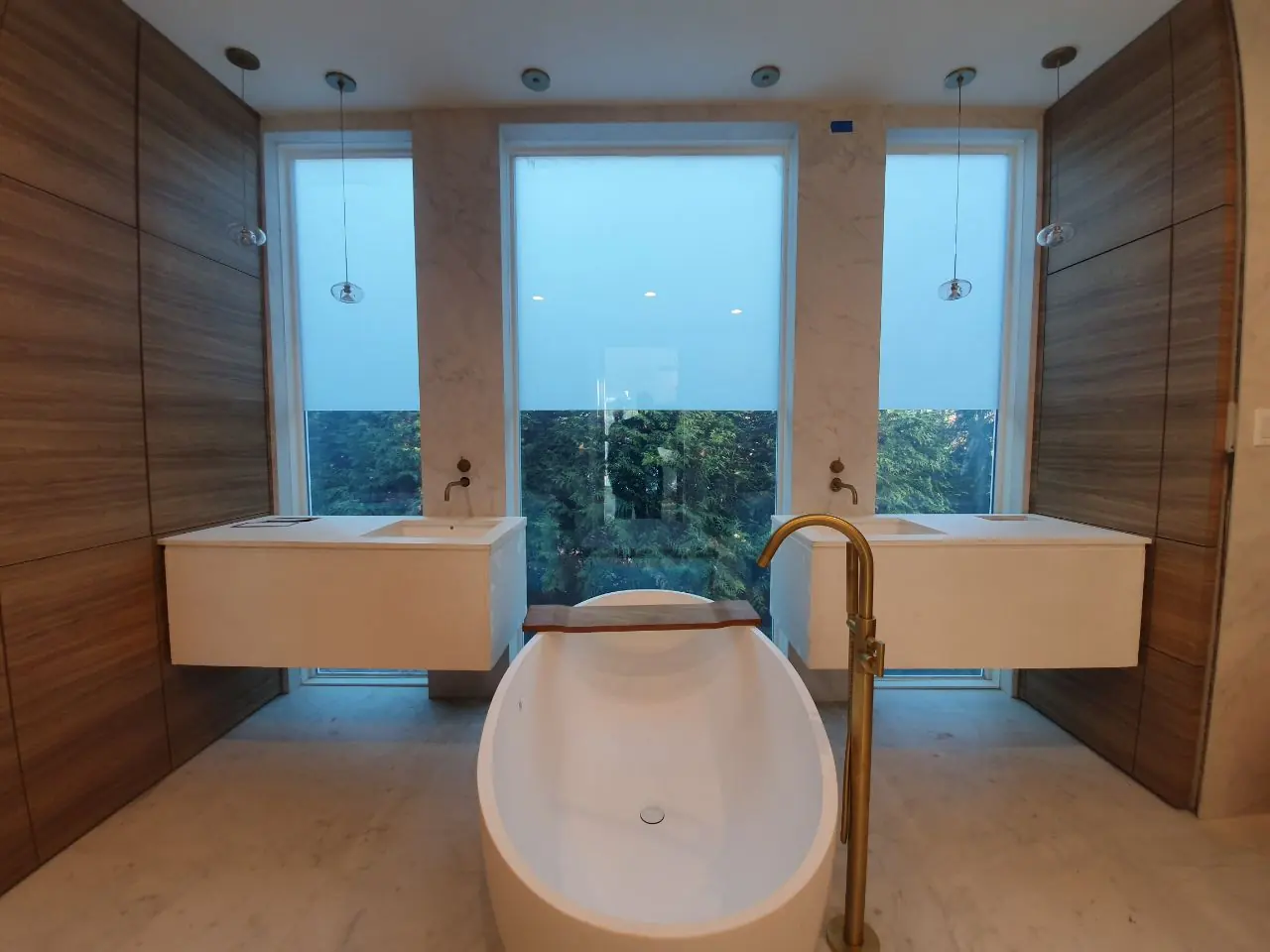
So the same wall does both jobs without a compromise in either. Powered, it is glass and the room can see through it. Unpowered, it is a screen large enough to project a car onto at full size.
What that gives an event that a screen does not
- The reveal is one movement rather than a stage change — nothing is wheeled away and no curtain drops
- The projection surface is exactly where the object is, so the audience never has to turn round
- Between presentations the panel is clear, and the space goes back to being a showroom
- Nothing is rigged above the crowd except the projector, which is fixed to the ceiling
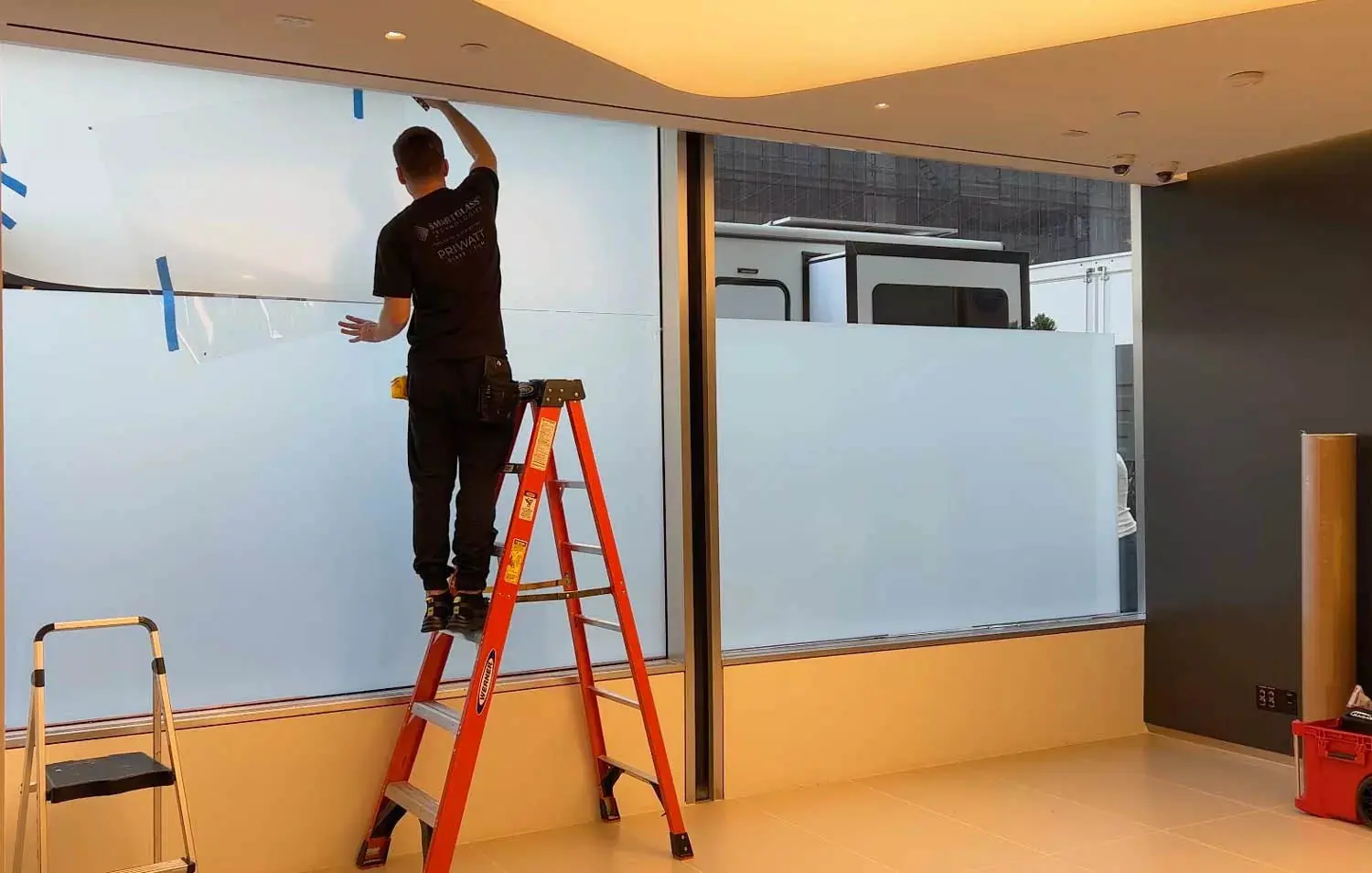
This was one of the largest projection panels the installer had put into a New York space. Size is the practical constraint on the idea rather than the optics: a single PriWatt panel reaches 143 in tall, and a wider surface is made from several with the joints set where the design wants them. Where those lines fall matters more here than anywhere else, because a projected image crosses them.
If you are planning a launch on glass
Three things decide whether this works, and all three are settled before anything is made. Where the projector goes, because rear projection means it is behind the screen from the audience’s side and the throw distance sets the room. How bright the room is, since a diffusing surface competes with ambient light like any other screen. And which state the panel should hold when nothing is switched on — for a showroom that is usually clear, which points at reverse mode rather than the normal-mode panel used here.
The full argument, including the haze figures and what they mean for a projected image, is on rear-projection surfaces.
Specified on this project
PriWatt PDLC switchable glass
The switchable layer laminated inside the panel, made to the opening. Private unpowered.
Rear-projection surfaces
A switched panel is a 94–95% haze diffusing surface, which is what a projection screen is.
Public spaces
Museums, retail, hospitality and lobbies, where the glass is part of the visit.
A project like this one
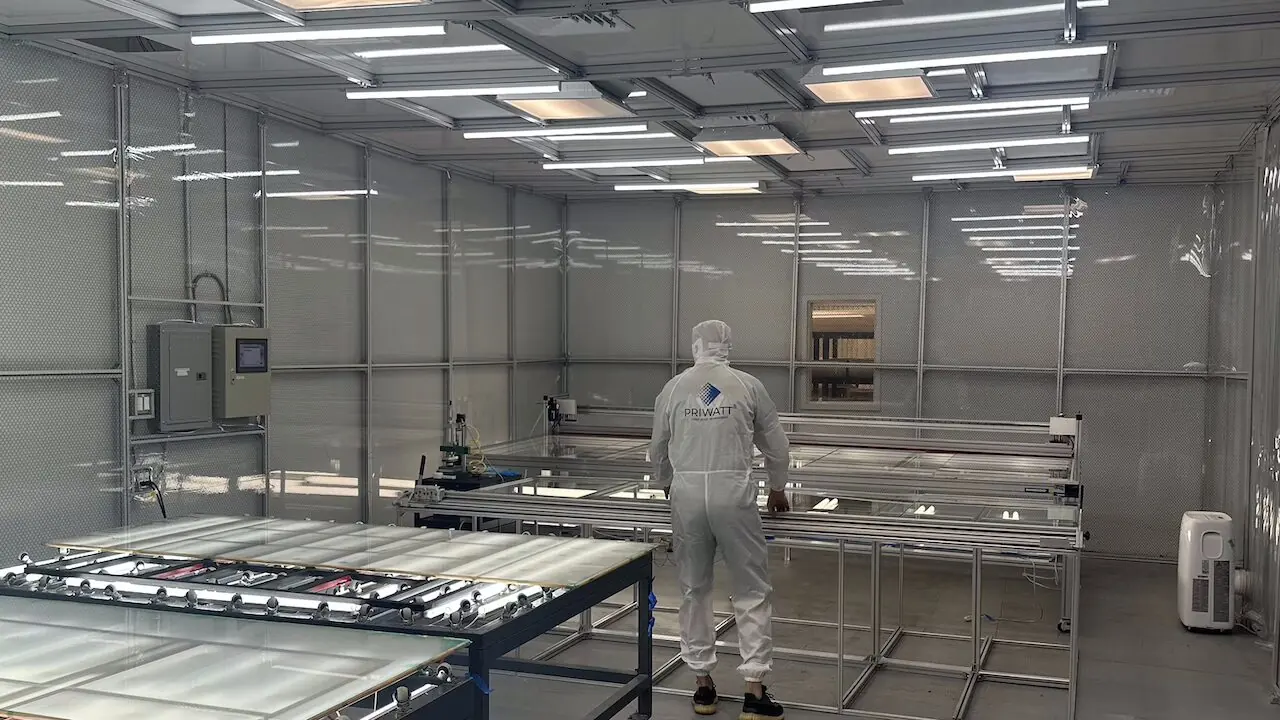
A product launch, a showroom or a demonstration space where the screen has to disappear. PriWatt makes the glass and the film in Pompano Beach, Florida, and quotes every project off its own drawings. Send dimensions, or a photograph with the sizes written on it. No drawings yet? Take the call instead.