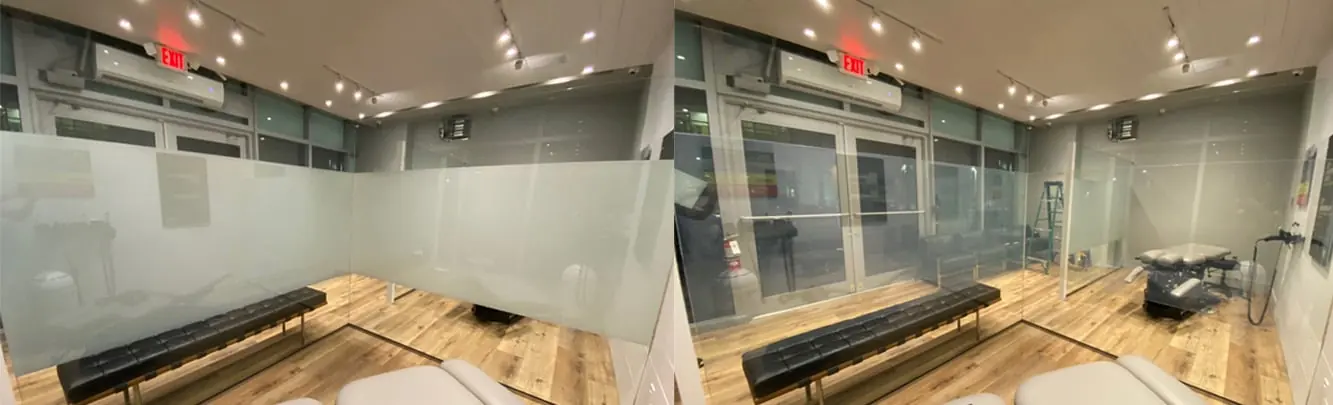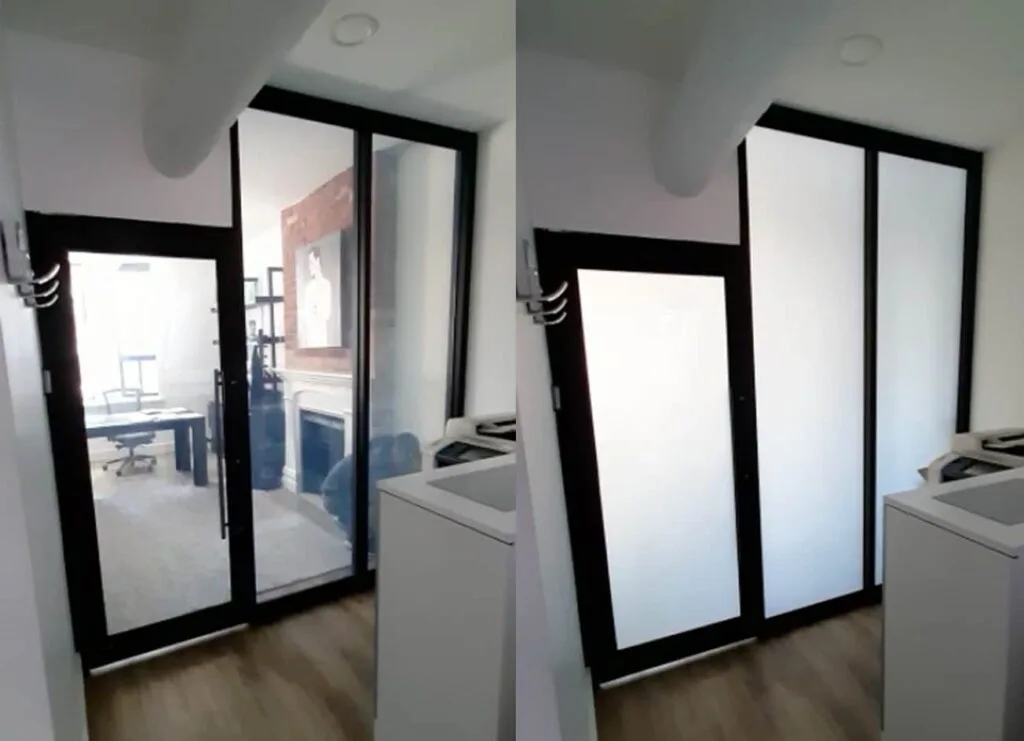

PriWatt film at the Martin County Sheriff’s Office
The glass was not empty
Most retrofit case studies describe a clean pane in a frame. This one did not have that. There were fittings already mounted on the glass, the kind of accumulated hardware any working building has after a decade, and film has to go onto a continuous surface.
The installer’s Miami team applied PriWatt switchable film around it. It took longer than the area suggests, and that is the useful part of this project, not a footnote to it.
What is actually on the glass in a working building
- Applied vinyl: signage, door numbers, frosted manifestation bands, and the adhesive residue under anything removed
- Hardware through or onto the pane: handles, pulls, closers, patch fittings, sometimes a card reader
- Silicone beads and mastic at edges that were never meant to be a substrate
- Older film, sun-damaged or lifting, all of which has to come off before anything else goes on
- Scratches and chips, invisible until film goes over them and permanent after that
Every one of those is either removed, worked around, or the reason a panel is quoted differently from the one next to it. Film is cut to a shape at manufacture, so a pane with a fitting through it is a shaped panel, notched or bored to the drawing, and that drawing has to exist before the order.
That is the real argument for the survey. It is not a formality; it is where a job with obstacles on the glass stops being a surprise.
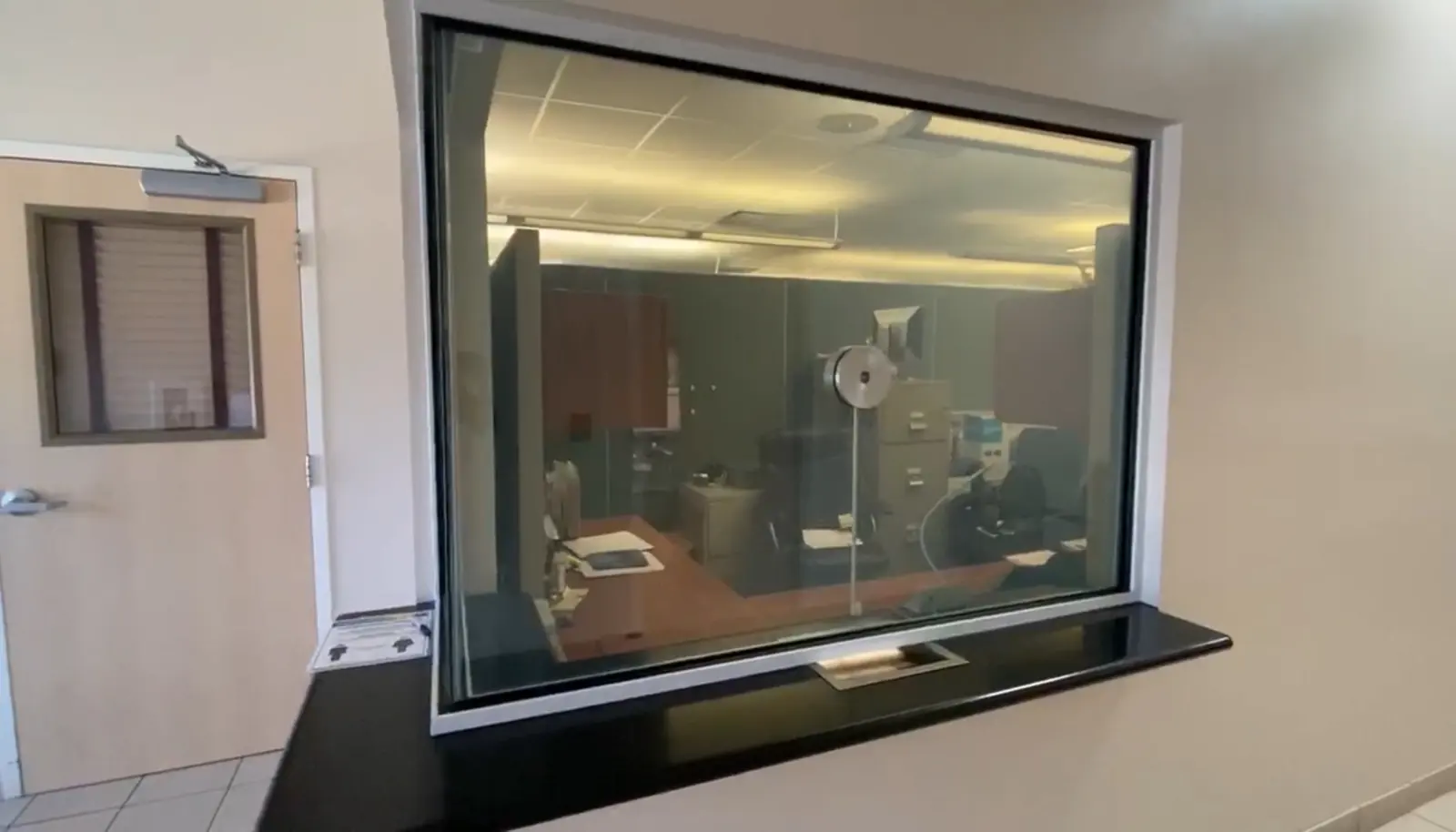
What a law-enforcement building wants it for
Interview rooms, briefing spaces, and offices where a case is being discussed. The requirement is the ordinary one: a room glazed so the building works, closed for the part of the day when what is on the table should not be legible from a corridor.
It is worth resisting the language that usually attaches itself to this sector. The product removes line of sight. It does not secure anything, it does not resist anything, and it is not a countermeasure. Those are different products with different tests behind them, and describing a 0.4 mm polymer film as one of them is how a specifier ends up with a control that does not do what the risk register says it does.
What it is
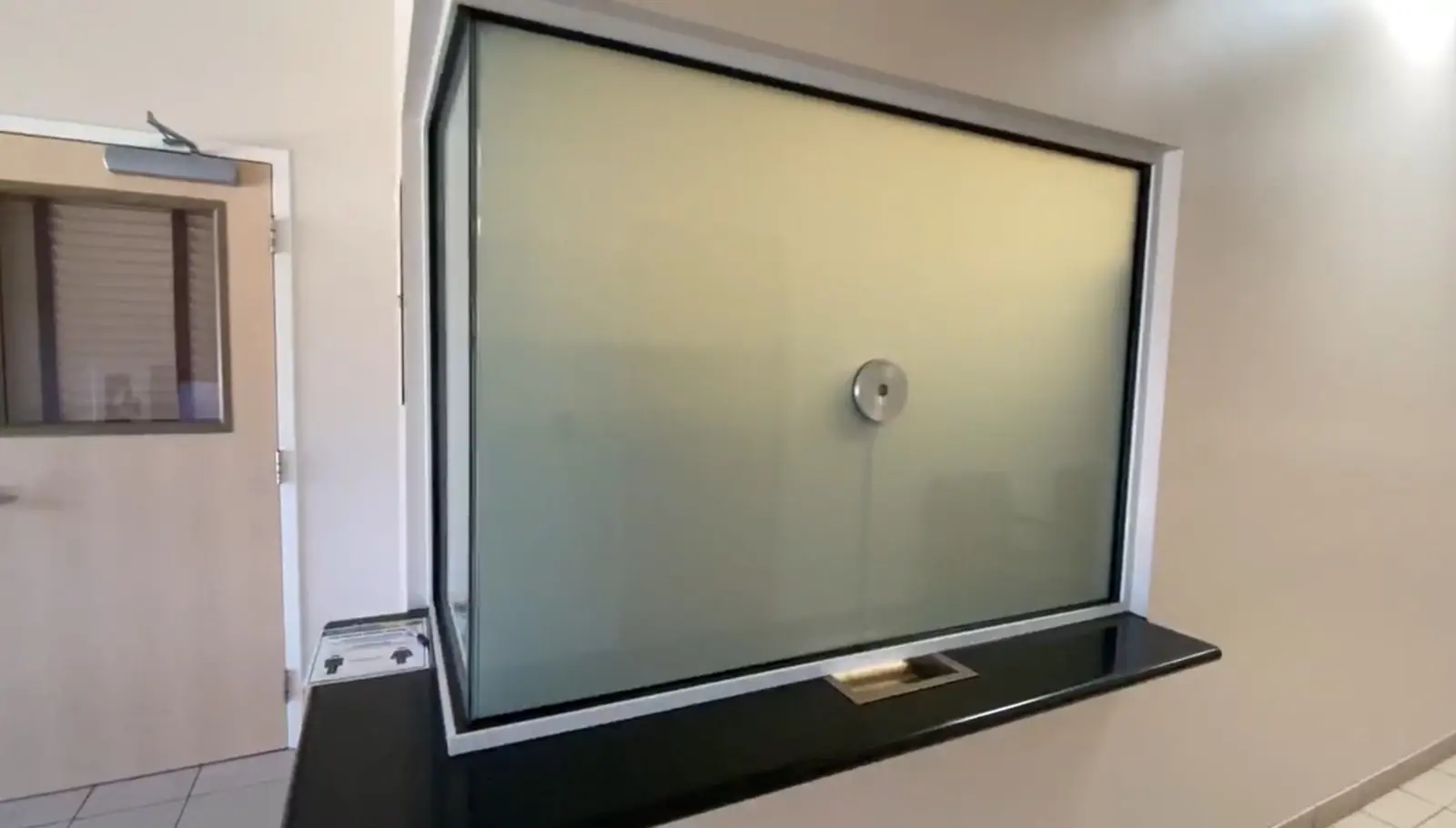
Visual privacy on demand, in under 200 ms, from a switch, with nothing hanging in a room that has to stay clear.
What it is not
Not acoustic. Not attack-resistant. Not a security rating. The pane’s rating is the pane’s, before and after.
What replaces the blind
Nothing to gather dust, nothing to break, nothing a person in an interview room can take hold of.
If a room genuinely has to be unheard
Then that is a glazing specification and it is settled separately. Acoustic performance belongs to the whole partition — the glass make-up, the head and sill detail, the junction with the structure — and is quoted per build-up. A laminated switchable panel can be built into an acoustic make-up; film applied to an existing pane cannot change what that pane does.
Say so at technical review. It changes the glass, not the switchable layer, and it is far cheaper as a specification than as a discovery. Everything measured and published is in the technical reference.
Specified on this project
PriWatt PDLC switchable film
Self-adhesive film applied to glass already in the building. Private unpowered, clear when switched.
Government facilities
Where the requirement is control over what is visible, and when.
PriWatt PDLC switchable glass
The switchable layer laminated inside the panel, made to the opening. Private unpowered.
A project like this one
An interview room, a briefing space, or a retrofit onto glazing that already has fittings on it. The glass and the film are made in Pompano Beach, Florida, and nothing here is priced off a rate card. Send dimensions, or a photograph with the sizes written on it, and the quote comes back against your panels. If you are not that far along, book the call.