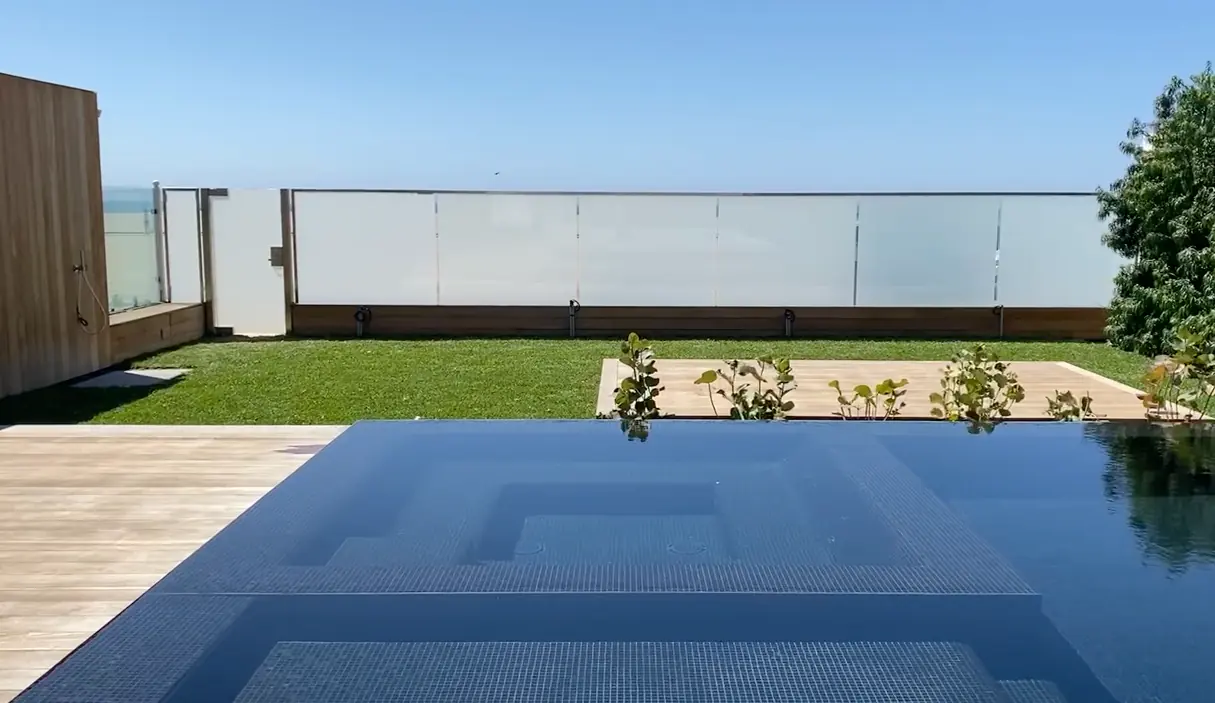
A PriWatt switchable glass fence on an ocean-front property in Los Angeles
The fence exists because of the view it would otherwise block
A boundary on an ocean-front property has to do two things that cancel each other out. It has to enclose, because the site is overlooked and the terrace is used; and it must not obstruct, because the view is why the house is there.
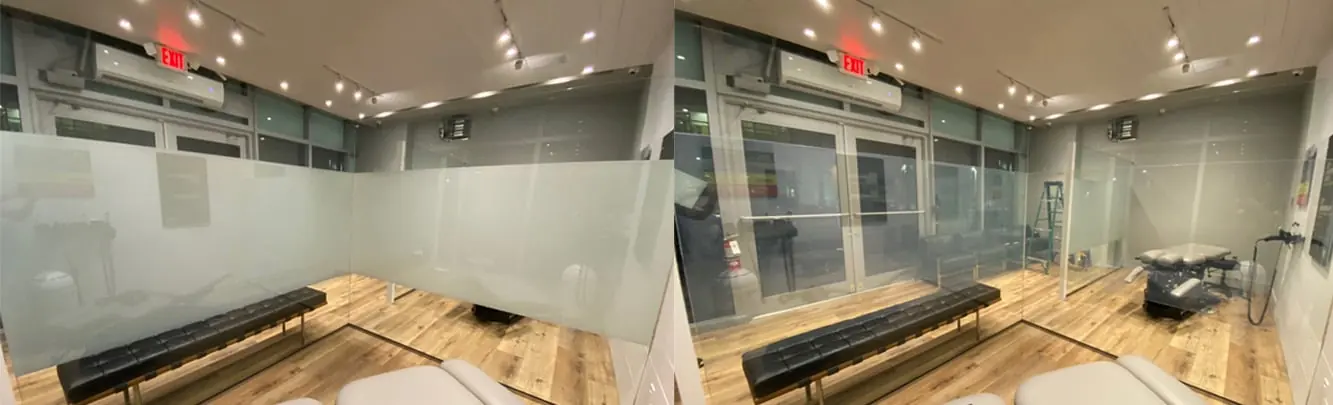
Glass answers the second and creates the first. A switchable glass fence answers both: transparent while nobody needs it not to be, opaque at a switch, and nothing standing on the terrace either way.
What the glass actually is
| Specification | |
|---|---|
| Overall thickness | 13/16 in |
| Glass | Low iron |
| Treatment | Tempered |
| Interlayer | EVA laminated, with the switchable layer inside it |
| Control | The house automation system, plus a programmed schedule |
Every line is doing work. Low iron removes the green cast ordinary float glass has, and that matters more here than anywhere, because the thing being looked at is the sea. Tempered and laminated is what a barrier has to be: this is a guard before it is a privacy screen, and the glazing has to hold in that role first. EVA instead of a standard interlayer is the moisture answer. An exterior laminate on the coast is exposed to salt air and standing water at its edges for its whole life.
The general case, that a balustrade is a barrier first and switchable second, is on railings and balustrades, and what a rating covers is on safety glazing and code.
Who did which part
Worth setting out, because it is how most PriWatt work reaches a building, and because it answers the commonest question a homeowner asks: who installs this?
A certified glazing company
Installed the panels. A laminated switchable panel is glazed like any other laminated panel. The trade that would have fitted a plain glass fence fits this one.
A PriWatt representative
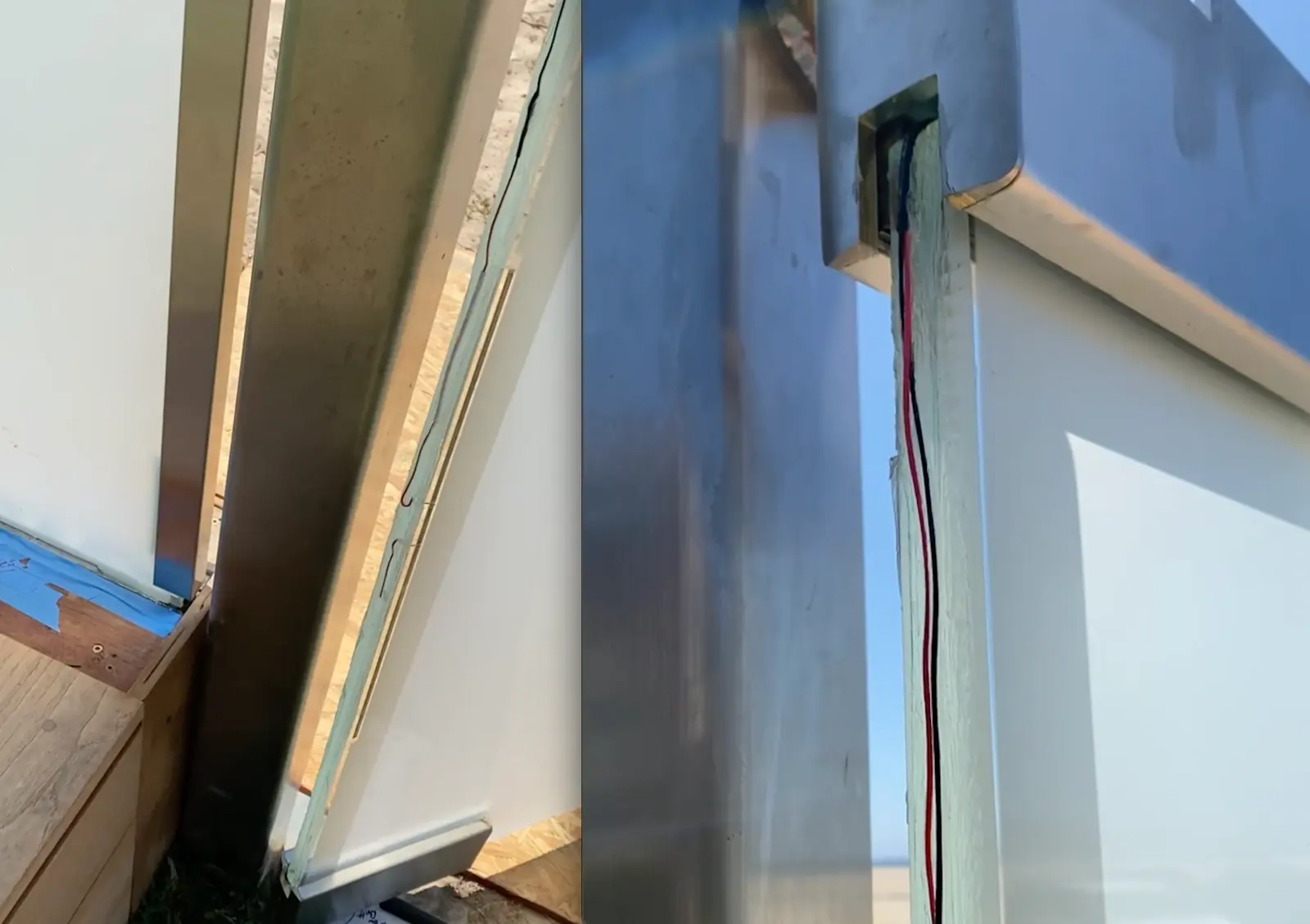
Oversaw the low-voltage connections and the commissioning. That is the part specific to the product, not to the glazing.
The mains supply
A certified electrician’s, as always. The transformer takes a supply; what happens upstream of it is not the glazier’s scope and is not PriWatt’s.
That division is the whole reason the partner programme is structured the way it is. A glazier does not need to become a switchable-glass specialist to fit one. They need the panel made correctly, a drawing that says where the tail leaves, and somebody responsible for the low-voltage side.

A schedule, unusual and sensible
The fence is not only switched by hand. It is programmed: the automation runs it to a schedule as well as answering the pads in the house. On a boundary that is the right arrangement, because the privacy requirement on a terrace is largely predictable: it follows the time of day and the way the household uses the outside space, not a decision somebody makes at the moment they need it.
Which state it holds with no power is then the question that follows. On an exterior boundary the usual answer is clear: the view should survive an outage, and the house should not wake up inside an opaque box. That points at reverse mode, clear unpowered and drawing current only while private.
Specified on this project
PriWatt PNLC reverse glass
Clear with no power, private only while it is switched — the reverse of normal mode.
Railings and balustrades
A barrier first, and switchable second.
Residential
Bathrooms, glazed stairwells, terraces and railings.
A project like this one
A terrace, a pool boundary, a balustrade or a fence that exists because of a view it must not obstruct. PriWatt makes the glass and the film in Pompano Beach, Florida, and quotes every project off its own drawings. Send dimensions, or a photograph with the sizes written on it. No drawings yet? Take the call instead.