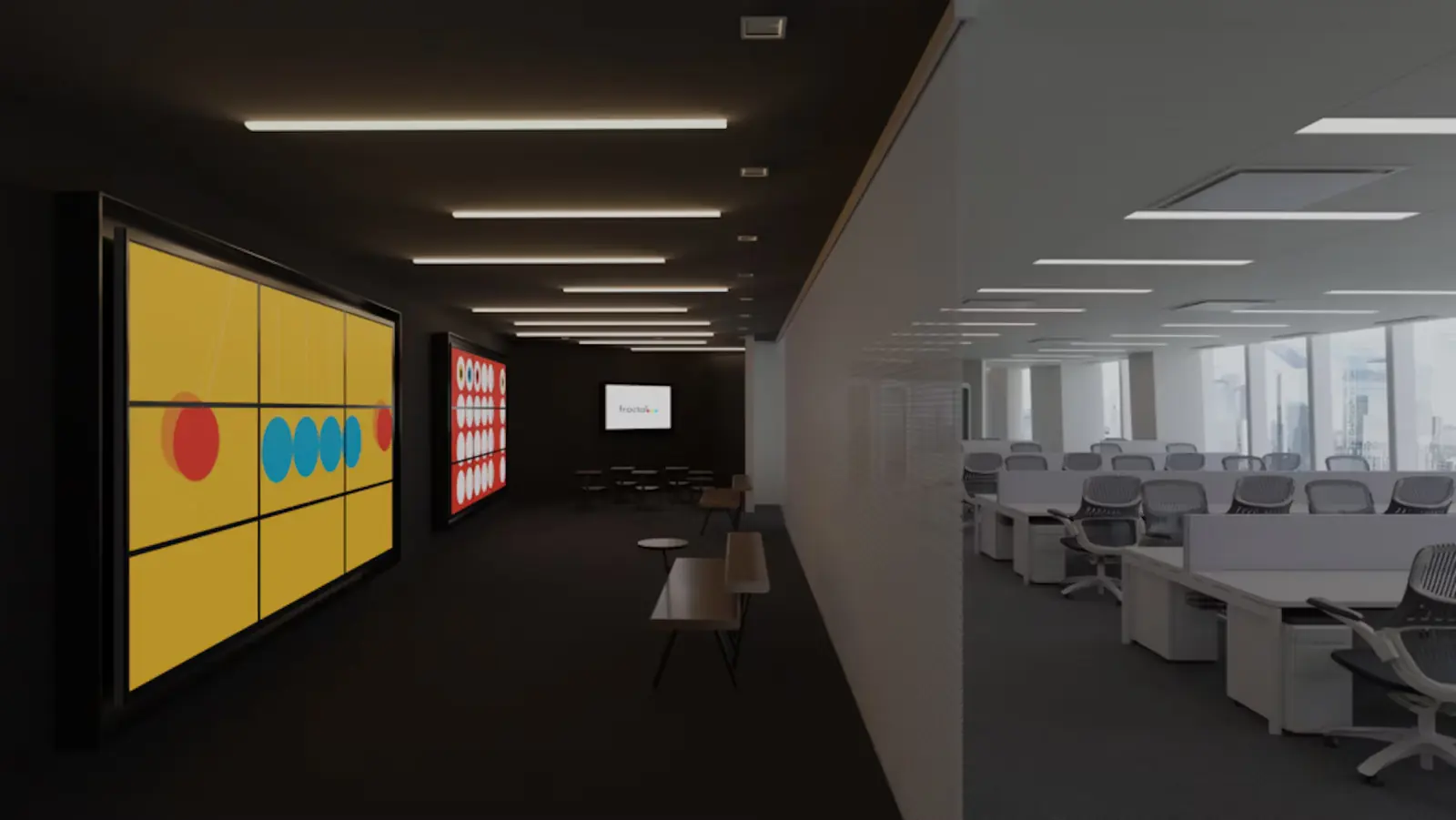
PriWatt film across the partitions at Fractal AI, New York
Six hundred square feet, and a phone that closes rooms
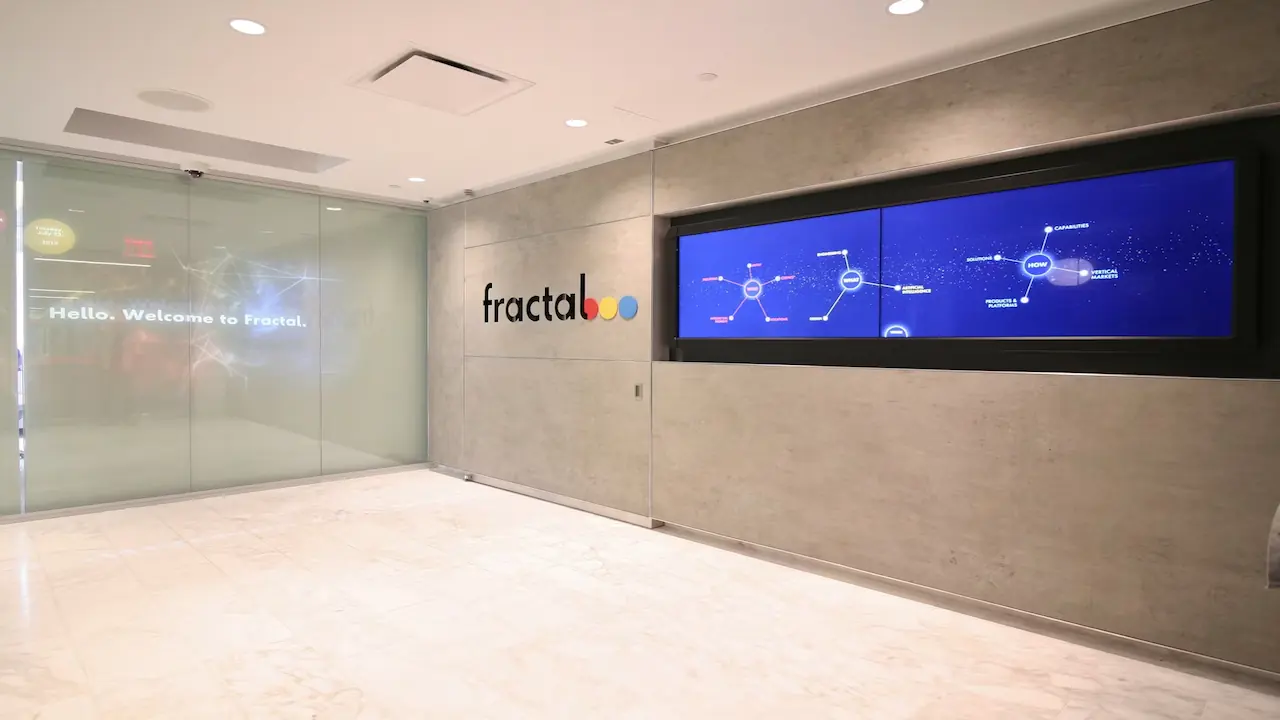
Fractal AI works in artificial intelligence and machine learning from New York, in an open-plan office glazed the way those offices are. Over 600 square feet of PriWatt self-adhesive film went onto the partitions and windows, cut to the dimensions and shapes of each surface, after a survey of the whole floor.
The part worth reading about is what happened after it was applied: it was tied into the automation system the office already had, so a room can be closed from a phone.
What integration actually means here
It is simpler than it sounds, and that is the useful part. A switchable panel is not a networked device. It is a pane with a busbar, drawing a low-voltage AC supply from a transformer, and its state is decided by one thing: whether that supply is interrupted.
Everything described as "smart control" is therefore a question about the switch, not about the glass. Anything that can interrupt a low-voltage circuit can control a PriWatt panel — which is why it works with systems it was never specifically written for.
| Control | What it is, physically |
|---|---|
| Wall switch | A switch in the circuit |
| Touch panel | The same, with several circuits behind one interface |
| Remote | A receiver in the circuit |
| Mobile app | A relay module in the circuit, reachable over the network |
| Building automation | The same relay, driven by the system that already runs the floor |
The practical consequence: integration is a decision to make while the wiring is being planned, because it is about where the relay sits and what reaches it. Retrofitting control into a finished partition is the expensive version of the same job.
Why the survey comes before the number
- Which surfaces actually want switching — usually fewer than are glazed, and every one specified needlessly is paid for twice, in film and in wiring
- The dimensions and shape of each pane, because film is cut at manufacture and a partition run that looks modular rarely is
- What the existing glass is, and which face the film goes on
- Where a tail can leave each panel and reach a transformer through framing that is already closed
- Whether control is going to be local or driven by a system, which decides where relays sit
Six hundred square feet is a floor-sized job, and on a job that size the survey is what separates a fortnight from a quarter. Everything on that list is an input to manufacturing rather than a site decision — which is the whole reason it happens before the quotation and not after it.
What is not claimed for this installation
The version published elsewhere lists energy efficiency among the objectives and again among the outcomes, on the basis that the film has insulating properties that regulate indoor temperature and cut heating and cooling.
Nothing was measured, and on interior partitions there is nothing to measure — an internal wall is not part of the thermal envelope and the film on it is not doing solar work. Where solar performance genuinely is the requirement the product changes and the figures exist: DLC dynamic shading, with published transmission values in the technical reference.
Specified on this project
PriWatt PDLC switchable film
Self-adhesive film applied to glass already in the building. Private unpowered, clear when switched.
Offices and boardrooms
Partitions, meeting rooms and executive offices — the application this belongs to.
Office partitions
How a glazed run is built: where the joints fall, and how one transformer serves a wall.
A project like this one
A floor-sized retrofit, or an office whose lighting and rooms are already driven by a system the glass should join. PriWatt manufactures in Pompano Beach, Florida. Every quote is worked from the project’s own drawings, so send dimensions. A photograph with the sizes written on it does the same job. Earlier than that, book the call.