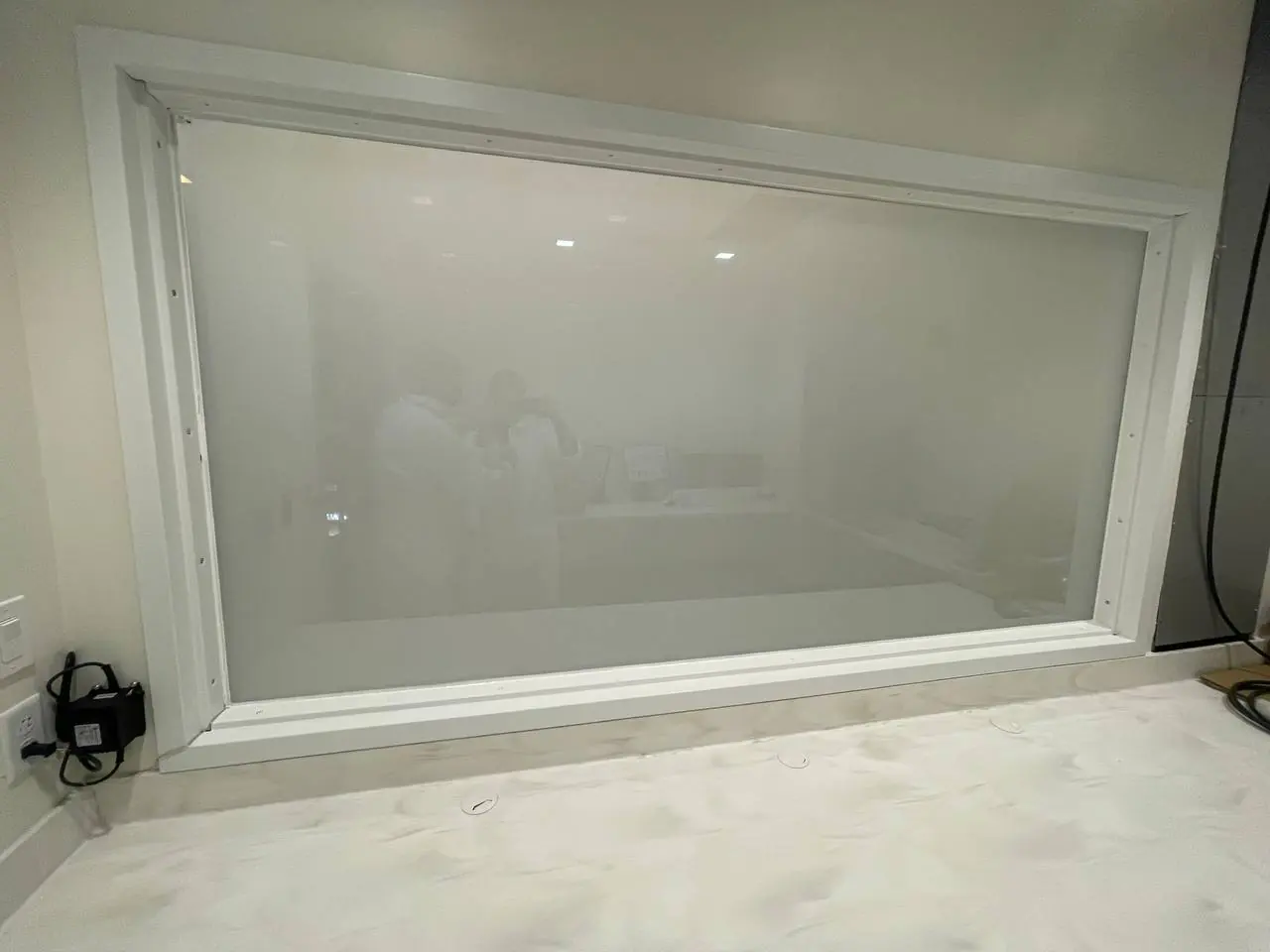
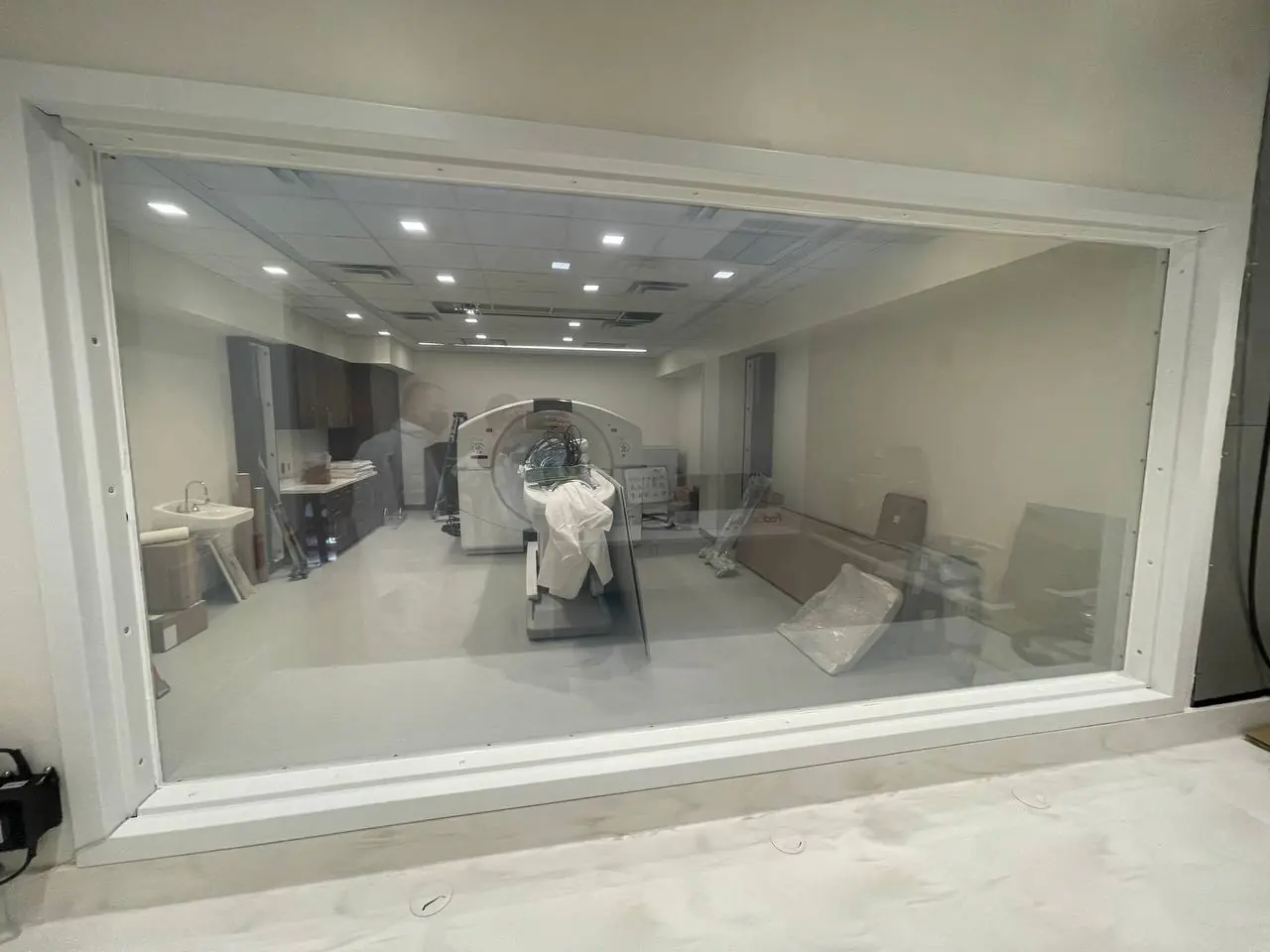
PriWatt film on the MRI suite at Moffitt Cancer Center
A room that has to be watched and not looked into
An MRI suite sets two requirements against each other. The radiographer has to see the patient for the whole of a scan that can run three quarters of an hour, and the patient is lying still, often partly undressed, in a room with a window in it.
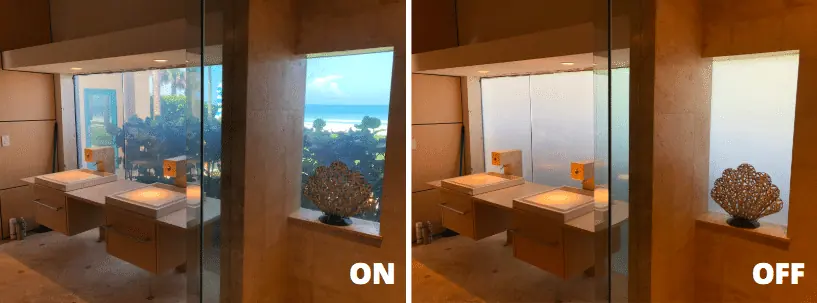
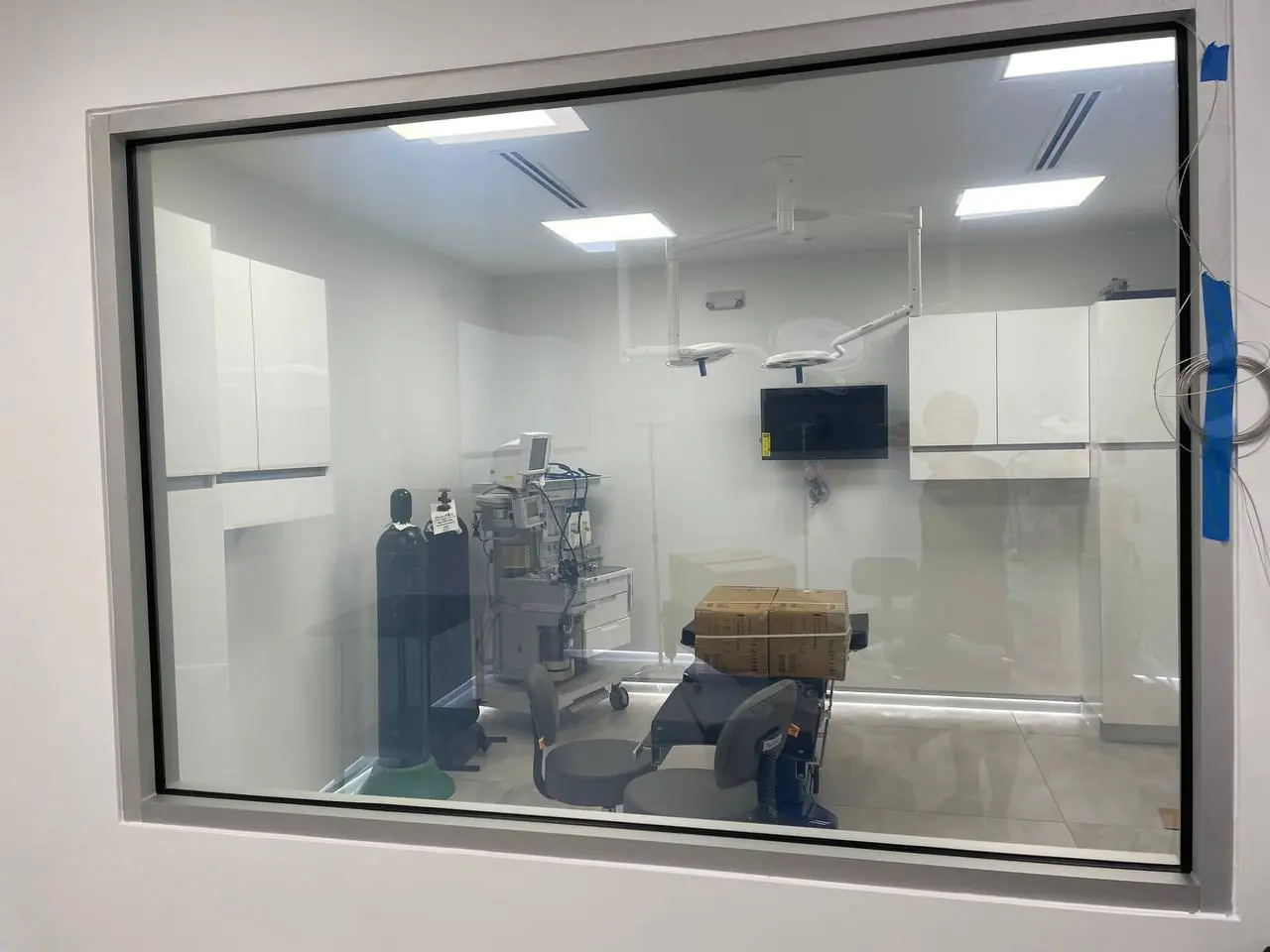
Moffitt’s suite was designed by healthcare architects and engineers with that resolved in the glazing instead of around it: PriWatt switchable film on the control-room window, so the glass is transparent while the scan is running and opaque for everything either side of it.
Why the window is there in the first place
The control room is separated from the scanner because it has to be. Gradient switching on a clinical MRI produces sound pressure levels that can exceed 110 dBA, and the radiofrequency environment of the magnet room is shielded. So the operator sits behind glass, and that glass is then the only way to see the patient.
- Patient positioning and transfer, when the room is least private
- Continuous observation for the length of the scan, when it must be clear
- Changing, and the minutes before and after, when it must not be
- Anaesthetised or sedated patients, where line of sight is not optional
The switchable film stops those states being a compromise fixed at design stage. The window is not permanently clear with a blind that somebody has to remember, and not permanently obscured with a viewing panel cut into it.
What film gives a hospital that a curtain does not
Nothing to launder
A privacy curtain is textile in a clinical room and it leaves on a trolley to be washed. The glass is cleaned with the rest of the glazing, on the same round, with the same product.
Nothing to touch
The state is changed from the control side. Nobody reaches across a patient or handles a rail to make the room private.
Nothing added to the room
Film goes onto the glass already in the wall. No track above the window, no fabric in the field of the magnet, no re-glazing of a shielded room.
That last point is why film, and not laminated glass, was the right unit here. An imaging suite is expensive to take out of service and its glazing is part of a shielded assembly; applying film to the existing pane leaves both alone. The general case for that is set out under glass or film.
What this does not do
Be plain about it, because the opposite is often claimed. The switchable layer is about a hundredth of a millimetre of polymer and liquid crystal; it does not make the window quieter. Acoustic performance in an imaging suite is a property of the glass make-up and the seal around it, and it is specified per build-up, the same answer this site gives for a boardroom. If a room needs quiet as well as privacy, that is a glazing specification, decided before the film is ordered.
Every value PriWatt publishes, including what the film does and does not affect, is in the technical reference.
Specified on this project
PriWatt PDLC switchable film
Self-adhesive film applied to glass already in the building. Private unpowered, clear when switched.
Healthcare and clinics
Observation walls, consulting rooms and imaging suites.
Safety glazing and code
Where a hospital’s glazing has to be safety-rated, and what film does not change about that.
A project like this one
An imaging suite, an observation window, a consulting room or a ward that has to be supervised and private in turn. PriWatt makes the glass and the film in Pompano Beach, Florida, and quotes every project off its own drawings. Send dimensions, or a photograph with the sizes written on it. No drawings yet? Take the call instead.