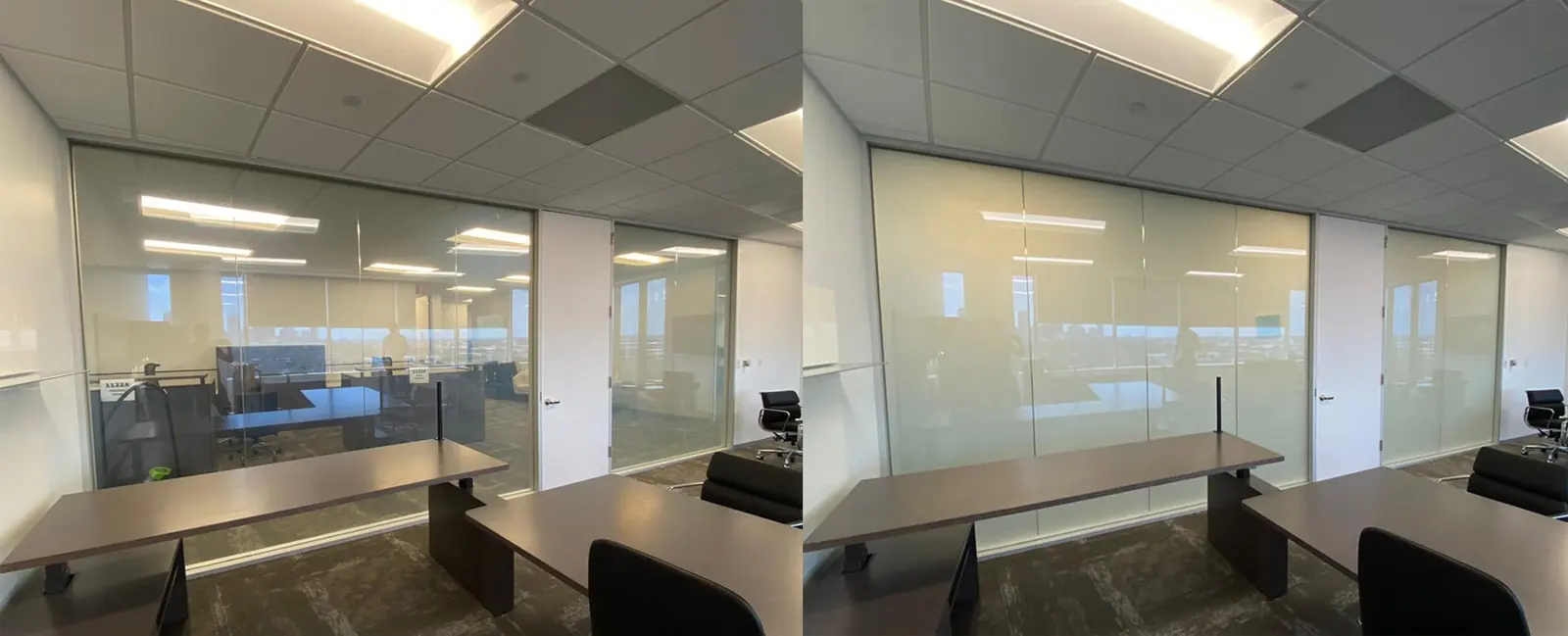
PriWatt film on the glazed partitions at EY’s Toronto office
Glazed partitions, and the meetings behind them
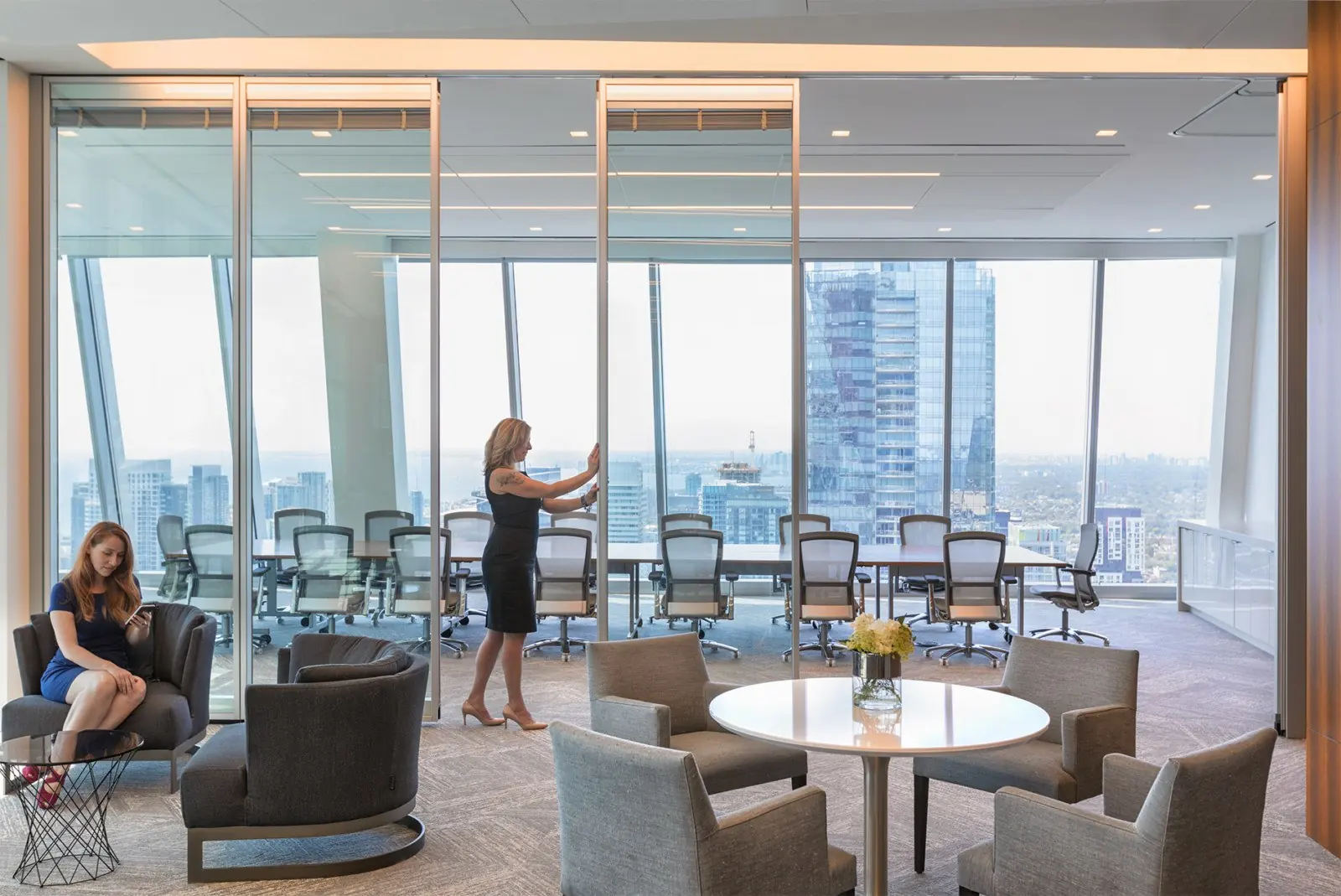
A professional-services floor is glazed on purpose. Partners and staff are meant to be visible to each other, meeting rooms are meant to look occupied, not shut, and the daylight is meant to reach the middle of the plate.
The same glazing puts client work on display. EY’s Toronto office had PriWatt switchable film applied to the partitions of its conference rooms and executive offices, installed by the firm’s Toronto installation partner, around the working day and not in place of it.
Which rooms, and why only those
Not every glazed surface on a floor wants switching, and specifying all of them is the commonest way to spend money that buys nothing. The rooms that earn it are the ones whose privacy requirement changes during the day.
| Space | What changes |
|---|---|
| Conference rooms | Open and legible between meetings; closed the moment client material is on the table or the screen |
| Executive offices | Transparent as the default, private for a conversation that would otherwise move somewhere else |
| Circulation glazing | Nothing changesit is glazed to be looked through, and switching it is spending for no requirement |
| Focus and phone rooms | Usually the reverse caseclosed most of the time, so a solid wall is cheaper and better |
The last two lines are the useful ones on a survey. On most floors the switchable schedule ends up shorter than the glazing schedule, and the saving is larger than any discount.
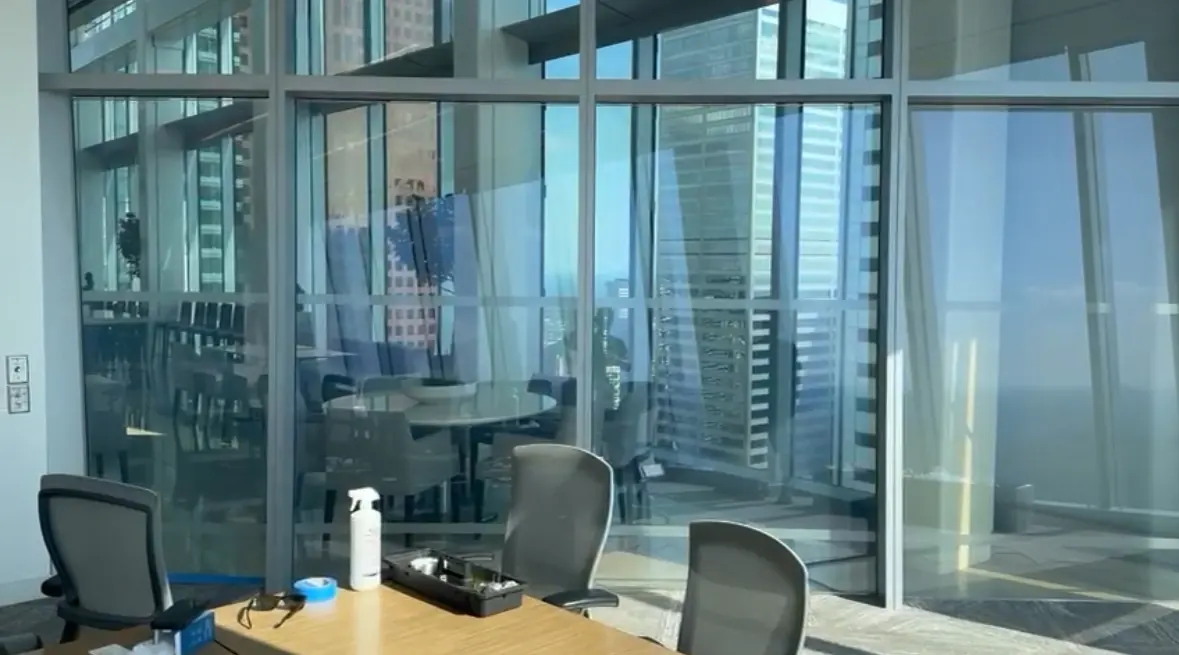
Film into an occupied floor
- The partitions stay: nothing is re-glazed, and no glass is ordered, craned or stored on site
- Work goes room by room, so the floor never becomes a site and meetings move once, not for weeks
- Low-voltage wiring is routed in the partition framing to a transformer sized to the run
- It is applied to the glass, not built into it, which matters on a leased floor where a permanent alteration is the landlord’s decision
That last point decides more corporate retrofits than any technical argument. The general comparison, when a project wants film and when it wants laminated glass, is on glass or film.
What the film blocks, stated as a property
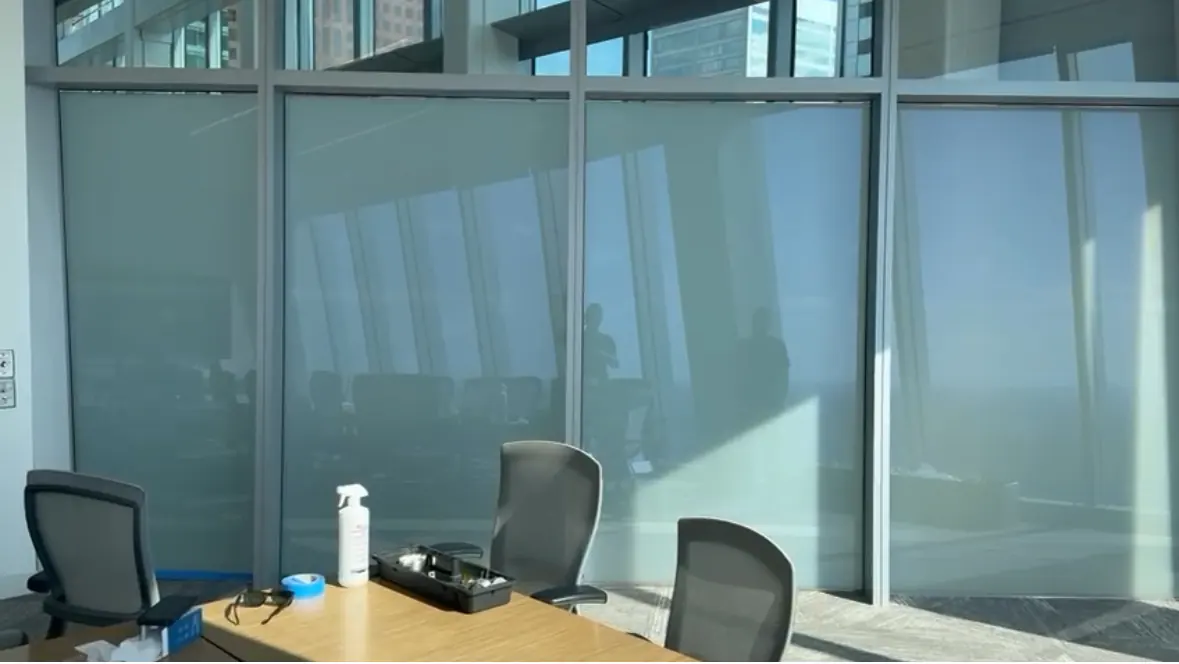
PriWatt film blocks ultraviolet and a share of infrared, and those are published figures, not estimates, and they are in the technical reference with the rest of the measured values.
What this page does not claim is a saving. Whether blocked solar gain shows up on a building’s energy bill depends on the facade, the orientation, the glazing it is applied to and the plant serving the floor, none of which was measured here. This film went onto an interior partition, where it is not doing solar work at all. The honest version is that the UV and IR performance is a property of the material, and a claim about a particular building is a claim somebody has to model.
Specified on this project
PriWatt PDLC switchable film
Self-adhesive film applied to glass already in the building. Private unpowered, clear when switched.
Offices and boardrooms
Partitions, meeting rooms and executive offices — the application this belongs to.
Office partitions
How a glazed run is built: where the joints fall, and how one transformer serves a wall.
A project like this one
A professional-services floor, a glazed meeting suite, or partitions that were built without a privacy answer. PriWatt makes the glass and the film in Pompano Beach, Florida, and quotes every project off its own drawings. Send dimensions, or a photograph with the sizes written on it. No drawings yet? Take the call instead.