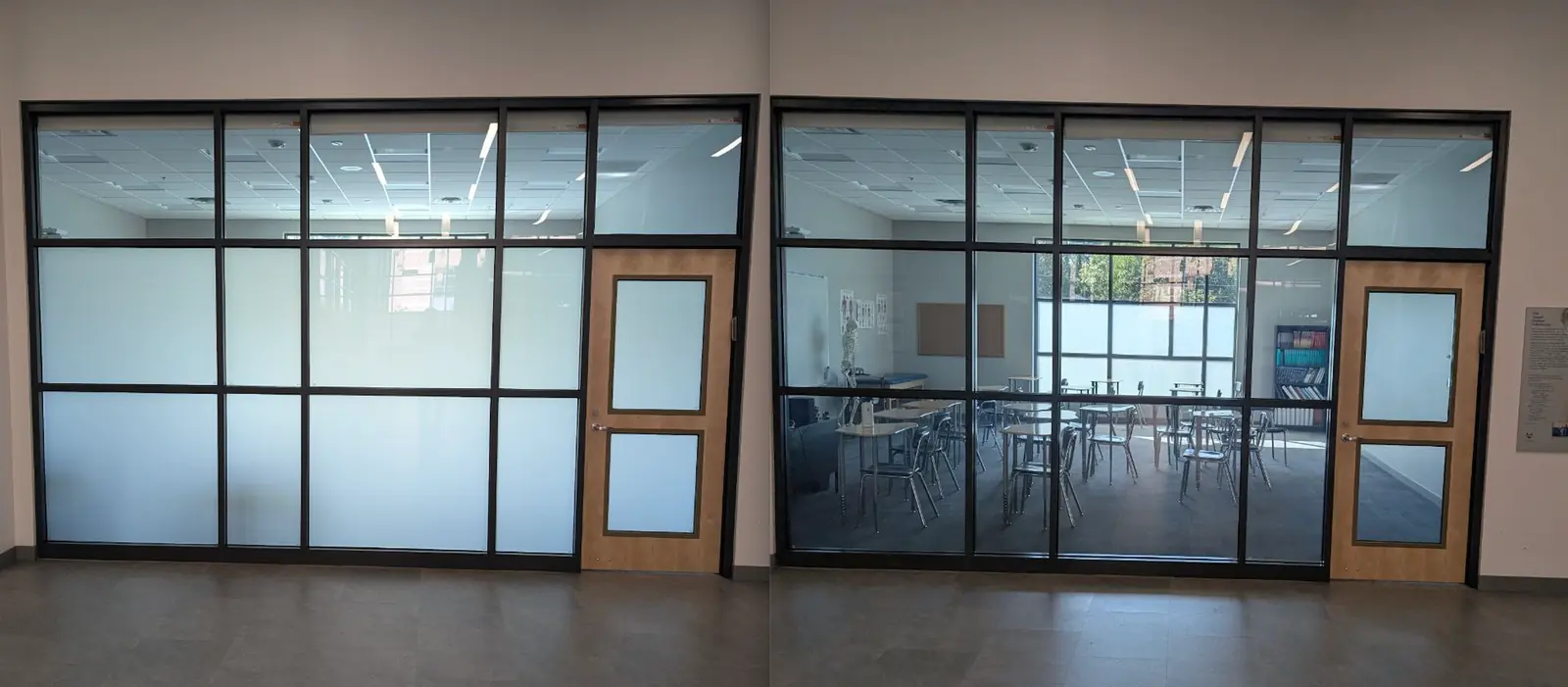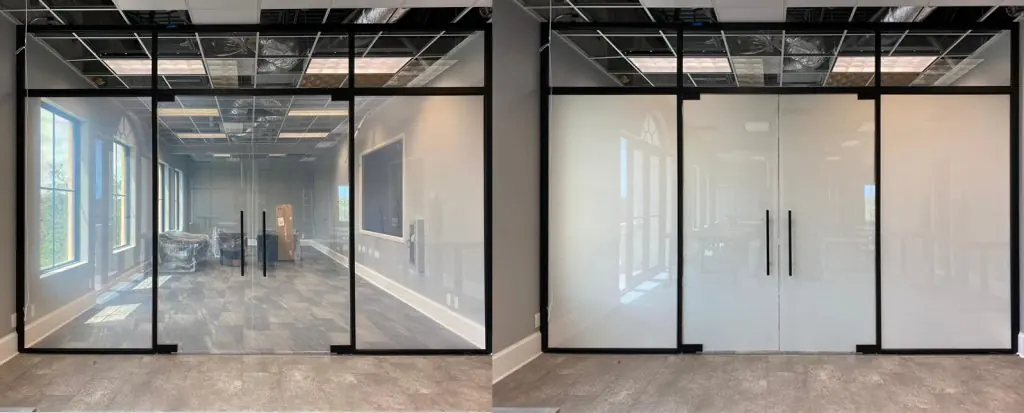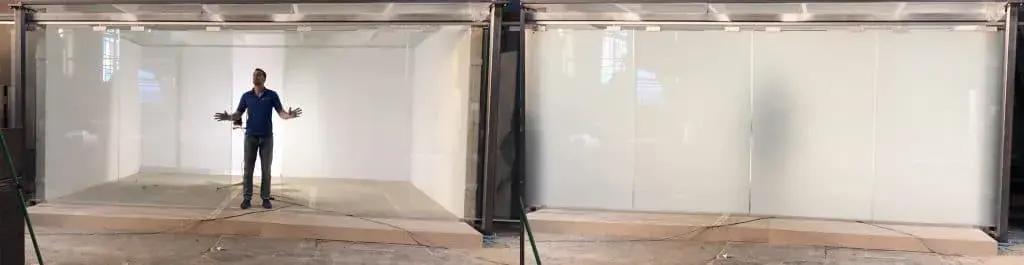
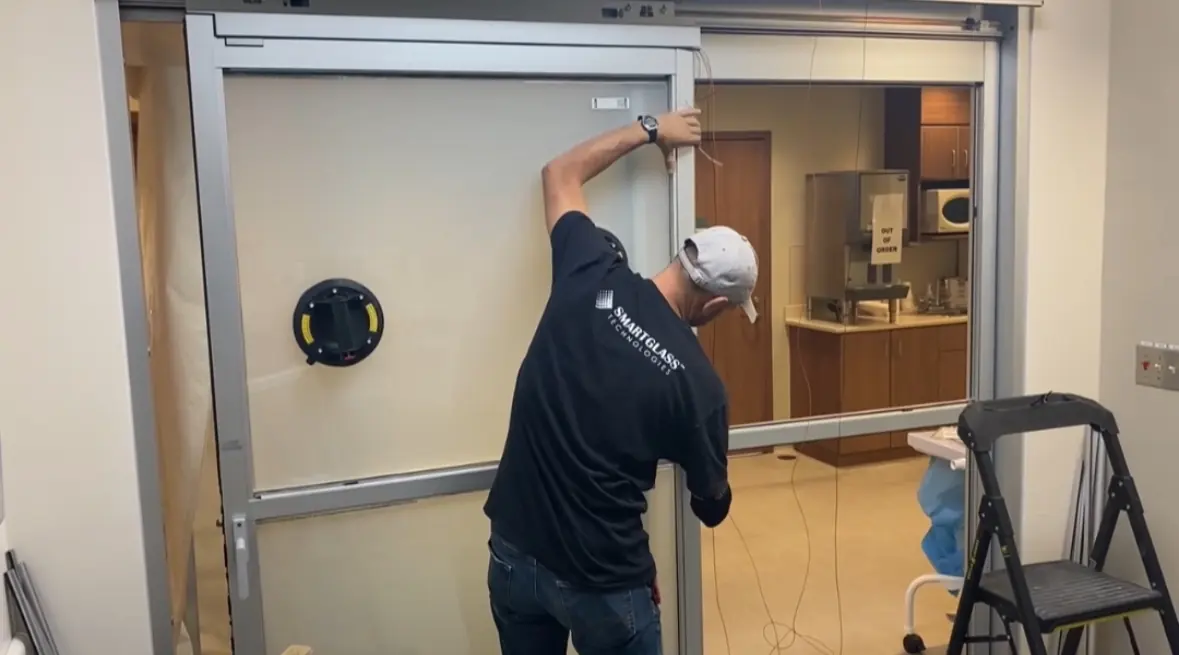
PriWatt switchable glass in the intensive care unit at Halton Healthcare
The one room where the glass is never a compromise
An intensive care unit runs on continuous observation. A patient is watched from outside the room for the whole of a stay, and the same patient is washed, examined, turned and visited by a family in that room. Both requirements are absolute and they are in direct conflict for several minutes an hour.
Halton Healthcare upgraded its ICU with manufactured PriWatt panels instead of film on an existing pane, so the glass build-up itself was specified.
What was actually made
| On this project | |
|---|---|
| Product | Laminated switchable glassthe switchable layer inside the laminate, not applied to it |
| Thickness | 1/2 inch |
| Glass | Low iron |
| Production lead time | 60 days |
| Scope | Manufacture through installation, including the low-voltage connections |
| Components | UL and Intertek certified |
| Minimum performance period | 10 years |
Low iron is the line worth understanding. Ordinary float glass carries enough iron oxide to give it a green cast, invisible until you look through two panes or care about colour. In a clinical room the whole point of the window is judging a patient through it, and skin tone read through a green pane is skin tone read wrongly. Low-iron glass removes the cast.
Sixty days is manufacturing, not installation. A laminated switchable panel is built to the opening: the interlayer, the busbar position and the wiring exit are all fixed at production. That is why the shop drawing comes first, and why an ICU programme has to allow for it.
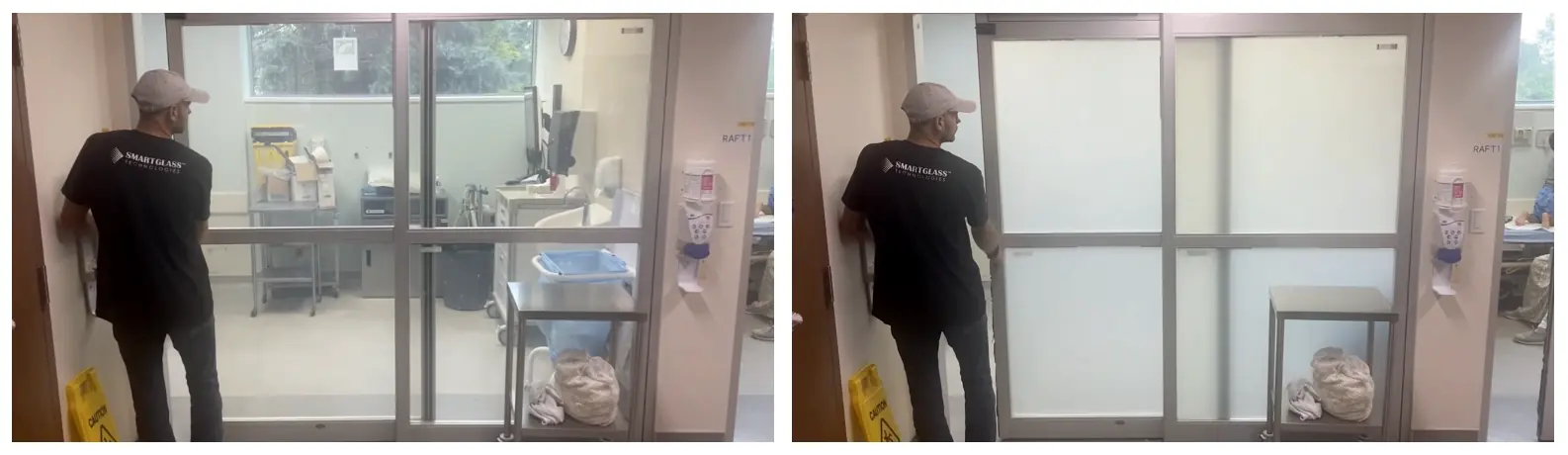
Laminated glass, not film, and why here
Most of the healthcare projects on this site are retrofits, where film onto the existing pane is right because the room cannot be closed and the glazing is staying. An ICU upgrade is the other case: the partitions are being built, so the switchable layer goes inside the laminate where it belongs.
The edge is designed, not added
The busbar sits inside the laminate and the tail leaves through an edge detailed for it, not through a route found in a finished frame.
The build-up is chosen
Thickness, low iron, and whatever else the room needs. Acoustic or impact performance is a property of the make-up, and this is the moment to specify it.
Nothing is applied on site
The panel arrives as a finished unit. In a clinical build that removes a wet, dusty operation from a room being commissioned.
The full comparison is on glass or film, and it comes down to one question: does the pane already exist?
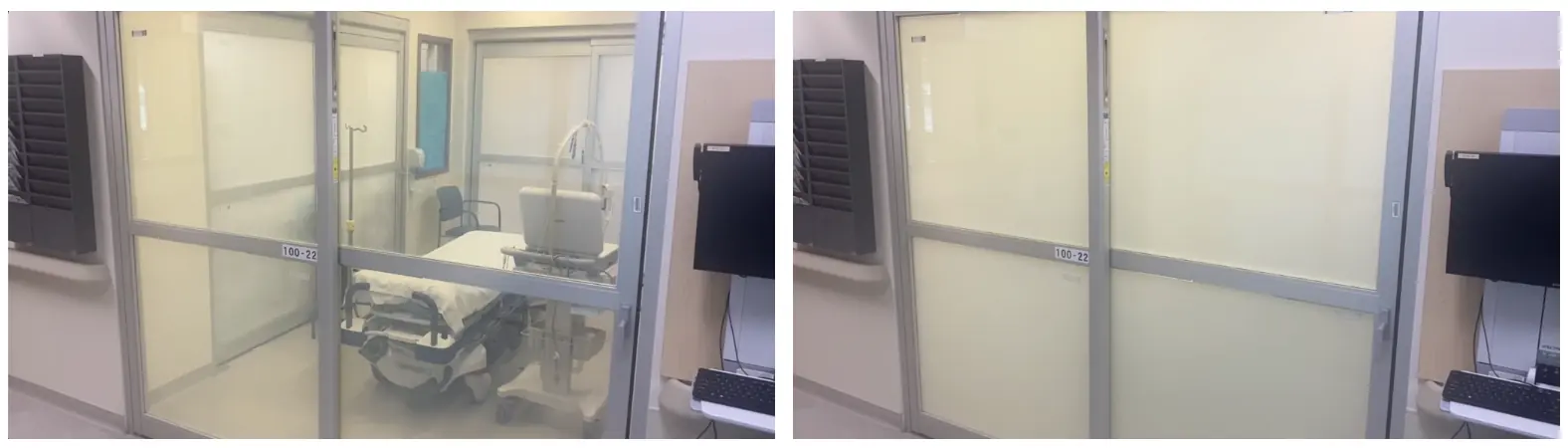
Two things not claimed, and one worth checking
Not claimed: infection control. The version published elsewhere says the glass minimises contamination points. PriWatt does not make that claim. What is true is narrower and still worth having in an ICU: there is no fabric in the room, and the surface is cleaned with the glazing instead of laundered on a rota.
Not claimed: recovery outcomes. That daylight helps patients recover is widely believed and is not something PriWatt has established, so this page does not assert it. What can be said is mechanical: the private state scatters light instead of blocking it, so a room closed for care is still a daylit room. Whether that helps anyone recover is a question for clinicians.
Worth checking: the ten years. A minimum performance period is a warranty term, not a measured property, and the terms are on the warranty. Everything that is measured (switching times, concealment, cycle life, panel limits, temperature range) is in the technical reference.
Specified on this project
PriWatt PDLC switchable glass
The switchable layer laminated inside the panel, made to the opening. Private unpowered.
Healthcare and clinics
Observation walls, consulting rooms and imaging suites.
PriWatt PDLC switchable film
Self-adhesive film applied to glass already in the building. Private unpowered, clear when switched.
A project like this one
An ICU, a ward refurbishment, or any clinical partition being built instead of retrofitted. PriWatt makes the glass and the film in Pompano Beach, Florida, and quotes every project off its own drawings. Send dimensions, or a photograph with the sizes written on it. No drawings yet? Take the call instead.