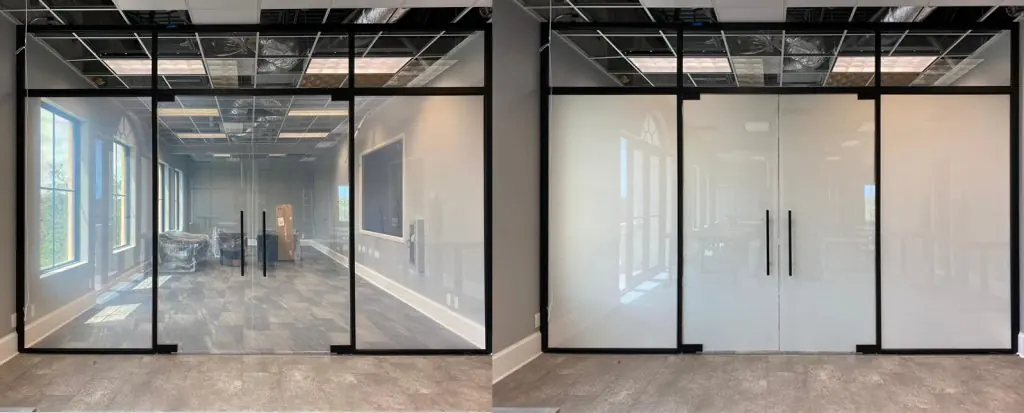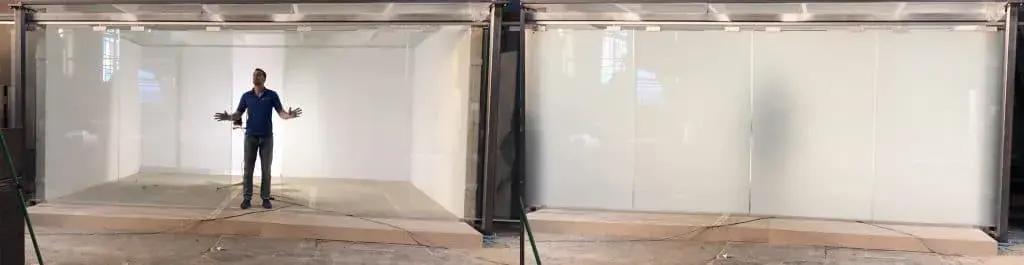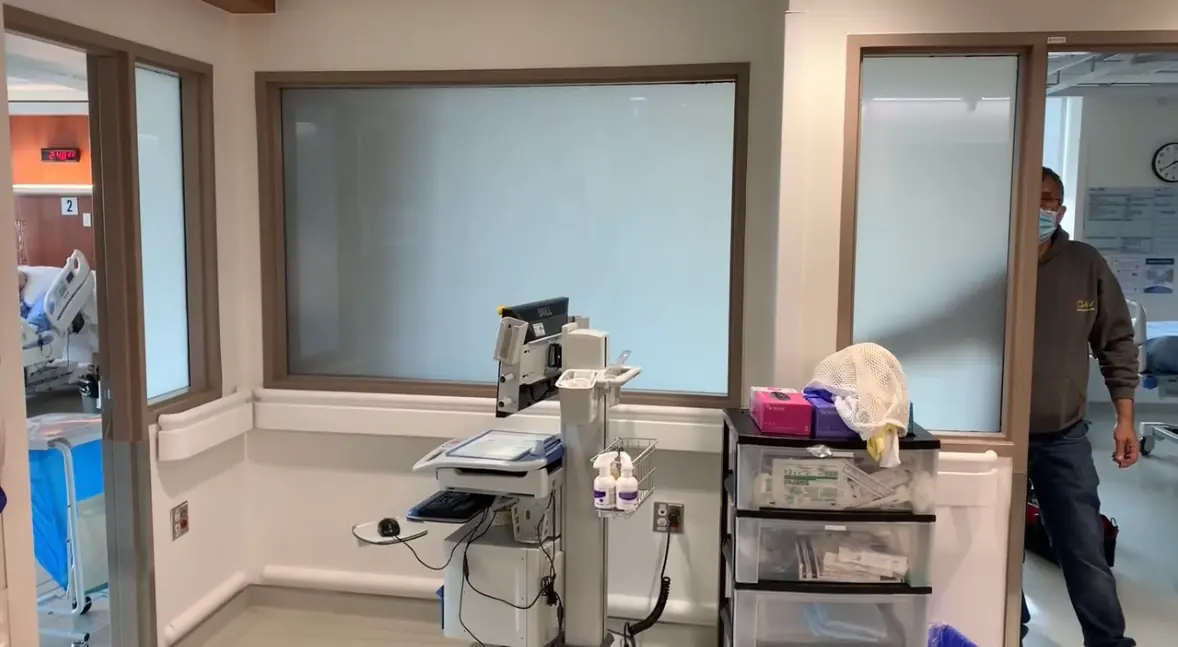
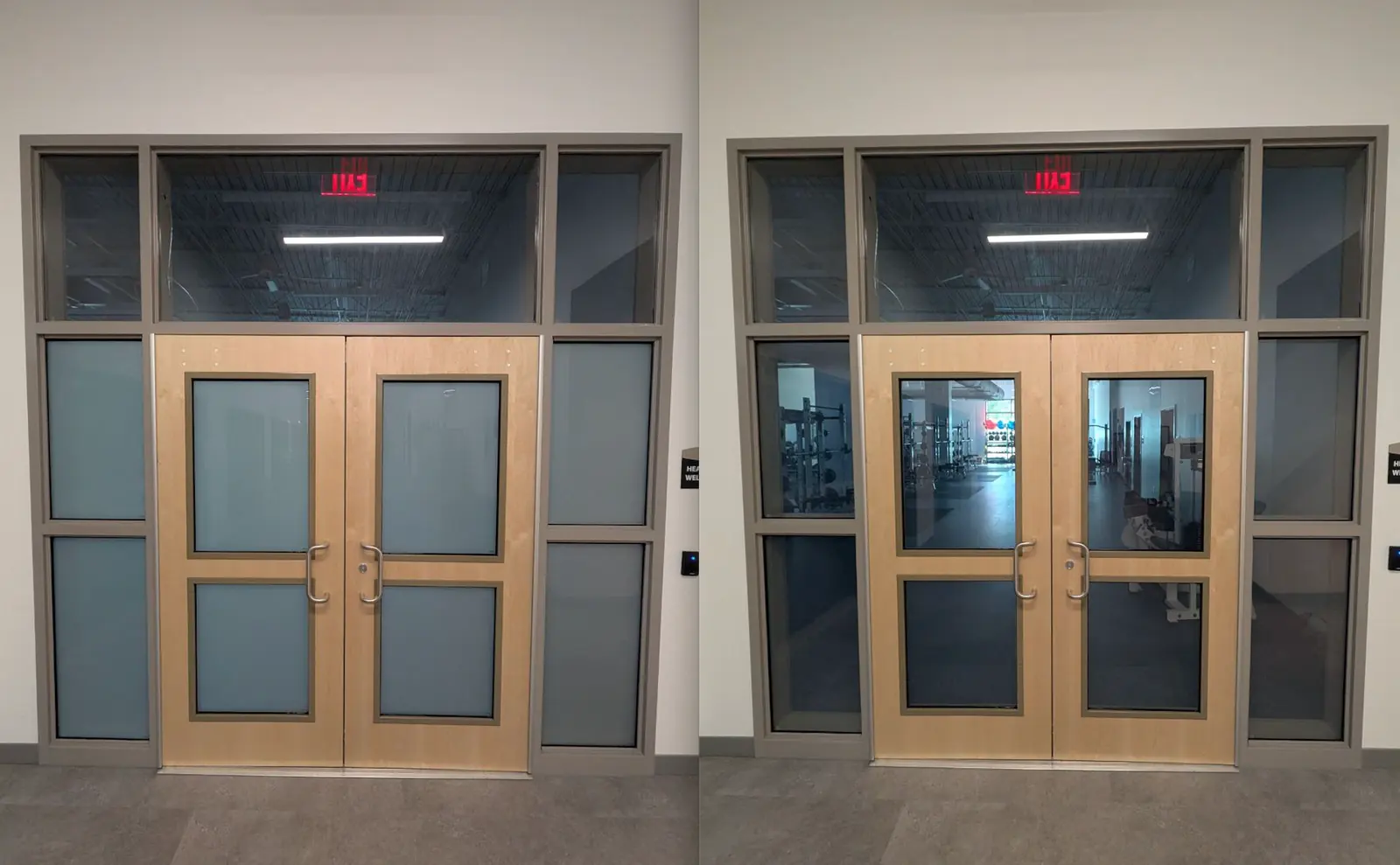
PriWatt film in the common areas at The Weber School, Atlanta
Common areas, an unusual place to specify this
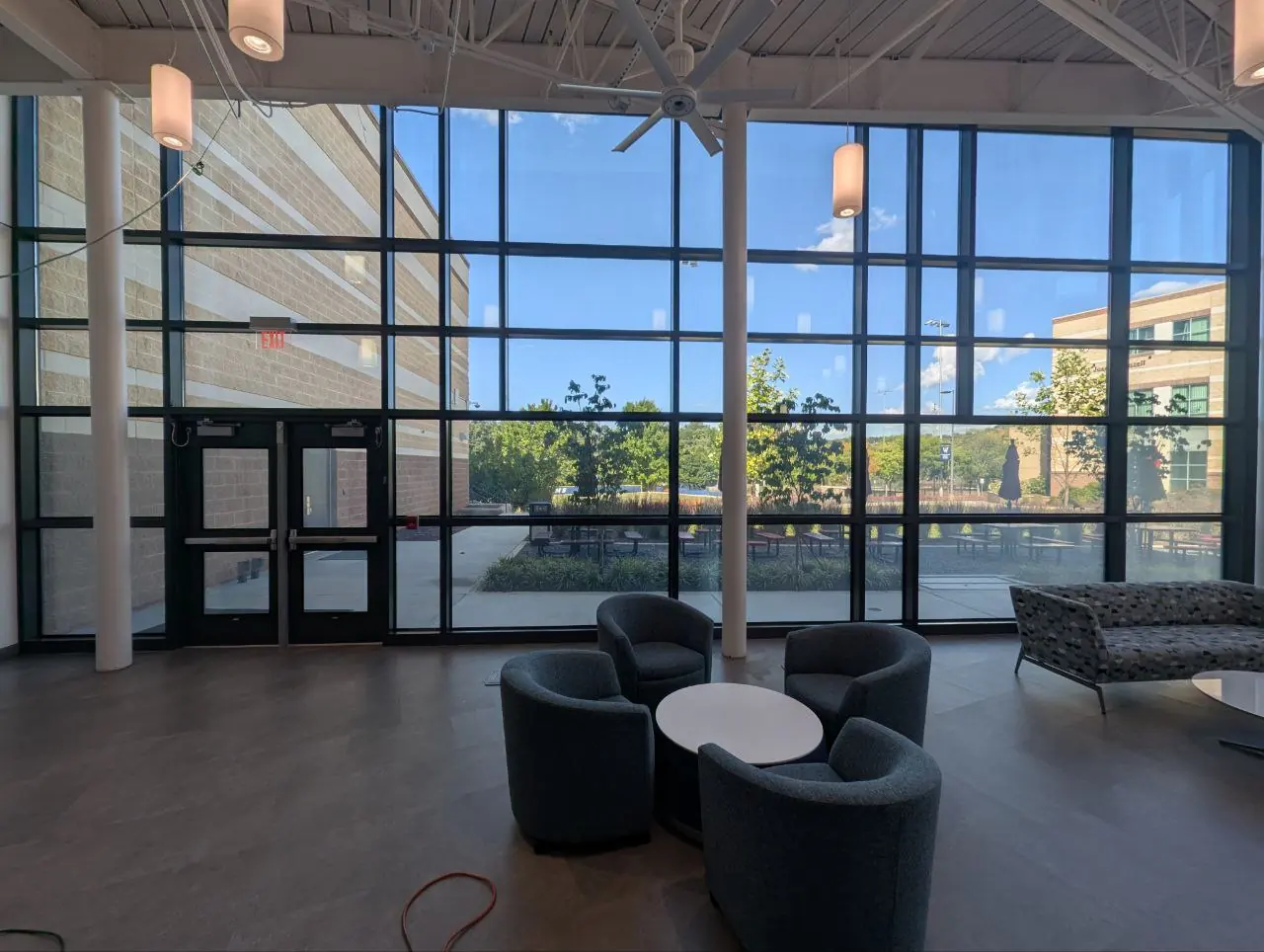
Most switchable glazing in a school goes on a classroom door or an office. Weber put it in the common areas: the glazed spaces where students gather between lessons, and where staff hold the conversations that do not warrant an office but do warrant not being watched.
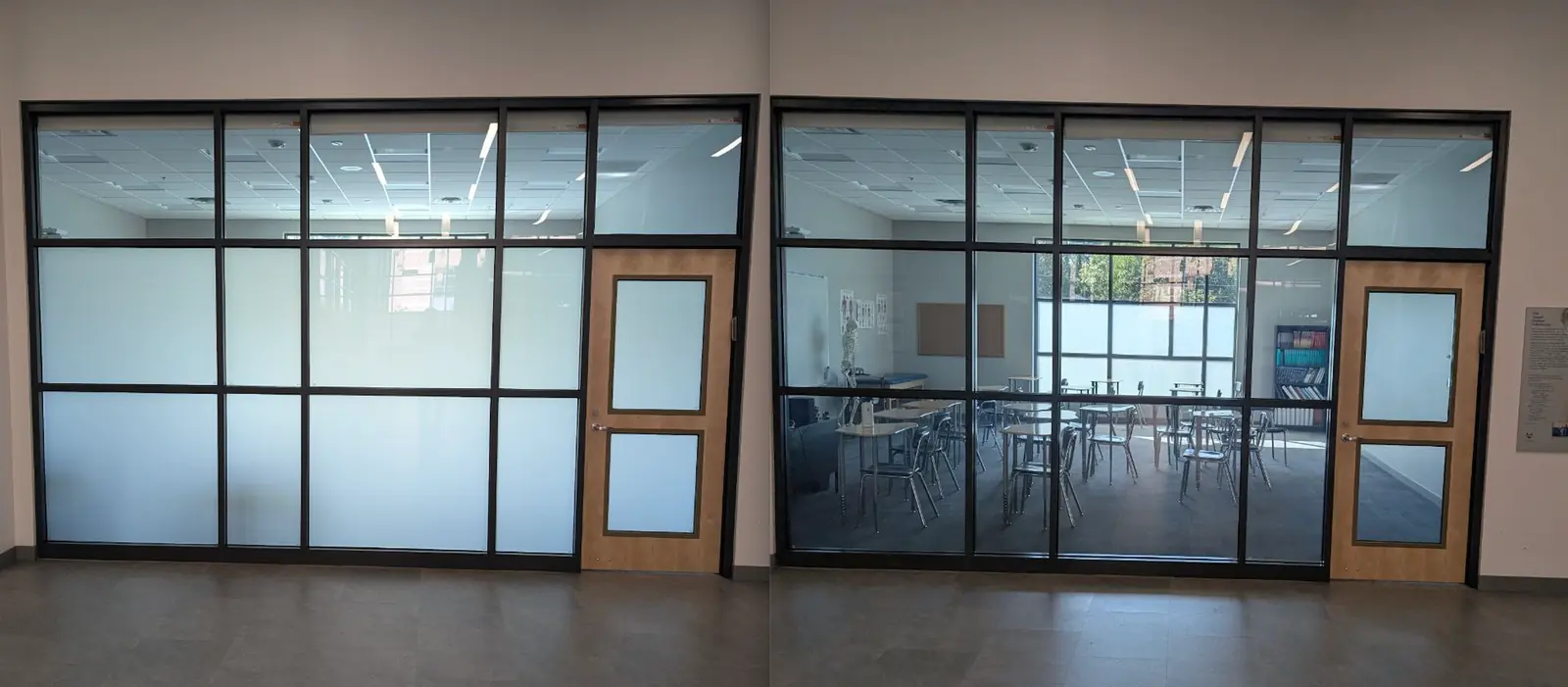
PriWatt film was applied to the existing glass, switched from a wall plate or through the building’s automation.
The conversation that has nowhere to happen
Every school has this problem and no floor plan solves it. A counsellor and a student, a member of staff and a family, a conversation that starts in a corridor and needs to stop being in one. Taking it to an office makes it formal, sometimes exactly the wrong signal, and leaving it where it started puts it in front of everybody.
- A glazed alcove or meeting space becomes private for as long as it is needed and goes back to being part of the building
- Nothing is booked, unlocked or walked to: the room the conversation is already in becomes the right room
- The private state still passes daylight, so a closed space does not read as a room somebody has been taken into
- Staff remain in a space that is architecturally open, its own safeguarding argument
That last point is worth dwelling on. Visual privacy and safeguarding pull against each other in a school, and switchable glass is unusual in that it can be reversed in under a second by anyone in the room. A door that locks cannot.
On lockdown, and what this film is not
The version of this case study published elsewhere lists lockdown among the uses. That is fair as far as it goes, and worth being exact about, because the same claim elsewhere in the source material goes considerably further than the product does.
| What it does | Removes line of sight into a space in under 200 ms, from a wall switch or a system command, without anybody walking to the glass |
|---|---|
| Why that is useful | Covering door and window glazing is in every published lockdown procedure, and it currently depends on somebody carrying a paper or card cover to the glass |
| What it does not do | It is roughly 0.4 mm of polymer. It is not security film, it is not tested for containment or attack resistance, and it must not be counted as delay at an opening |
| Where the rating lives | In the glass, not the film. If a location requires safety or security glazing it still does |
The full statement of this, including the standards a security film would actually be tested to and the questions worth putting to any supplier, is on the El Paso school page and on safety glazing and code. PriWatt makes glass and film. It does not write lockdown procedure.
Which state a school building should hold
Clear, almost always. A school is supervised space, and glazing that goes opaque when the power fails is glazing that removes supervision at the worst possible moment. That points at reverse mode, clear with no power and private only while switched, instead of the normal-mode film used here. It is a decision worth taking once for an estate, not per room.
The other question a school should ask is who holds the switch: the room, the office, or a system command that closes a corridor together. All three are possible on the same panel, and the answer belongs in the procedure, not in the product.
Specified on this project
PriWatt PDLC switchable film
Self-adhesive film applied to glass already in the building. Private unpowered, clear when switched.
Education facilities
Classrooms, labs and training rooms that are supervised and, at other times, closed.
Safety glazing and code
What a glazing rating covers, and why film over a pane does not change it.
A project like this one
A school, a college, or any common area where a private conversation has to happen where people already are. The glass and the film are made in Pompano Beach, Florida, and nothing here is priced off a rate card. Send dimensions, or a photograph with the sizes written on it, and the quote comes back against your panels. If you are not that far along, book the call.