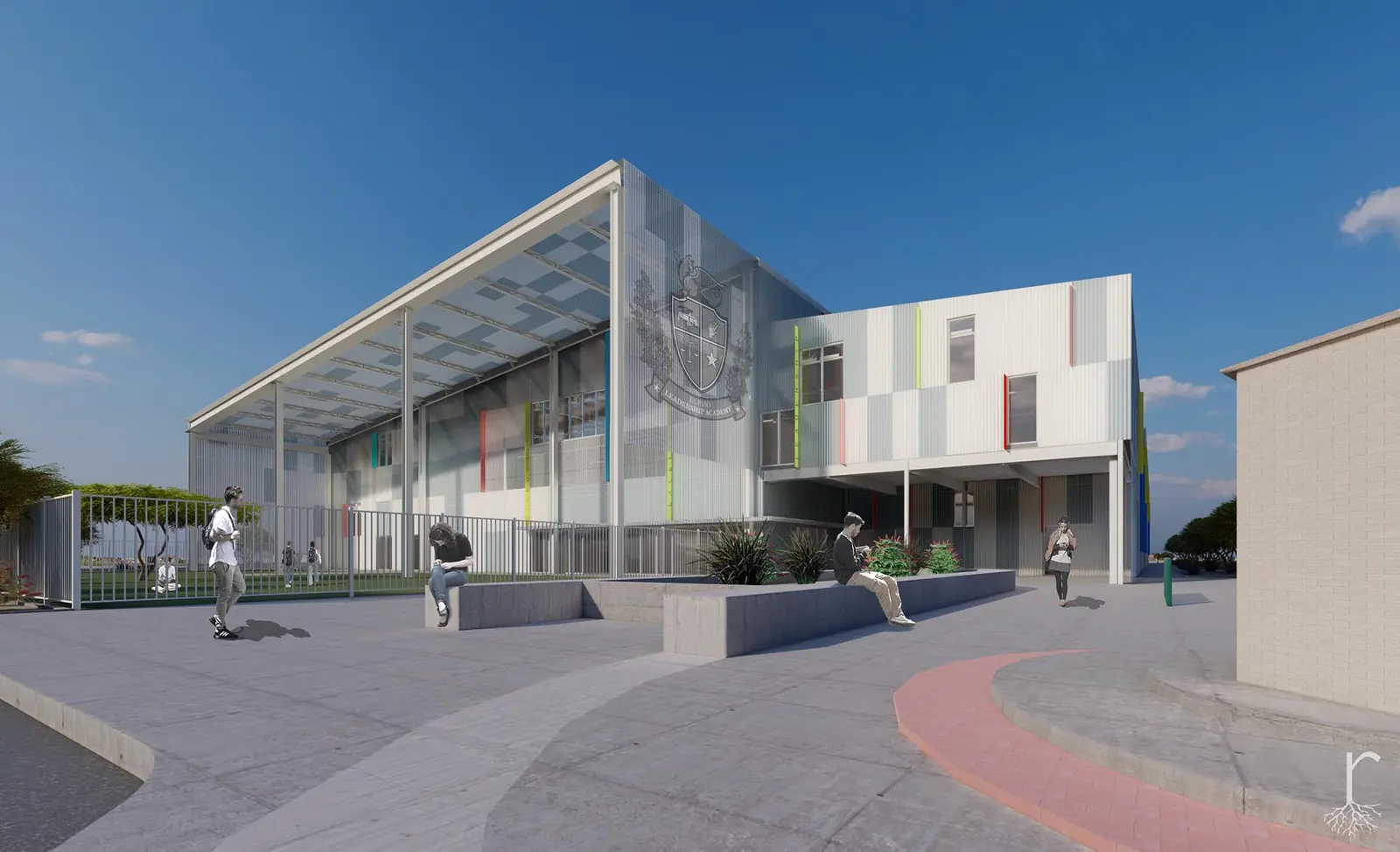
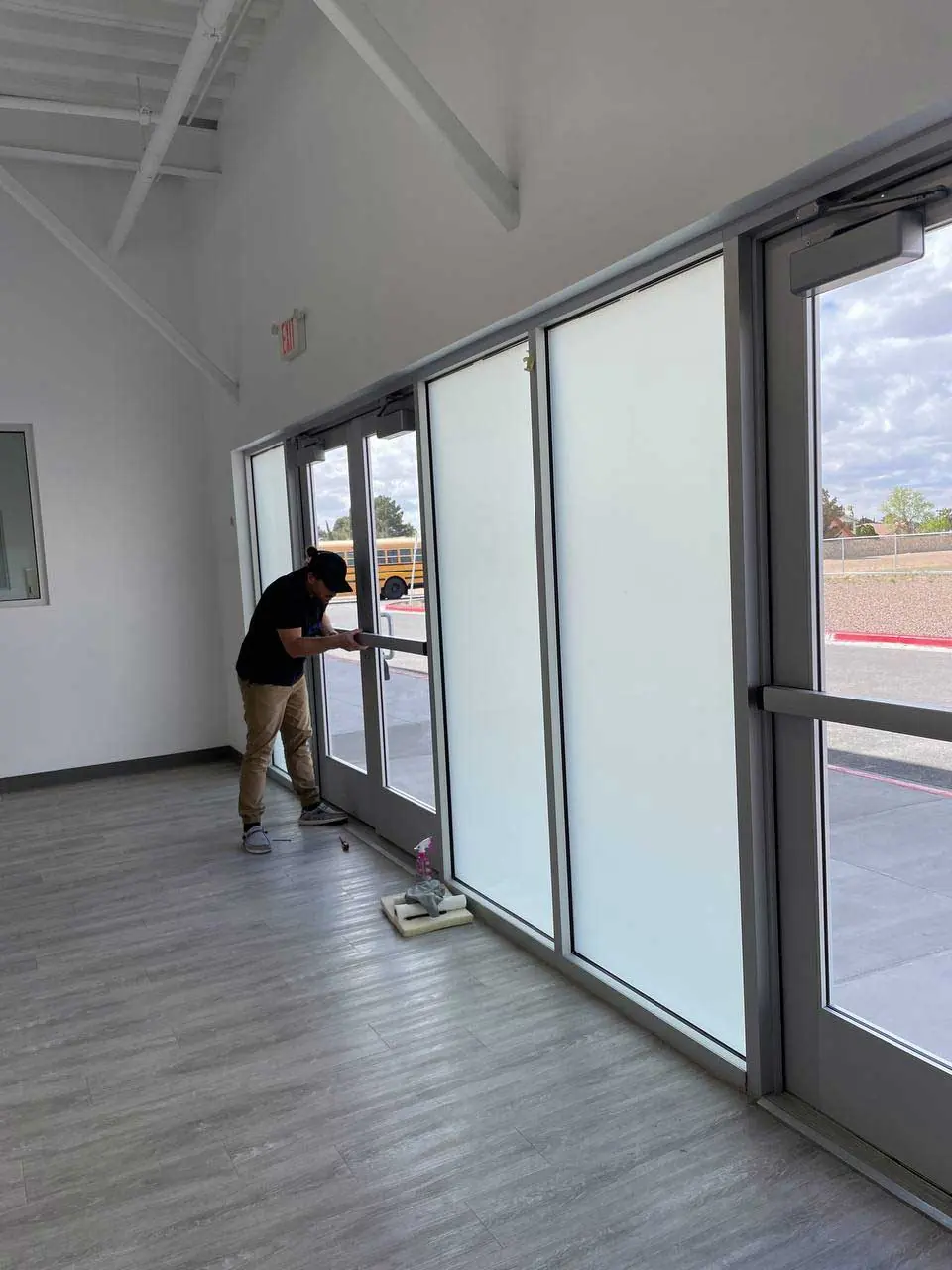
Switchable film on classroom doors and windows at an El Paso public school
Removing the view, from across the room
Classroom doors are glazed because supervision requires it. A vision panel lets an administrator see in without interrupting a lesson, and in most districts it is required, not optional.
The same panel is how someone in a corridor sees who is inside. PriWatt PDLC film was applied over the existing door and window glazing at a public school in El Paso, switched remotely so the glass can be obscured in a fraction of a second by a teacher who never walks toward it.
What this product does, and what it does not
This section exists because the version of this case study published elsewhere claims more than the product does, and in a school that matters more than anywhere else on this website.
| Claim | Status |
|---|---|
| Obscures the glass in a fraction of a second | True. PDLC switches in under 200 ms, faster than a person crosses a corridor |
| Switched without approaching the glass | True, and the operational point. A wall switch, a remote or a system command; nobody stands at the door |
| Applied over glazing that is already there | True. No door is replaced and no glass is re-ordered |
| The supervision panel still works normally | True. It is clear by default and only obscured when it is switched |
| Holds the glass together if it breaks | NO. This is roughly 0.4 mm of polymer, not security film. It is not tested for containment and PriWatt does not claim it |
| Resists or delays forced entry | NO. Attack resistance is a tested property of a glazing assembly. Do not buy delay at a door on the strength of this film |
The general rule behind the last two rows is on safety glazing and code, and it fits in one sentence: applying film to a pane does not change what that pane is rated as. If a location requires safety or security glazing, it still requires it, and the rating belongs to the glass underneath.
Why line of sight is worth something on its own
Removing the view is not a barrier, and it is not nothing either. Every lockdown procedure a US district publishes includes covering the door glazing, and that is why teachers keep paper, card or purpose-made blackout covers in classrooms. Those work, and they have two problems: someone has to walk to the door to put them up, and once they are up the room is dark and stays that way.
Nobody approaches the door
The glass is obscured from wherever the switch or the remote is. That is the whole difference from a cover that has to be carried to the glazing and fitted.
It happens at once, everywhere
On a system command a corridor of classrooms obscures together, instead of one at a time depending on who reacted.
The room stays lit
The private state scatters light instead of blocking it, so a class that cannot be seen is not a class sitting in the dark.
And the same glazing does ordinary work for the other 179 days: a room that is supervised through a clear panel most of the time, and closed for an assessment, a meeting with a parent, or a student who needs a moment out of view.
Questions to put to any supplier, including this one
- What is the glass rated to, before the film, and does the location require safety glazing under code?
- Which state does it hold with no power, and what happens to every door in the building during an outage?
- Who can switch it: the teacher in the room, the office, a system command, or all three?
- Does obscuring the glazing conflict with the district’s own supervision or egress policy?
- Is the film tested for anything beyond what it is being sold for here?
The second question is the one with a wrong answer available. Normal-mode film is private with no power, so a power cut leaves every classroom obscured, which is not usually what a school wants. Reverse mode is clear unpowered and obscures only while switched, and on a school building that is worth the conversation before anything is ordered.
PriWatt makes the glass and the film. It does not write lockdown procedure, and this page is not a substitute for the people who do.
Specified on this project
PriWatt PDLC switchable film
Self-adhesive film applied to glass already in the building. Private unpowered, clear when switched.
Education facilities
Classrooms, labs and training rooms that are supervised and, at other times, closed.
Safety glazing and code
What a rating covers, and why film over a pane does not change it.
A project like this one
A classroom, a corridor or an administrative suite where the glazing has to be supervised and, occasionally, not. PriWatt makes the glass and the film in Pompano Beach, Florida, and quotes every project off its own drawings. Send dimensions, or a photograph with the sizes written on it. No drawings yet? Take the call instead.