
PriWatt switchable glass in the treatment spaces at VIO Med Spa
Clinical privacy, in a room that is not supposed to feel clinical
A med spa is designed against a hospital. The lighting is warm, the finishes are domestic, and the whole proposition is that a medical procedure happens somewhere that does not look like a treatment bay. Then the patient undresses, and the room has to be as private as a clinic while looking nothing like one.
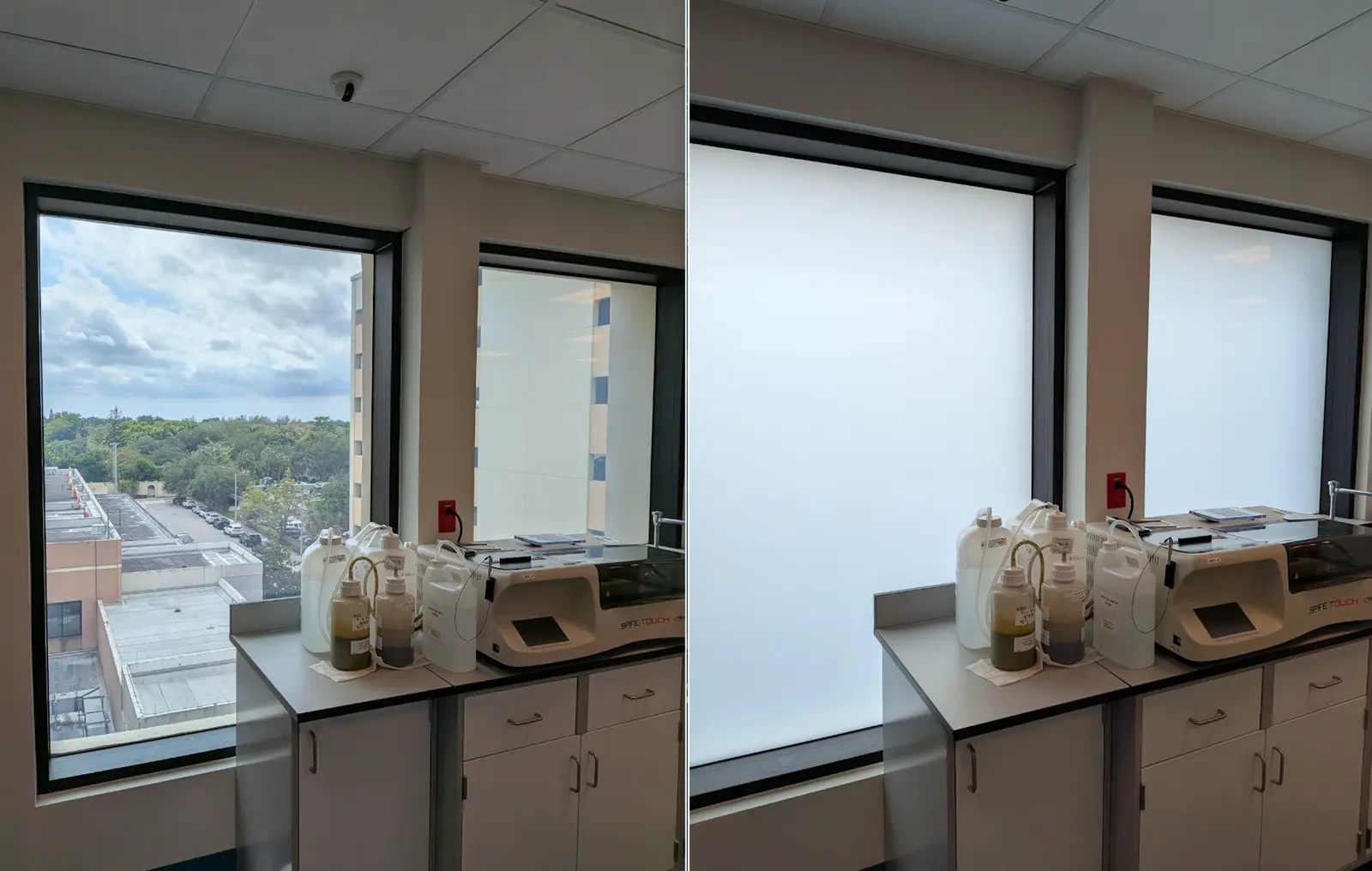
PriWatt switchable glass went into VIO Med Spa’s treatment spaces: glazed by default, opaque for the treatment itself.
Why the room is glazed at all
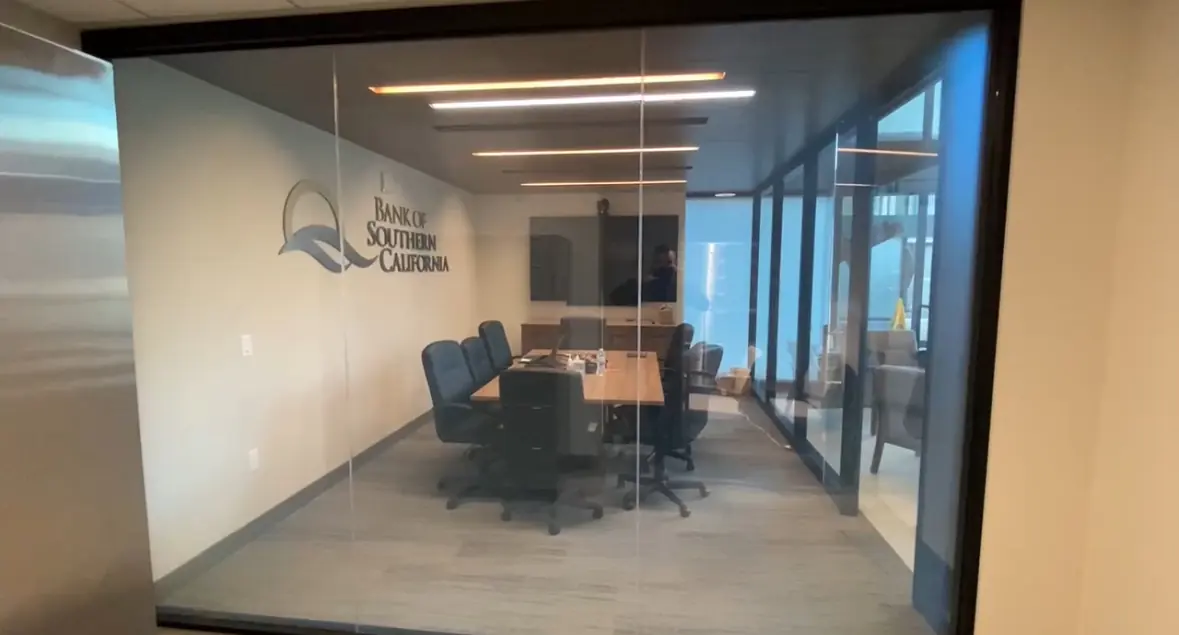
It is a fair question, and the answer is why this product suits the building type. A treatment room built with solid walls is a windowless box, and a windowless box is the thing a med spa is trying not to be. Glazing gives the room borrowed light and keeps the suite legible: a client walking in sees a clinic that is open, not a corridor of closed doors.
- Between appointments the room reads as part of the space, the thing the interior was designed for
- During a treatment it is fully private, in under a second, with nothing for the client to see being operated
- Staff can tell at a glance which rooms are in use without opening a door
- The private state still passes daylight, so a closed room is not a dark one
The third is the operational one people underestimate. In a clinic running several treatment rooms, knowing which are occupied without knocking is worth as much as the privacy itself.
The hygiene argument, stated at its actual size
It is narrower than it is usually sold, and still good. A curtain or a blind in a treatment room is a textile assembly that has to be taken down, laundered and put back on a schedule somebody maintains. A pane of glass is smooth, non-porous, and is wiped down with the rest of the glazing on the same round.
That is the whole claim. PriWatt does not describe this product as antibacterial, and neither does this page. Removing one launderable item from a room is a real improvement, and it does not need an unsupported adjective attached to it.
One fewer thing to launder
No fabric in the room, so nothing leaves it on a trolley and nothing comes back on a rota.
Nothing to touch
The state is changed at a switch, not by handling a rail beside a client on a treatment couch.
Cleaned as glazing
A damp cloth and a mild detergent, dried off, edges included: the same as any pane in the building.

The decision a clinic should make deliberately
Which state the glass holds with no power, and in a treatment room that is a dignity question before it is anything else. Normal mode is private unpowered, so a supply failure leaves every room opaque, which in a clinic is almost always the right way for it to fail. Reverse mode is the opposite and suits a space that is open most of the day; it is the wrong choice for a room somebody is undressed in.
Second, whether the glazing is in a location where code requires safety glazing. That is decided by the pane, not by the switchable layer; see safety glazing and code. And third, whether the partition also has to be acoustically separated, a property of the whole build-up and not of the film or the switchable interlayer.
Specified on this project
PriWatt PDLC switchable glass
The switchable layer laminated inside the panel, made to the opening. Private unpowered.
Healthcare and clinics
Observation walls, consulting rooms and imaging suites.
PriWatt PDLC switchable film
Self-adhesive film applied to glass already in the building. Private unpowered, clear when switched.
A project like this one
A treatment room, a consulting suite, a clinic or a wellness space that has to be private and must not feel institutional. PriWatt manufactures in Pompano Beach, Florida. Every quote is worked from the project’s own drawings, so send dimensions. A photograph with the sizes written on it does the same job. Earlier than that, book the call.