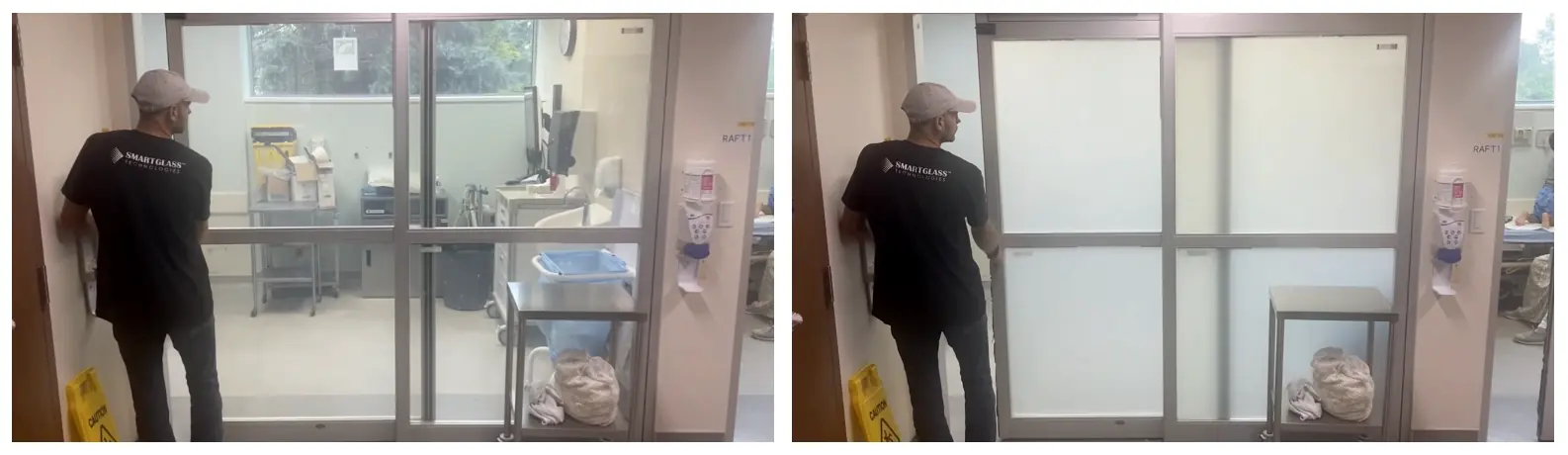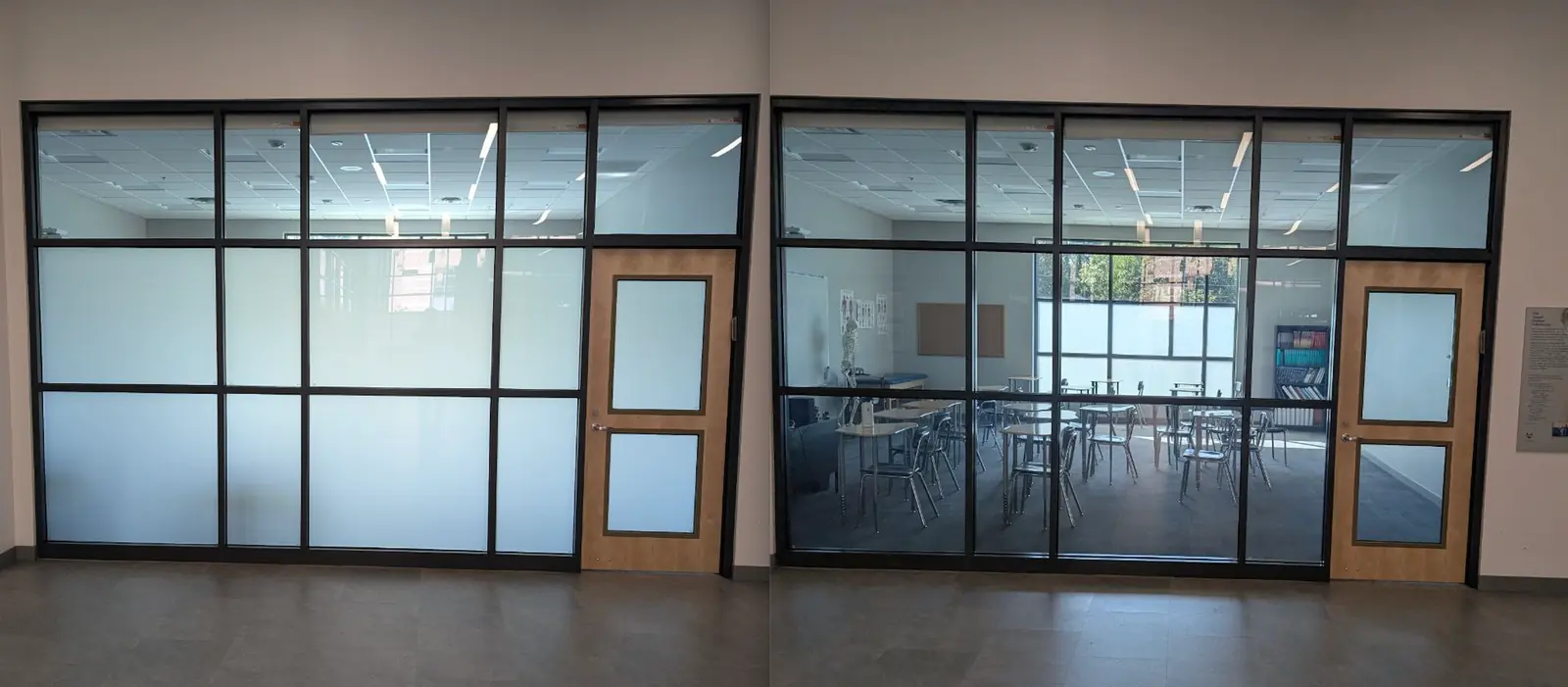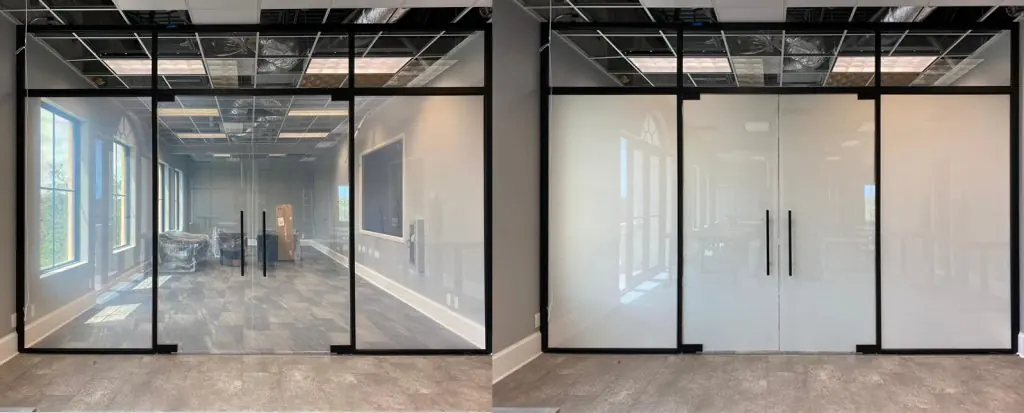
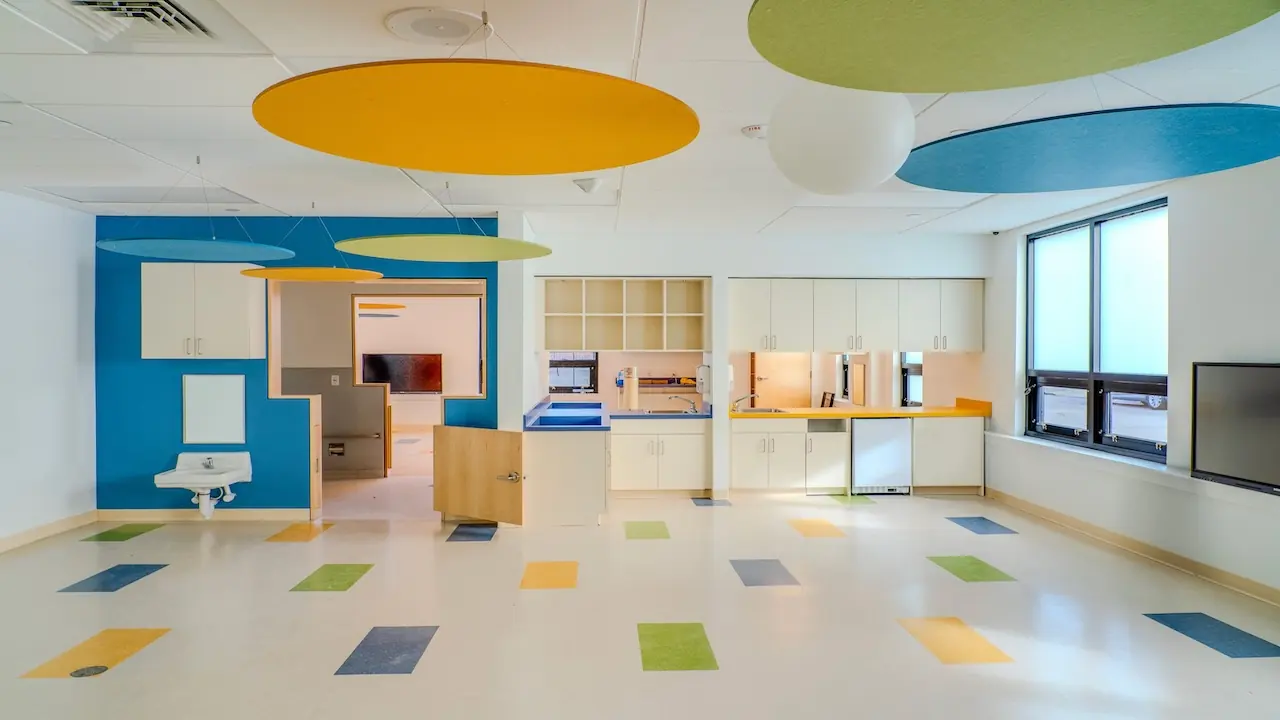
PriWatt switchable glass at the NorthStar Early Education Academy
Supervision is the requirement. Privacy is the exception.
Early-years settings invert the usual brief. In an office the default is openness and privacy is bought; in a nursery, continuous line of sight into every room is a safeguarding requirement, and the exceptions are narrow, specific and unavoidable: a nap room, a child who needs a few minutes out of view, a conversation with a parent.
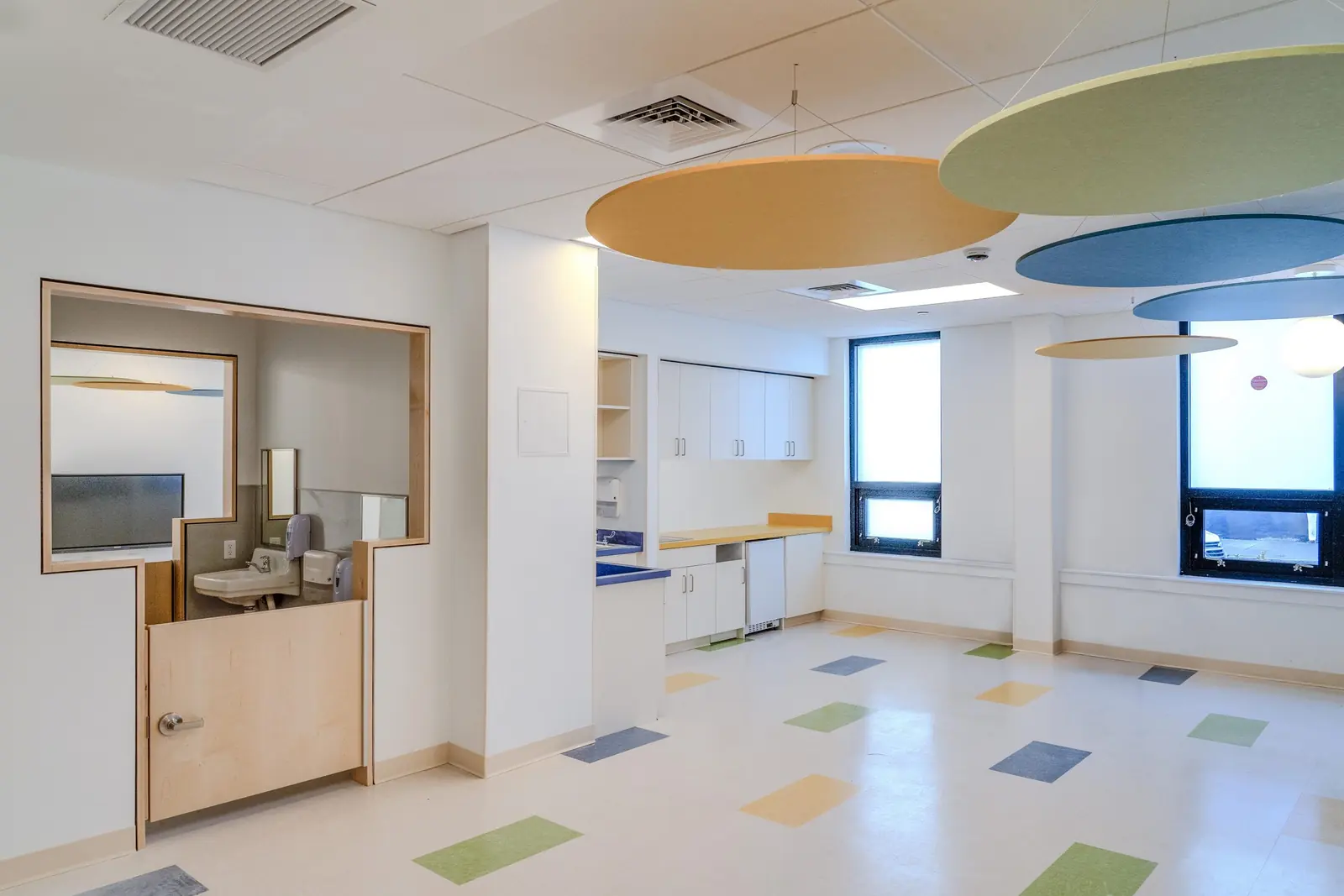
NorthStar is a purpose-built 19,000 square foot facility, constructed by Dellbrook|JKS. PriWatt switchable glass was built into the office partitions and classroom sections by the installer’s Boston team.
What glass does for a room full of small children
- Rooms stay observable from the corridor, the point of the exercise and usually a licensing condition
- Nap and quiet rooms can be darkened to view without being cut off, and go back to being visible the moment the room is in use again
- The private state scatters light instead of blocking it, so a room closed for a sleep is dim, not dark, and staff can still see
- A child with sensory sensitivity can be given a space with less visual traffic in it, without that space becoming a cupboard
The obvious alternative is a blind, and in an early-years room a blind is the one window treatment that should not be there at all: it has a cord or a chain, it is at child height, and it is the single most common strangulation hazard named in nursery safety guidance. Switchable glass has nothing hanging and nothing to reach.
On impact resistance, stated carefully
The building around this glazing is rated for hurricane impact — Hunter panel sheathing, fibre cement siding and Universal Series 600 AL windows, the correct specification for the location.
Laminated switchable glass can be built to an impact make-up, and that is worth knowing. But it is a specification, not a property: the switchable interlayer confers nothing on its own, and a panel is impact-rated because somebody specified a build-up and had it tested. If a location requires an approved assembly, the requirement is met by the assembly and its approval, not by the fact that the glass switches. That distinction is set out in full on safety glazing and code.
The same holds in the other direction for the retrofit case: applying film to an existing pane does not change what that pane is rated as, either way.
The state it holds with no power
In an early-years setting the answer is clear, and opposite to the clinical one. Rooms must be observable, so the state to hold when nothing is switched on is clear. A power cut in a nursery should not leave every classroom obscured to the corridor. That points at reverse mode: clear unpowered, private only while switched, and drawing current only for the nap hour.
Put the two side by side, because the same product suits both and what the room is for decides the answer:
| Room | Should fail | Which mode |
|---|---|---|
| Nursery classroom | Clear — supervision must survive an outage | Reverse (PNLC) |
| Clinical treatment room | Opaque — a patient must not be exposed | Normal (PDLC) |
| Office meeting room | Clear — the floor should look as designed | Reverse (PNLC) |
| Retail shopfront | Opaque — stock should not be on view overnight | Normal (PDLC) |
Specified on this project
PriWatt PNLC reverse glass
Clear with no power, private only while it is switched — the reverse of normal mode.
Education facilities
Classrooms, labs and training rooms that are supervised and, at other times, closed.
Office partitions
How a glazed run is built: where the joints fall, and how one transformer serves a wall.
A project like this one
A nursery, an early-years setting, or any building where continuous supervision is the rule and privacy is the short exception. PriWatt manufactures in Pompano Beach, Florida. Every quote is worked from the project’s own drawings, so send dimensions. A photograph with the sizes written on it does the same job. Earlier than that, book the call.